Categories
Exhibition Spotlight McMullen Musings Problematic Visual Culture

A Portal To Where? 

Lauren Whitlock ‘24 

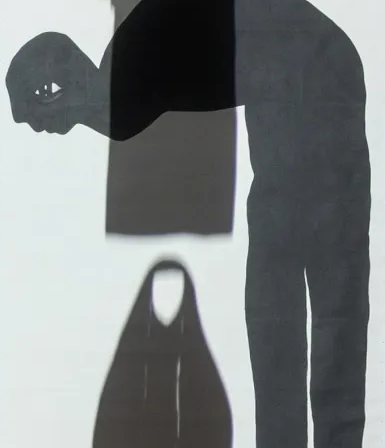
Drake DiPaolo, a twenty-year-old passionate about museums—and a McMullen Student Ambassador—was ecstatic to see four older people enter the gallery. They appeared frustrated by the video on the far side of the room. In their faces, you could see them asking, “Is this the last one?” as they sat down on the opposite side of the room and began to speak loudly to one another. This room was on the third floor, and on the second was the Barjeel Art Foundation’s show Landscape of Memory, which displayed seven videos focused on the “rich and complex history of the Middle East.” Naturally, the people assumed that this floor would have more of what they had just seen, videos. But this space was a bit different. The room was cramped, with vertical LEDs glaring and dark walls. Exhausted by the exhibit, the viewers discussed how all the videos were about death, and none of them had been in English. Confused, they looked at the people in the video dead in the eye. But, something felt eerie about the figures, as if they were watching the visitors. Drake walked over. 

“It’s actually like a zoom; these people live in a refugee camp.” The visitors spent their remaining time at the museum complaining that they could not hear the people, understand their accents, or even comprehend the point of the exhibit. They made sure to tell me this, the worker at the front desk, on their way out. This uncomfortable scene comes from a semester of bizarre interactions between visitors and “the Portal” at the McMullen Museum of Art from January 30th through June 4th, 2023. 

When I initially heard about the exhibit, the concept of the portal also confused me. I found the name dystopian, fantastical, maybe something out of a Back to the Future Movie. What the hell was the Portal? A Portal to where? Was there more than the video art installations on the second floor? But, on the third floor, there was more: a small room with all-black walls, about 12 chairs, and a video projection. The Portal was unlike a Delorean and had no time or space travel capabilities; its goals were much more advanced. 

I later learned that “The Portal” is not unique.  It is a room-sized audio-visual experience providing a cross-continental connection you can place on any college campus. The proprietor of the technology and licensing, Shared Studios, has a clear Silicon Valley-esque message of connection. Their website displays a picture of President Obama and his words while using this portal: “It’s an amazing technology, making it seem like you are standing right in front of me,” he says while speaking to young entrepreneurs from Iraq. Topics of conversation vary, from climate change to artistic expression, but the overarching theme of cultural exchange is consistent throughout.
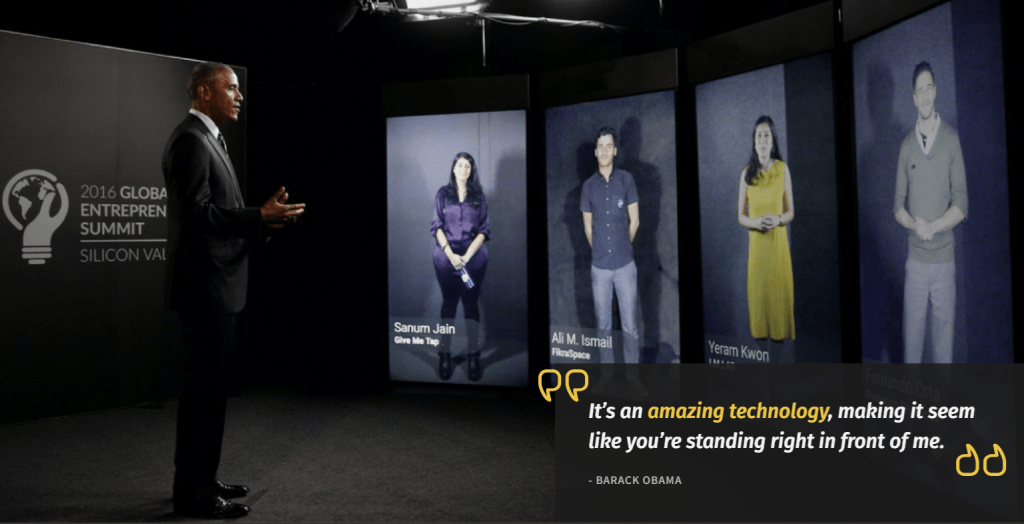
Screenshot from the Shared Studios website.

Now that it was at the museum, patrons and BC students could connect with people from all over the world. Specific topics were encouraged for certain groups. For instance, a group from Barbados talked with a professor and their Oceans class about climate change. A group from the Nakivale refugee group was encouraged by Shared Studios to discuss the portal they built out of bottle bricks. A group from Palestine discussed their futures. Many of them reflected on the current exhibit’s Landscape of Memory’s themes of exile, home, war, and family. The audience was never as diverse as the speakers featured at the Portal. Throngs of white college students entered the museum. They had to write papers on their experience—how were their eyes fully opened? Many of the participants were young college students mandated to be there to meet someone different from themselves. Most would sit there dead silent, hoping to get through the event and get their extra credit. 

In comparison, Drake spent countless hours worried about the Portal and its functions. He would come early to work to set it up, go into every connection with notes on discussion topics, and encourage visitors around the museum to join him. Despite his best attempts, he was the only one willing to put in this effort. Drake recounts moments where he felt like he was pulling teeth; “at times, I felt like I was running a circus. It was hard to manage the people in the room. Sometimes, they would just sit and watch whoever was talking. You had to force interaction.” The placement of the exhibit itself was bizarre. There was a video installation in another part of the exhibit, implying to visitors that this, too, was something to view.  “It was also weird because they are having this interaction, but in the room right next to them is the rest of the exhibit,” Drake said. There was a feeling that museum-goers should view these people, their stories, culture, and even trauma as objects. 

Though conversations that took place in the Portal are essential to understanding one another, to have these conversations within the context of a museum space reinforces power structures. The museum has once again become the playground for people with wealth and power. The people on the other end of the connection are often othered by this experience. Though they are involved in this process, they are the ones on display. The first time I saw the Portal, I was reminded of the historical display of others. I had recently taken a class in Victorian studies and was eerily reminded of their practices. The purpose of the museums in the Victorian period was to display so-called conquered cultures from across the globe. Indian silks and bead-work were an essential feature of the museum. The museum became a part of the nationalistic rhetoric and colonial projects. 
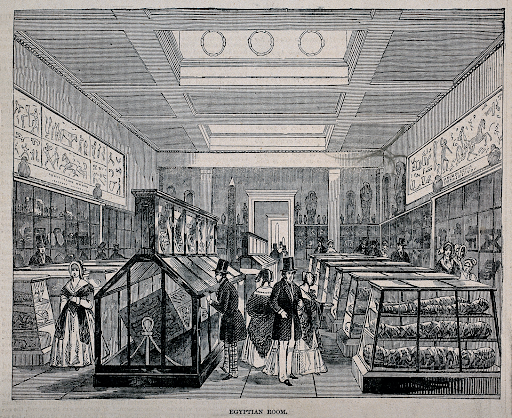
Artist unknown, (1847) The British Museum: the Egyptian Room, with Visitors. 1 print: wood engraving; image 12.2 x 15.4 cm.

The Victorians are also responsible for developing freak shows and human zoos in the late 18th and early 19th centuries to display people with non-Euro-centric features and disabled bodies. Pseudo-science and the academic field of anthropology reinforced these backward forms of entertainment. The basis of science and historical study justified false racialized narratives that pervaded museum exhibitions for the public to view. The “other” was put on display for societal purposes. Museums became a place where the “other” is reminded of their place, and the audience is reminded of their superiority. These interpersonal interactions reflected the colonialist tendencies of Great Britain and other European powers. Viewers mocked, laughed at, and, in some cases, attacked the subjects of the human zoo. 

The Crystal Palace at Sydenham Hill, London. Designed by Sir Joseph Paxton for the Great Exhibition of 1851 and rebuilt in 1852–54 at Sydenham Hill.
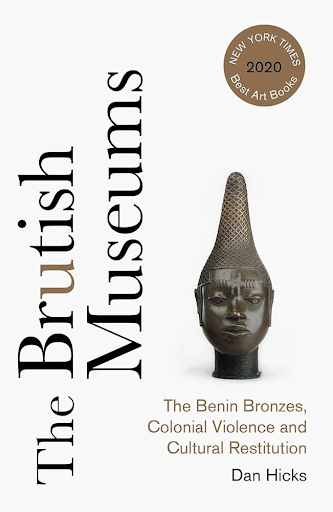
Book cover of Dan Hick’s Brutish Museums: The Benin Bronzes, Colonial Violence and Cultural Restitution.

Dan Hicks, in his book Brutish Museums: The Benin Bronzes, Colonial Violence and Cultural Restitution, describes the “second shot” produced by museums. The “first shot” is the colonial exploitation and theft of indigenous art, and the “second shot” is a continuation of this narrative. Though not entirely the same as a human zoo, the McMullen Museum’s Portal continues the “exhibitory” gaze of the past. Through the Portal, the museum puts the “other” on view. Not only are their bodies on display, but their trauma is now a learning experience for others. The Portal accentuates power differences when watching the conversations, and there is also something Foucauldian about the museum entering these people’s homes. The Portal is an installation meant to connect people, but it has created an exploitative environment in practice. There is constant surveillance of the “other.” Museums have always struggled with this issue. New technology does not break down the old power structures. Exploitation does not need to be at the root of art.

Drake left the interview with a few words, “You can’t view it as an exhibit.” Context is important. In the museum’s attempt to diversify and enrich experiences for their visitors, they exploited the lived experiences of people in countries with fewer opportunities than the US. Yet, exploitation is a conscious choice made by the visitors. A random student who has done nothing to learn about the Portal speakers enters the space differently than someone with the intention of discussing difficult topics. One student, Ashley Shackelton, who participated in a Portal on campus, not in the museum, felt that the experience was necessary to her learning. “It felt like we had to have serious academic conversations if you went with a class. But my favorite most meaningful conversations were about sharing music and books we found inspiration.” We can still meet the goal of the Portal—human conversation—if the person with the power in the transaction is willing to absolve themselves of it. However, Ashley noted that the connection felt blocked by the technology. She notes, “there wasn’t much comfort I could provide… It reminded me that although we could have incredibly enlightening and important conversations, we were still speaking through a video.” 

In attempting to create human interaction, Shared Studios is placing the importance on both groups of people coming together as equals to have a discussion. Reality is not as simple. The conversation is not on an equal playing field in a space of power such as a museum or a college.  Some of my discussions in the Portal were constructive and opened my eyes to new experiences. Drake recalls a moment when the translator had not yet arrived, and a class of students blankly stared at the people on the screen. In a moment of panic, Drake posed the question- Messi or Ronaldo? Everyone in the room understood what was happening and interacted despite the language barrier. Drake is a shining example of how to make this technology work. 

The idea that we are all similar no matter what is true, but understanding differences allows for richer and more empathetic conversations. Historical and present contexts affect these interactions. The only way to move forward is to acknowledge our differences while learning our similarities. In this way, the Portal can work.

Works Cited

Dan, Hicks. The Brutish Museums: The Benin Bronzes, Colonial Violence and Cultural Restitution, Pluto Press, 2020, pp. 152–65. JSTOR, https://doi.org/10.2307/j.ctv18msmcr.17. Accessed 22 Mar. 2024.

Bennett, Tony. The Birth of the Museum: History, Theory, Politics. Routledge, 2005. 
Categories
Podcast Archive

Art in Focus: “Gateway to Himalayan Art” with Professors Matthew Vale and Yonder Gillihan

The McMullen Student Ambassadors are pleased to present Art in Focus, featuring an informal discussion between Boston College professors from various academic departments. With each new episode, we aim to uncover a unique perspective on the works on display, informed by research and methodologies in areas of study across the University. Each conversation will bring the exhibition’s works “into focus” to highlight art’s expansive reach and interdisciplinary nature.

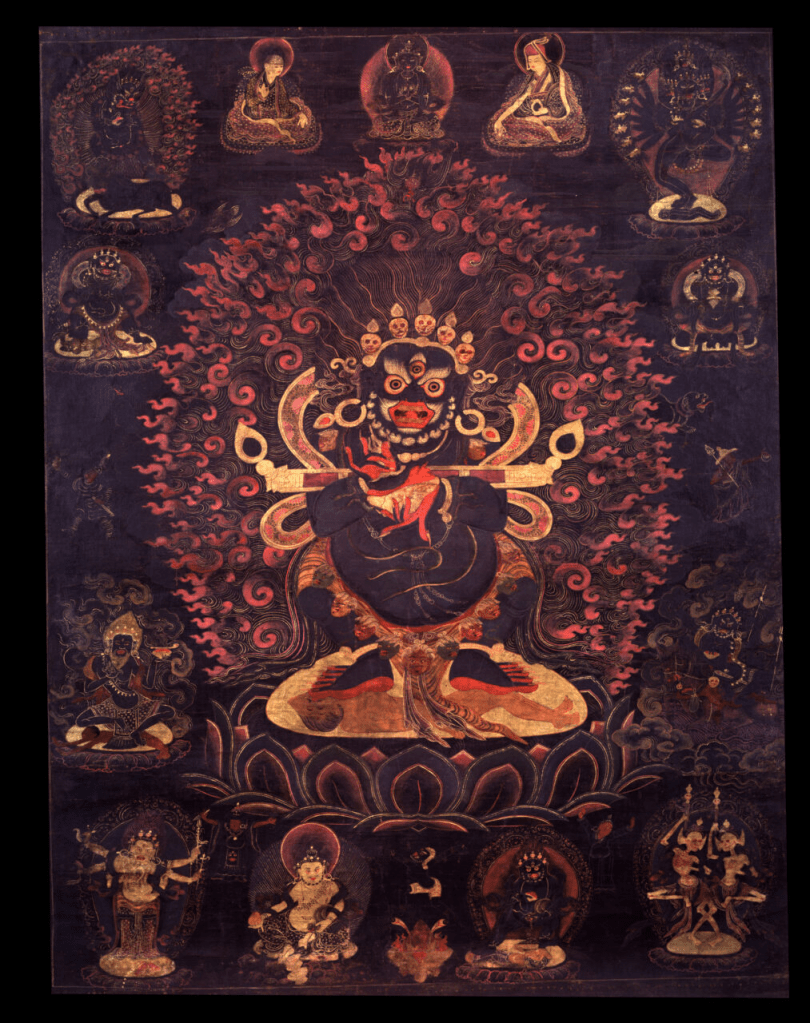
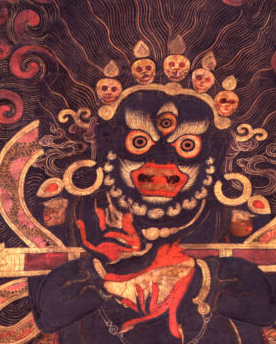
The following podcast is the first installment in the Art in Focus series, where we explore different themes and artwork from the “Gateway to Himalayan Art” exhibition. For this episode, we invited Boston College Visting Assitant Professor Matthew Vale and his colleague Associate Professor Yonder Gillihan of the Theology Department to talk about one of the paintings, Panjarnatha Mahakala, in the exhibit. Together, they discuss, as theologians, how iconography from other religious traditions can provoke reflections and help, for example, Christians learn more about their own faith.

Panjarnatha Mahakala (Tibet, 18th Century), pigments on cloth, © Rubin Museum of Art.

For the quoted biblical texts, please see below.

Useful Links

Mahakala (Buddhist Protector) – Panjarnata (Lord of the Pavilion) (Himalayan Art)

Mahakala (Buddhist Protector) – Panjarnata (Lord of the Pavilion) – Rubin Museum of Art – Tibet

Panjarnatha Mahakala

The Rubin is transforming. Read important updates from our Executive Director.

Categories
Museum Events

Reflections on Queer Film Night: Queerness, Recouces, and Art in Dialogue

By H Edwards 26’

H is both a Student Ambassador for the McMullen Museum and the Policy Coordinator for the Queer Leadership Council (QLC) here at Boston College.

Creative minds in the Queer community are no secret. The Queer community has always worked to transgress norms and signal to others their queerness and their differentness. This beauty is precisely what the Queer Leadership Council hopes to celebrate and cherish in the Boston College community. The Queer Leadership Council, formerly known as the GLBTQ+ Leadership Council, started Pride Week with a re-naming of its council and ended Pride Week with a Queer film night at the McMullen Museum. 

Changing the name to include the word Queer was one of profound importance to the community at Boston College. As the primary student organization that exists for LGBTQ+ students, we have the responsibility of channeling a practice and environment that cherishes unity, acceptance, and care. QLC believes the name GLC represents an inequitable centering of cisgender male students who identify as gay and a neglect of women and gender non-conforming students. Through this name change, we recenter the experiences of people of all sexual practices and all gender performances as a unified community under the Queer label. With the integration of Queer resources into the Bowman AHANA+ Intercultural Center, Boston College has entered a new era that can impact the experiences of Queer students. Additionally, it allows us to take part in impactful change more broadly and reflects the commitment we have in QLC to cultivate community. 

Pride Week, a week surrounding National Coming Out Day, was the perfect day to release the re-naming news. We hoped to start our celebration of Queer lives, joys, and experiences with a reclaiming of who we are. The Pride Week events had a central theme of connecting Queer students to resources. We wanted to remind students that the school, its resources, spaces, and administrators exist for all of us. The McMullen Museum collaboration was one of the connections we hoped to bridge for Queer students during Pride Week. We wanted to introduce students to the museum and, by showing an explicitly queer film, prove to them the space is for them.

Boston College students on the terrace of the McMullen Museum to watch Portrait of a Lady on Fire for a Pride Week event. Taken by Sydney Brown.

Students came to the terrace of McMullen to watch Portrait of a Lady on Fire: a French film from 2019 with themes around forbidden queer love, memory, and the complexities of gender and sexuality in a patriarchal, hetero-normative society. Through the complicated relationship between an artist and her subject, this film beautifully connects the ways that being Queer, being a female artist, and taking up space all transgresses the norms drawn by society. The crowd was joyful, enjoying the film and giving commentary. The McMullen was a safe space that night and will continue to be for diverse identities across Boston College’s campus. As a student ambassador, I want to continue to hold space for all identities and work to connect students to the magical resources of our beautiful museum through its art, programming, and space.

Categories
Uncategorized

Exploring Panjarnatha Mahakala: A Look Into Wrathful Buddhist Deities

 By Emily Barnabas ‘26

For me, Halloween can be a time filled with fear; from ghosts and ghouls to vampires and zombies; we have all come to know these creepy creatures. In my first impression, I was also fearful of the wrathful deities on display in the exhibition Gateway to Himalayan Art, currently at the McMullen Museum. These sacred Buddhist deity illustrations and religious statues have specific mythological and visual traits. Despite their seemingly ghastly expressions, flaming hair, bulging eyes, and fangs, they instead are benevolent deities, there to protect people from their worst traits and fears. Additionally, these deities’ violent expressions signify the destruction of spiritual obstacles, military strength for domination, and the eradication of worldly dangers. So, in actuality, they are contrary to European folklore’s monsters who take center stage in American Halloween representations.

Panjarnatha Mahakala (Tibet, 18th Century), pigments on cloth, © Rubin Museum of Art.

Panjarnatha Mahakala, displayed in the McMullen Museum’s Gateway to Himalayan Art exhibit, embodies many violent iconographic qualities of wrathful Buddhist deities. Indigenous to the Tibetan region, Buddhists widely refer to Panjarnatha Mahakala as an exterminator of black magic and other forms of negative energy. Panjarnatha Mahakala is named after the term “panjara,” which means having one face and two arms, and artists often depict them as very human-like and violent. As a unique protector for the Shri Hevajra cycle of Tantras, Panjarnatha Mahakala has been used as a source of protection by the Mongolians as a war standard during the time of the Yuan Dynasty, alongside many otherworldly applications. Specifically, the Shri Hevajra tantra indicates ultimate reality through imparting wisdom and means to those who follow the ritual tradition.

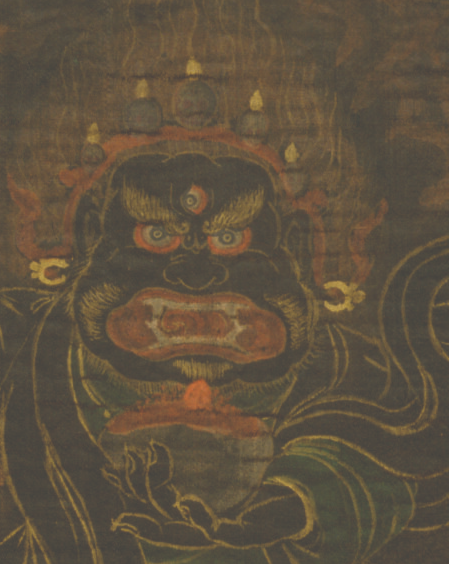
Highlighted by gold and fiery red pigments, Panjarnatha Mahakala appears to be seated in a royal ease stance, surrounded by a mandala of wild flames. Additionally, Panjarnatha Mahakala has bulging eyes and a toothy grin, a typical characteristic artists often use to depict wrathful deities. Other stylistic attributes include a crown of five dry human skulls, bone and snake adornments, and a ‘Ghandi’ stick held across the body. If you look closely, Panjarnatha Mahakala looks to be sitting on top of a corpse, a symbol of their power. Surrounding the central figure appear to be other wrathful deities, looking down at Panjarnatha Mahakala or towards each other.

Interestingly, Panjarnatha Mahakala’s hands are in the gesture of Tantric unity, an emblem of embrace and consort that symbolizes the unity of wisdom and method. In this sense, it becomes evident that Panjarnatha Mahakala’s wrath comes down to the purpose of guiding and defending their followers. In this sense, it is easy to cast Mahakala as a violent character at first glance. Yet, when exploring the vengeful iconographic elements of Makhala, it becomes apparent that the deity personifies nuanced benevolence. Through adornment with terrifying features, Mahakala can protect people from their worst traits and fears.  

Wrathful deities are presentations of the intersection between art and religion and fuse violent characteristics with Tantric manifestations to foster peace and control. Rivaled with classic creatures of Halloween, they are precisely the opposite. 

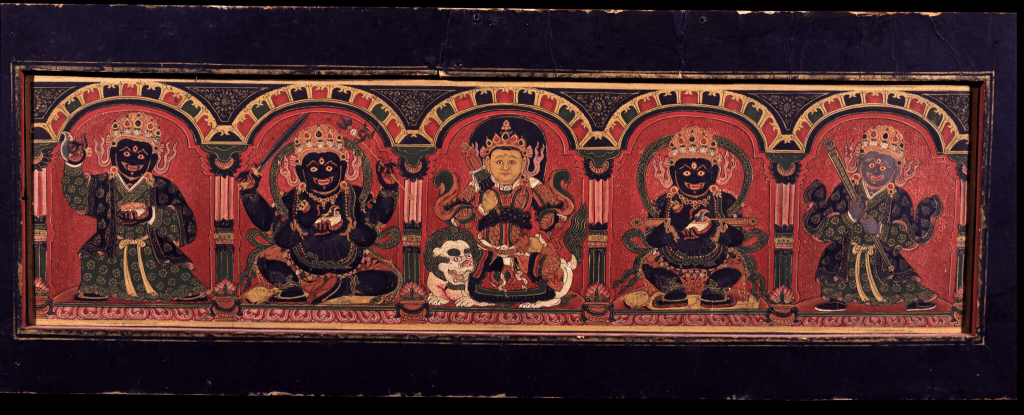
Illuminated Manuscript Page Depicting Four Forms of Mahakala and Vaishravana, (China, 17th century), pigments on paper, © Rubin Museum of Art.

Sources

Geoffrey C. Goble, “Chinese and Tibetan Esoteric Buddhism, ed. by Yael Bentor and Meir Shahar (review)” Journal of Chinese Religions, 46.1 (2018), 71-73.

‌For the Hevajra Tantra, see http://www.tibetanbuddhistencyclopedia.com/en/index.php?title=Hevajra_Tantra accessed October 29, 2023.

Categories
Podcast Archive

Art in Focus: “Landscape of Memory” with Professors Kristin Peterson and Renée Pastel

The McMullen Student Ambassadors are pleased to present Art in Focus, featuring an informal discussion between professors from various academic departments at Boston College. With each new episode, we aim to uncover a unique perspective on the works on display, informed by research and methodologies in areas of study across the University. Each conversation will bring the exhibition’s works “into focus” to highlight art’s expansive reach and interdisciplinary nature.

The following podcast is the second installment in the Art in Focus series, where we explore different themes and artwork from the “Landscape of Memory: Seven Installations from the Barjeel Art Foundation (Sharjah, UAE)” exhibition. For this episode, we have invited two Assistant Professors of Boston College’s Communication Department, Renée Pastel and Kristin Peterson. Together, they discuss Arab culture and the ways the artists in the exhibition are able to express diasporic and displaced memories in their installations.

Sadik Kwaish Alfraji (Baghdad, Iraq, 1960–), The House My Father Built, 2010 © Image courtesy of Barjeel Art Foundation, Sharjah; Marwa Arsanios (Washington, DC, 1978–), All about Acapulco, 2010–11© Image courtesy of Barjeel Art Foundation, Sharjah.

Categories
Podcast Archive

Art in Focus: “Landscape of Memory” with Professors Elitsa Molles and Maheen Haider

The McMullen Student Ambassadors are pleased to present Art in Focus, featuring an informal discussion between professors from various academic departments at Boston College. With each new episode, we aim to uncover a unique perspective on the works on display, informed by research and methodologies in areas of study across the University. Each conversation will bring the exhibition’s works “into focus” to highlight art’s expansive reach and interdisciplinary nature.

The following podcast is the first installment in the Art in Focus series, where we explore different themes and artwork from the “Landscape of Memory: Seven Installations from the Barjeel Art Foundation (Sharjah, UAE)” exhibition. For this episode, we have invited Boston College Assitant Professor of International Studies and Political Science Elitsa Molles and her colleague Assistant Professor Maheen Haider of the University of Massachusetts Lowell’s Sociology Department to discuss two artworks within the exhibition to offer unique insights into the experiences of refugees, asylum seekers, and immigrants. 

Sadik Kwaish Alfraji (Baghdad, Iraq, 1960–), The House My Father Built, 2010 © Image courtesy of Barjeel Art Foundation, Sharjah.
Mona Hatoum (Beirut, Lebanon, 1952–), Plotting Table, 1998 © Image courtesy of Barjeel Art Foundation, Sharjah.
Categories
Podcast Archive

Art in Focus: “Martin Parr” with Professors Greer Muldowney and Asher Anderson

The McMullen Student Ambassadors are pleased to present Art in Focus, featuring an informal discussion between professors from various academic departments at Boston College. With each new episode, we aim to uncover a unique perspective on the works on display, informed by research and methodologies in areas of study across the University. In addition, each conversation will bring the exhibition’s works “into focus” to highlight art’s expansive reach and interdisciplinary nature.

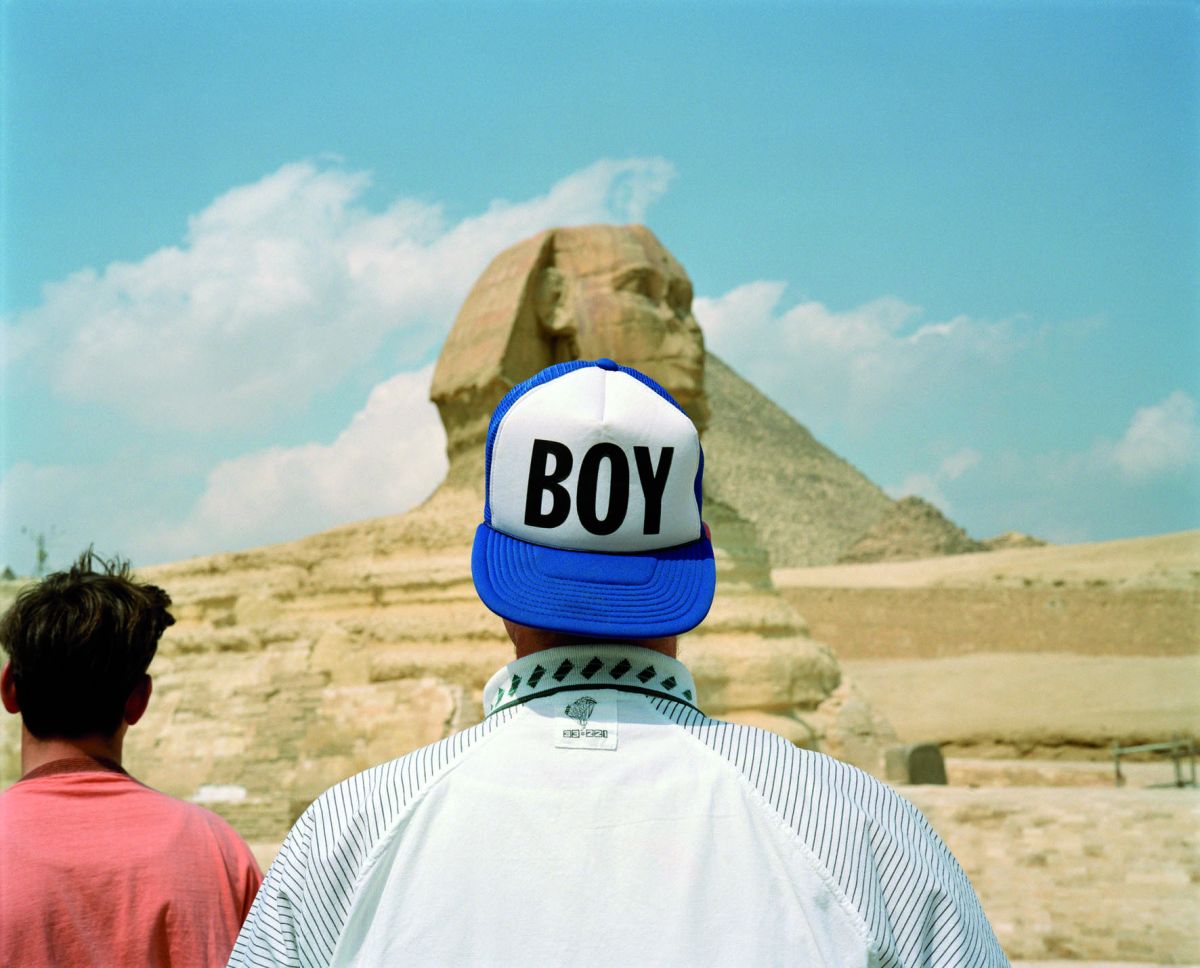
The following podcast is the third installment in the Art in Focus series, where we explore different photographs and themes from the Martin Parr: Time and Place exhibition. For this episode, we have invited Assistant Professors Greer Muldowney and Asher Anderson of the Art, Art History, and Film Department to discuss six photographs from Martin Parr’s ongoing series “Small World.” In these photographs, Parr offers a unique perspective and critique of our global world economy in the 80s and mid-90s through the tourist industry.

From top Left. The Acropolis, Athens, Greece, 1991; The Artificial Beach inside the Ocean Dome, Miyazaki, Japan, 1996; Basilica San Marco, Venice, Italy, 1989; The Great Sphinx, Giza, Egypt, 1992; Leaning Tower of Pisa, Italy, 1990; Kleine Scheidegg, Switzerland, 1990 © Martin Parr | Magnum Photos.

Categories
Problematic Visual Culture

What Artistic Depictions of Thanksgiving Get Wrong

By Liam Conner ’25

National American Indian Heritage Month, since its inception in 1990, celebrates the past and present histories of Indigenous peoples and honors Tribal sovereignty and self-determination. In an attempt to acknowledge the United States’ colonization of formerly Tribal lands, the month recognizes the evils of colonialism and its effects on how we perceive American identity.

Thanksgiving is a holiday that has become a staple for all the wrong reasons. The feast-focused celebration now features early-morning 5Ks, televised parades, football games, and boxed stuffing (albeit the best kind). In classroom retellings of the holiday, we learn that the Puritan Pilgrims peacefully ate alongside their Native American counterparts solely because they developed a friendly relationship. Unfortunately, many accounts fail to mention painful truths, like how the feast coincided with various wars and battles for land. The contextual and historical exclusion of the crucial facts of this story not only allows for these traditions to remain prominent but also disregards the toilsome reality of Thanksgiving and its colonial undertone.

One way to visualize American misconceptions around Thanksgiving lore is to engage critically with depictions of the holiday in art. From Thanksgiving’s earliest representations in the 1800s to the modern clipart we can download on our computers, incorrect retellings inform some of art’s most seminal pieces. 

George Henry Durrie (New Haven, Connecticut, June 6, 1820-1863) Home to Thanksgiving, 1867, hand-colored lithograph, 14 ⅝ X 25 in. co. Mr. and Mrs. Paul Mellon.

One of the first published renderings of Thanksgiving dates to 1867, four years after Abraham Lincoln codified the holiday as a national celebration. In George Henry Durrie’s “Home to Thanksgiving,” a snow-covered farm and its inhabitants greet their guests from the city. Rural tranquility marked with a jovial yet modest celebration demonstrates the escapist nature of the holiday. The idea of leaving a bustling city for the peaceful countryside still prevails today, as relatives convene in a typically calm and welcoming home situated away from the day-to-day. 

While perfectly describing the current nature of Thanksgiving, Durrie’s painting does not reflect its origins in history and conflict. The people in this scene celebrate the holiday that began in 1863, not the 1621 feast that the current holiday attempts to resemble. In no way, however, was the first Thanksgiving utterly peaceful. Instead, the feast most likely celebrated a recent massacre of about seven hundred Pequot Indians or the newly agreed-upon, yet quickly broken, peace treaty between the local Wampanoag Indians and the Pilgrims.1

Jean Leon Gerome Ferris (Philadelphia, Pennsylvania, August 8, 1863-1930) The First Thanksgiving, 1912 Oil on canvas.

Nearly fifty years later, Jean Leon Gerome Ferris’s painting “The First Thanksgiving” attempts to depict the holiday as dominated by the Pilgrims. They are postured above the Native Americans, standing up and feeding them as they sit on the ground. It is as though the Pilgrims were fully responsible for their bountiful harvests and societal advancement, leaving no thanks for the Natives, who were crucial to their survival.

Perhaps the most notable of these native guides is Squanto or Tisquantum.2 Tisquantum, a member of the Patuxet Tribe, was an English-speaking liaison between the Pilgrims in Plymouth and his own Tribe. His story is a prime example of how crucial facts are left out of the general public’s view of the holiday. Many people tend to disregard the question of how Tisquantum learned the culture and language of the English. Many years before, European colonizers captured Tisquantum and sold him into slavery. Because of this enslavement, Tisquantum spent years in England, forced to adapt to the language and ideas of his colonizers.

Norman Rockwell (New York, New York, February 3, 1894-1978) Freedom from Want, 1943. Oil on canvas, 45 3/4″ x 35 1/2″. Norman Rockwell Museum Collections.

A more contemporary look at Thanksgiving includes one of Norman Rockwell’s most famous pieces. “Freedom From Want,” part of a four-part series, displays a family sitting down to eat the Thanksgiving meal. Instead of gawking at the mouth-watering turkey, the family members smile at each other, grateful for their presence. They have no need for a bountiful meal; they just need each other.

Despite the wholesome and anti-materialist representation of this modern feast, the painting still disregards any historical context. The holiday may have signified familial love and gratitude, but that does not mean we should ignore its true and violent origins. Wars across the “new world” surrounded the time of the feast, making it nothing but cheerful. Therefore, depicting the holiday as strictly pleasant is wrong and misleading.

Before the colonization of the “new world,” there were approximately five million American Indians, but by 1800, this population had declined to only 600,000. European colonizers brought disease, quickly killing many Native peoples, yet the wars they waged were the most impactful.3 In a greedy search for land, colonizers decimated Native populations and enslaved the remaining survivors. As a result, Europeans and their colonial desires wiped many tribes completely out, one of them being the Massachusett, who resided on the very land that Boston College now inhabits. Because of this, a month of history is not enough, as many Native Americans call for reparations to begin amending the crimes of the colonizers.4

While these famous works of art certainly depict a widespread misunderstanding of Thanksgiving, there are even false and problematic pieces like these on Boston College’s campus. In Gasson Hall’s rotunda, there are four large paintings on the upper walls created by Francis Schroen, SJ. Two of them display colonizers and their interactions with the local Tribes. 

While attempting to praise these saints, these religious images blatantly show how European colonizers forced Christianity onto the Native Americans. In the first image, it seems as though the holy figure leads the Natives in search of more land. He uses his domineering religion to colonize another land that is not his own. Similarly, the second image depicts a religious ceremony happening right in front of the Natives’ eyes. Placed in the background, they watch from afar, and the painter shows them gazing in a state of awe. The painting inflates the importance of Christianity, deeming it superior to the religion of the Natives. Again, on land that is not their own, the colonizers celebrate divine providence and the false sense of manifest destiny.

It is striking to see these paintings within the halls of Boston College, as they display extremely problematic scenes of colonization. To praise these saints that clearly imposed themselves and their religion on the native population is seemingly against the values of our institution. Unfortunately, this example is not limited to the walls of our own university. Reminders of the incorrect retellings of Thanksgiving and the colonization of the “new world” riddle themselves throughout the United States. Depictions through art are just one of the many ways our modern world ignores the horrific actions of the European colonizers. If we continue to acknowledge these works as accurate, we will never be able to honor the true history of our nation. Instead, we must know that these depictions are wrong and educate ourselves to the greatest extent.

  1. For more of the history of Thanksgiving Day, see https://www.britannica.com/topic/Thanksgiving-Day, accessed 11/27/22. ↩︎
  2. For more on Tisquantum, see https://www.britannica.com/biography/Squanto, accessed 11/27/22. ↩︎
  3. For “The American Genocide of the Indians—Historical Facts and Real Evidence,” see https://www.fmprc.gov.cn/mfa_eng/wjdt_665385/2649_665393/202203/t20220302_10647120.html, accessed 11/27/22. ↩︎
  4. For “‘This is all stolen land’: Native Americans want more than California’s apology,” see https://www.theguardian.com/us-news/2019/jun/20/california-native-americans-governor-apology-reparations, accessed 11/27/22. ↩︎
Categories
Uncategorized

Massachusetts Independent Comic Expo Returns In Person

By Megan Streeter, Class of ‘24

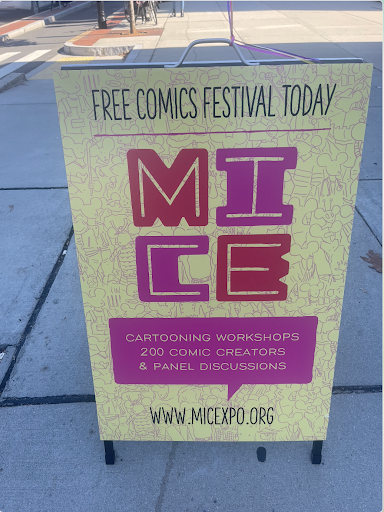
Few things can get me out of bed early on the weekend, but when I heard that Boston University would be hosting the Massachusetts Independent Comics Expo (MICE), I set multiple alarms. MICE has been bringing comic artists and fans together for 13 years, but this is the convention’s first meeting in person since the onset of the COVID-19 pandemic, as well as BU’s first time acting as host. Stepping off the T on a chilly Saturday, unneeded pointed me toward an endless stream of students, adults, and parents with children in tow towards the Thurman Center, known as the “cultural hub” of Boston University.

Over two days of operation from October 22-23, MICE artists, writers, and publishers in the independent comics world spoke on panels, and led hands-on workshops on everything from character design and lettering to printing. All sessions were free of charge, making the event economically accessible. One of the panels I attended was titled “(Not-So) Funny Animal Comics.” Tak Toyoshima moderated the panel, which hosted four contemporary comics artists whose works feature “delightful and off-beat animal stories.” The roundtable discussion began with a short history of animal characters in comics, from early 1900s newspaper strips to Art Spiegelman’s 1980 graphic novel Maus, pages of which the McMullen Museum’s American Alternative Comics exhibition currently feature. Then, as the title suggests, the panel discussed both the funny and the not-so-funny, examining animal characters in comics as vehicles both for comedy and social commentary. 

MICE’s biggest draw was, arguably, its vendor hall. The hall gives space to hundreds of independent artists with a wide range of styles, subjects, and notoriety. Boston College senior Michal Miller said of her experience at MICE: “As I walked onto the convention floor, I was initially shocked by the number of artists in attendance and even more appalled when the first person I spotted was an author I’d met years earlier (at another convention) in New York City!” 

Included in the mix was a storyboard artist from Cartoon Network’s Adventure Time, Boston University students displaying their works, and independent artists from all over the east coast. “Every single vendor there was so incredibly passionate about their work, and so much of it was incredibly strange and avant-garde and unique,” said Boston College junior Tommy Chen. The vendors sold not only comics but posters, prints, stickers, pins, even tabletop games of their own devising, and much more.While they have yet to set a date for 2023, you can learn more about MICE on their website and join their newsletter to receive updates. Can’t get enough of indie and alternative comics? Even if you missed MICE, you can still get a healthy dose of indie and alternative comics at the McMullen Museum’s American Alternative Comics exhibition, which will be open for the rest of the semester.

Categories
Artists Across Comm Ave

Artists Across Comm Ave: Katie Garrett

Artists Across Comm Ave is a series that spotlights student artists at Boston College (across Commonwealth Avenue). The social media installments of this series can be found on the McMullen Museum’s Instagram and Facebook pages.

By Michaela Brant, class of ’23

Boston College senior Katie Garrett does more than study economics; she is also an avid sewer since childhood. She learned from her grandmother in California, who gave her a sewing machine, and believes that everyone should know the skill.

Katie’s love of sewing began with tailoring and mending clothes (although her very first creations were pencil pouches as valentines for her class—which she said were not long enough to fit pencils). If she got a hand-me-down or thrifted a piece of clothing that fit less than perfect, it did not mean it was trash. It just meant she had to make it her own. 

“That was my first love with sewing, was taking stuff in or making something a little shorter,” she said. “I didn’t really start to get into making clothes from scratch until probably the past two years. It felt like something I was never going to be able to do, but I think as you get into a hobby like that, it kind of takes over, and you’re like, ‘Totally, I could try this out.’” 

Traveling back and forth from California to Boston College every couple of months meant that Katie had to leave her sewing machine at home. At first, she found that sewing machines on campus were only available to students who had a connection to the Theatre Department’s costume operations. She needed another option if she wanted to keep sewing. 

Meanwhile, the Boston College Design and Innovation department sought to bring more design thinking to campus. So in the summer of 2021, the department installed a makerspace where students could use equipment (including sewing machines) to do their own projects in the basement of Higgins Hall, the home of several BC science departments and classes. Spending time down there, Katie realized she wanted to bring her passion for sewing to the rest of BC. Once the makerspace, renamed The Hatchery, moved to BC’s newest academic building at 245 Beacon Street, Katie saw her chance. The idea for Patches, a sewing and upcycling club, was born.

Starting a club on campus is not as simple as grabbing your friends and booking a room—it requires a process that includes meeting with the Board of Student Organizations (BSO), proving there is a need for the organization, and documenting interest. Because STITCH, a club of crafters primarily focused on knitting and crocheting, was deemed too similar to her idea for a sewing club, the BSO rejected her first application proposal sophomore year. Rather than let that derail her, she decided to reapply the following year and get creative in proving that students wanted and needed Patches on campus.

At the annual Boston College Arts Festival in April, not-yet-official Patches set up a booth to sell clothing and collect interested students’ emails. By the end of the day, they had sold almost all of their clothing and had a lengthy list of interested students’ emails. 

In the fall, once Patches was an official club, Katie tabled at the student involvement fair, gaining even more interested participants. The first general interest meeting, she said, drew about 60 people, even though it was at 9:00 pm on a rainy Monday night. 

Patches uses the sewing machines in The Hatchery for sewing meetings, meaning members need to take the safety orientation, then complete a sewing machine training. Katie is among the group of student workers at The Hatchery who leads training and helps people out during open hours. 

The hardest part of teaching people to sew, she said, is that they underestimate their skill level. She compared learning to sew to driving a car or following a recipe—once you get the hang of it, it feels natural.

Making clothes from scratch and upcycling, while it may seem small, is a way for Katie to resist the fast fashion industry and overconsumption. Textile waste is a vast pollutant worldwide. The EPA estimated in 2018 that the United States created 17 million tons of textile waste.

“My ability to sew is something I’m really grateful for,” she said, “because it allows me to be sustainable in a way that a lot of people don’t have the ability to be.”

Upcycling clothing is one way to divert textile waste from landfills or already overrun thrift stores. “It allows me to be more thoughtful about the ways that I consume,” said Katie, “which I just try to take advantage of.”

As an economics major, Katie hopes to work to regulate banks and financial technology companies in the future. Although she does not see sewing playing a role in her career, she knows she will be sewing for the rest of her life. 

Although the arts scene at Boston College can sometimes appear limited to traditionally popular forms, like music, theatre, dance, and visual arts, Katie and Patches are helping create artistic spaces for anyone interested. 

“People who do art, or who want to do art, or like art, give you that respect and encouragement, like, ‘No, that’s cool, you should keep doing it,’” she said. “And I feel like meeting people like that here, even though I wasn’t still sewing [as often], encouraged me to…sew now more than I ever have in my life.”

Categories
Into the Collection

Into the Collection Spotlight

Joseph Stapleton (1921-1994) Thinking of Duke Ellington, 1979 India ink on paper, 17 x 14 in.

By Liam Conner, class of ’25

Joseph Stapleton was one of the many artists who populated New York City following the wars of the early 20th century. As a member of Abstract Expressionism’s “second generation,” Stapleton and others were heavily influenced by international culture, social movements, and artistic creativity. As shown in Stapleton’s Thinking of Duke Ellington, the seemingly spontaneous and erratic brush strokes combined with what seems to be text throughout the border work to create a portrait of Duke Ellington like none other. Painted approximately five years after The Duke’s death, the work expresses his longstanding legacy through its aberration from form. Ellington’s music throughout his career was revolutionary, and this image articulates that with its quick and almost swing-like strokes that hop around the canvas. Heavily influenced by Japanese calligraphy, Stapleton unconventionally incorporates themes from throughout the world in the same way that Duke Ellington wrote music with Latin and European cultures in mind. Stapleton’s interpretation of the great composer in Thinking of Duke Ellington provides a look not only at his own era but also at the impact of Duke Ellington and his legacy on the greater artistic community.

Sources:

Duke Ellington: American Musician. See https://www.britannica.com/biography/Duke-Ellington#ref344119. Accessed 9/23/2022.

New in Artstor—Nearly 300 Self-portraits by Joseph Stapleton: A Unique Offering from a Second Generation Abstract Expressionist. See https://www.artstor.org/2019/11/05/new-in-artstor-nearly-300-self-portraits-by-joseph-stapleton/. Accessed 9/23/2022.

Categories
Uncategorized

Letter from the Co-Editor: Signing Off

Dear McMullen Community,

I am beyond grateful to have served as a Student Ambassador, member of the  Education and EDIA+ (Equity, Diversity, Inclusion, and Accessibility) committees, and co-chair of the Publications Committee over the past two years. I started working during the pandemic and have had the opportunity to witness the McMullen grow and adapt to the challenges of our society, including the struggle for racial justice. Additionally, I have been able to experience several exhibits, such as Indian Ocean Current: Six Artistic Narratives and Taking Shape: Abstractions from the Arab World, 1950s – 1980s. The exhibits have introduced me to different forms of art from around the world and have made me think more critically. 

The McMullen is a place that has enriched me intellectually and personally. I have met some of the most passionate, creative, and kind people, and I am blessed to have many of them as not only colleagues but friends. In addition, I have had the opportunity to work with other McMullen Ambassadors, host workshops, and implement my own ideas through collaborations with student organizations that I belonged to, such as FACES, the anti-racism organization, and BC Bigs. From the good-humored security guards to our amazing supervisor Rachel, the McMullen has fostered a welcoming and intellectually-stimulating environment that provided me with skills that I will use in future academic and professional pursuits. 

Being a co-chair and member of the Publications Committee, the Terrace provided fellow Student Ambassadors and me with an outlet to critically analyze art, its nuances, and its role in our society. Through articles such as “Religious Art: Buddha is not Home Decor” and “Art as Resistance: Murals at the U.S. – Mexico Border,” I have recognized the role of art beyond something aesthetically pleasing and as a powerful tool for both social change and oppression. The publications team has engaged further in the idea of art as a tool of oppression through our series called “Problematic Visual Culture,” which discusses pieces of visual culture that perpetuate stereotypes and other forms of discrimination. We also ask questions about the ethics of how museums operate in the article “Museums and Ethics: A Series of Question.” I am grateful to have been a part of a platform that has encouraged critical thinking, new perspectives, and the inclusion of marginalized groups. Through the Terrace, the McMullen has been able to connect with issues facing communities beyond BC and uncover how important art is in the world.    

I will definitely be visiting the Terrace website in the future, but as a reader rather than a writer, and I am beyond excited to see the fantastic work of all the Student Ambassadors to come. Working here has been an amazing experience, and while it is sad to say goodbye, I am so excited to pass the Terrace over to the committee’s returning co-chair: Michaela Brant (‘23), and new co-chair Joy Cheng (‘23). 

Sincerely, 

Ivana Wijedasa ‘22

Categories
Uncategorized

Art as Resistance: Murals at the U.S. – Mexico Border

By Ivana Wijedasa, class of ‘22

During my senior year spring break, I visited a beach not part of a resort in Cancún filled with stressed college students in need of a vacation, but one lined by a wall – the U.S. – Mexico border wall. Although it would be my last college spring break, I couldn’t pass up the opportunity to physically see the borderlands instead of solely reading about them in academic courses. Thus, I decided to spend the week on an educational trip to visit the border in San Diego and Tijuana as part of a course titled “Interdisciplinary Approaches to Borderlands and Human Mobility” taught by Professor Olayo-Méndez. The trip centered on utilizing different disciplines such as biology and theology to analyze and address issues at the border. In the case of art, the trip focused on paintings and murals, and how artists can use them as a tool of resistance against discriminatory migration policies at the border.

A place in San Diego that featured art from Chicanos—Mexican-Americans—in response to harsh migration policies and dehumanizing rhetoric towards migrants is Chicano Park. Immediately, the complexity and number of murals throughout the park overwhelmed me, and I stood in front of each mural for several minutes, admiring the mix of faces and phrases. A central theme of the murals focused on the injustice of migration policies, and I felt both sadness and frustration at the lack of humanity ascribed to migrants as I walked around the park. In the mural with many crosses, phrases such as “Love has no borders!” and “No border wall” are visible. The mural draws connections between religion and migrant rights. The presence of several crosses signifies how Christianity promotes a love for one’s neighbor, which the U.S. government obstructed with the construction of a border wall.

Photo from Chicano Park of a mural saying “Love has no borders!” and “No Border Wall” painted on a bridge pillar

In another mural photographed below, one artist painted on a pier under a bridge with the phrase “La tierra es de quien la trabaja con sus propias manos,” which roughly translates as “The land belongs to those who work it with their own hands.” There are images of migrant workers in the same mural, which illustrates how jobs tilling and farming the ground in America are often done by migrants who cross the border and should be allowed to remain on the land they work. Lastly, another mural in the park pictured below contains the phrase “Ningun ser humano es ilegal,” meaning “No human being is illegal.” The mural addresses the rhetoric surrounding Hispanic migrants at the border that describes them as “illegals” to dehumanize them and justify cruel migration policies. In addition to the murals in San Diego, more paintings and murals are featured across the border in Tijuana, addressing similar issues of dehumanization and injustice.

Photo on the left from Chicano Park of a mural featuring migrant workers painted on a pier. Photo on the right of a mural from Chicano Park saying “Ningun ser humano es ilegal.”

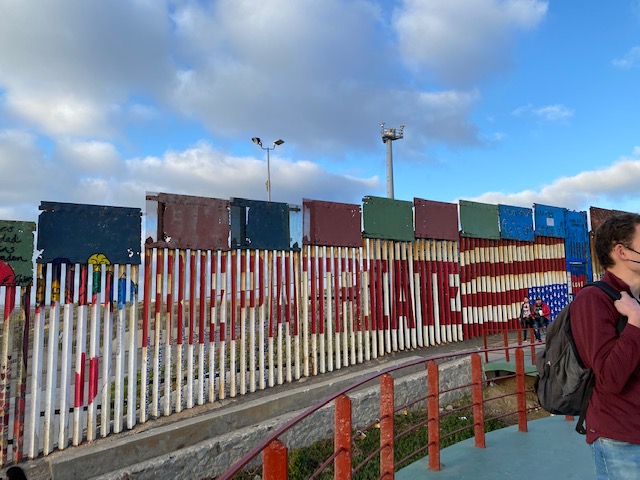
When we crossed the border to Tijuana, the colorful and mural-filled border wall on the Tijuana side surprised me. A wall that is a barrier to pursuing a better life and is constructed from racist and nationalist ideologies has become a form of art. In addition to the murals painted on it, the location of the wall also surprised me. In the photos below, the wall sits alongside a beach, where people frequently visit to spend leisure time under the rays of the sun. The wall is part of everyday life for the people of Tijuana, who cannot escape its presence even when trying to enjoy the beach. The dehumanizing wall is covered by paintings and phrases that advocate for migrants and address the injustice of the wall’s existence. For example, in the photo below, an upside-down American flag is painted alongside the phrase “Repatriate” as a reference to the deported veterans who served in the American military. The upside-down flag represents the hypocrisy of the U.S. government that permits undocumented migrants to serve in the military but not to live in the country.

Photo from Tijuana of the border wall on the beach in Friendship Park
Photo of the mural on the border wall with an upside-down American flag and the word “Repatriate”

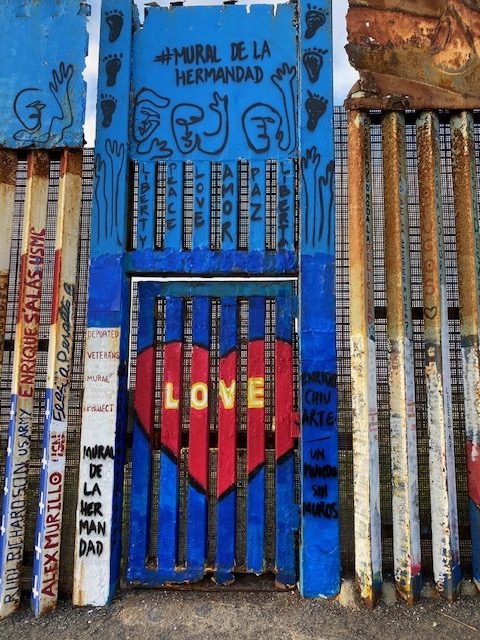
Another feature of the border wall pictured below is the blue door with the word “love” painted in yellow within a red heart. Surrounding the door are phrases such as “mural de la hermandad” or “brotherhood wall,” as well as words including “love,” “peace,” and “liberty.” The door itself, which the government rarely opens, allows families who have been torn apart by the immigration system to meet for a few minutes and for some to hug each other for the first time. The remainder of the wall meeting the ocean features portraits of deported migrants as a way to humanize and put a face to people often characterized by numbers. The border wall art and the art at Chicano Park serve as reminders of the humanity of migrants and the injustice they face due to U.S. migration policies.  

Photo of the Love door in the border wall in Tijuana

Although we often view art as a pastime or something enjoyed for leisure, art is also a powerful tool of social change. The murals at Chicano Park and on the border wall in Tijuana provide us with important examples and serve as a reminder of the humanity of migrants and the discriminatory policies that we need to combat to ensure migrants’ humanity is recognized. Art is a tool of resistance, and hopefully, more artists and people will begin to realize that.

Categories
Uncategorized

From the Seven Hills of Rome to Chestnut Hill: On the Trail of Boston College’s St. Michael Statue

By Michaela Brant, class of ‘23

Featured image by Éamon Laughlin, class of ’22

When awe-struck visitors and hustling students enter Gasson Hall, Boston College’s most iconic Gothic building, they pass through a rotunda adorned with oil paintings, and in the center stands a towering sculpture. St. Michael, triumphant in his struggle with Satan, raises his brass sword to smite the devil and send him to the underworld. The action-packed scene depicted by this statue would not be amiss  in a comic book. Motion is chiseled into the marble, transforming solid stone into fluid forms and lythe bodies straining against one another. The folds of Michael’s robe flowing behind him and the intricate decorations of Lucifer’s serpentine tail truly bring the marble to life. This important piece of Boston College and Gasson Hall history has a pathway that spans centuries and takes us from an artist’s studio in the heart of Rome to the parlors of Boston’s 19th-century elite, to right here in the Heights. 

Lucifer lays prone at Michael’s feet near vanquished, and he tries to raise himself upright, not yet defeated. You can almost hear Lucifer cry out a ferocious roar as he looks back at his assailant, face full of frustration and left fist clenched. He uses the other hand to steady himself as he prepares a retaliatory strike. Although a paradox, one cannot help but admire the demon for his stubbornness and refusal to stay down. The Archangel Michael stands victorious but takes no joy in his work. Their battle is not simple, but a civil war. Lucifer was once a powerful angel, and Michael casting him out represents a conflict between former allies and friends. The artist’s masterful carving inserts the emotion and gravitas of this conflict and forces the viewer to reckon with this struggle for the fate of heaven and earth. As one gazes down from the towering Michael to the foundation of the statue, the decorations forming the base are equally impressive. Three sides of the base feature intricately carved scenes of St. Michael. When he carries Moses’s body to heaven, drives away a demon from Moses’ dead body, and he meets and blesses the prophet Daniel in the Tigris River. After one stops and absorbs this majestic sight, it conjures more questions—who made this work? What inspired it? And how did it get here?

Scipione Tadolini

The iconography of St. Michael remains a constant in the Catholic tradition of statuary. It is, therefore, unsurprising that the statue’s creator, Scipione Tadolini, was commissioned to bring this favorite biblical story to life. Tadolini, a middle-class sculptor based in Rome, lived from 1822 until 1893 and came from a family of artists. His mother, Serafina Passamonti Tadolini, painted miniatures. His father, Adamo Tadolini, was also a sculptor and a favorite assistant of the great Neoclassical, Venetian-born artist Antonio Canova. Canova helped Adamo establish his own studio, where he trained his sons, and which Scipione took over upon Adamo’s death. Four generations of Tadolinis worked in this historic Rome street studio until it closed in the 1960s. The studio is now home to the Canova-Tadolini museum and café, where patrons can sip on chianti and dine on fresh-made pasta, all the while admiring beautiful marble sculptures. 

There is not much recorded information about the life of Tadolini himself, but what we have gathered focuses mainly on his art. From looking at his pieces over the years, it is clear that white marble was Tadolini’s material of choice. Tadolini studied at the Accademia in Rome and then gained recognition for his sculptures from prominent institutions in Italy and beyond. He created several portraits and ecclesiastical sculptures for Roman churches and sculpted an equestrian statue of Simon Bolivar for the city of Lima, Peru. He also was well known for his figure sculptures, and in the early 1850s, he gained notoriety for making several marble works from the same model, La schiava greca (The Greek Slave)

Photo courtesy of Richard Redding Antiques Ltd., richardreddingantiques.com 

The Statue’s Path

The life of Gardner Brewer, the statue’s patron, began in Boston in 1806. Brewer came to be one of the wealthiest merchants in Boston, following in the footsteps of his father, Thomas Brewer. He worked as a distiller and then became involved in the dry-goods trade, founding the house of Gardner Brewer & Co. Through this dry-goods business, Brewer accumulated a fortune estimated at several million dollars by the time of his death. With such a substantial fortune, the Brewers were eclectic collectors of art. They filled their home with American pottery, European decorative art, Etruscan gems, Japanese screens, oriental jade, and rare jewelry from France and India. The Brewer family bequeathed most of this collection of worldly art to the Boston Museum of Fine Arts. Additionally, shortly before Brewer passed away in 1874, he gifted a beautiful fountain to the city of Boston. The Brewer Fountain now stands in the Boston Common and has been running since June 3, 1868.

In 1865, Brewer contacted Tadolini and asked him to convert his vision of St. Michael overcoming Satan into stone. Brewer paid $28,000 for the statue and insisted that Tadolini accompany it on its journey to America. Tadolini, always a perfectionist, took four years to complete the statue, which was one of his largest and most ambitious works. In 1869, Tadolini accompanied the statue across the Atlantic to Boston, where Brewer had the statue installed in the great hall of his Beacon Street Home. The city of Boston has since torn down his house at 29 Beacon Street to build an extension of the Massachusetts State House.Unfortunately, Brewer only had five years to enjoy the statue. After Brewer’s death, the St. Michael statue passed into the hands of an art dealer. It remained in storage for many years until an anonymous benefactor purchased it for Boston College in 1909 in the name of Charles Lane, S.J., who was a prefect of the Church of Immaculate Conception and minister of Boston College High School. The acquisition was announced in April 1909, and the statue arrived at Boston College soon after.

Image courtesy of O’Neill Library, Boston College

Gasson Hall: Traditions and Contexts

Gasson Hall is both the center of and backdrop for many highlights of BC life. Several rooms in Gasson Hall bring students together for academic and extracurricular events. Gasson 305, the home of the Fulton Debate Society, is both a classroom and a mini auditorium. A list of debate winners since 1890 adorns one wall, and the spirit of both learning and performance continues outside of the classroom—the same room is the site of panel discussions and comedy shows. Closer to the St. Michael statue, Gasson 100, or “the Irish room,” hosts guest speakers, chamber music concerts, and student admissions programming.

Not only does Gasson Hall play host to a multitude of BC traditions, but the shaded Linden Lane that leads up to the hall is also one of the most Instagrammed locations in the country. Visitors and graduates pose for photographs framed by lush trees in front of the bronze eagle sculpture with Gasson’s gothic spires in the background. Students snap photos walking to and from class in sunshine and snow alike. Freshman process down Linden Lane for “first flight,” and seniors process the opposite way for commencement. Boston College students cherish Gasson Hall and the memories it gives to them. And the St. Michael statue stands just beyond the doors, a silent witness to it all. 

A Boston College Stylus article from April 1909 describes the newly acquired St. Michael statue as “a great gift to Boston College.” Since then, Boston College has undergone many changes—not the least of which are admitting women and people of color. The university continues to evolve academically, with adding an engineering department and the Schiller Institute of Integrated Science and Society, and socially, with students pushing for increased resources for marginalized communities. No matter how the school has changed, the beautiful art and architecture have made Boston College Boston College, one of the nation’s most beautiful campuses and a place that people associate with service and commitment to Jesuit values. Today, the St. Michael statue resides in a space that continues to give to Boston College students—memories, traditions, and hopefully, a place to call home. 

Acknowledgments

Thank you to all the student ambassadors at the McMullen Museum of Art who played a role in the process of writing and researching this article: Chris Rizzo, Ivana Wijedasa, Matthew DiBenedetto, Adrianna Zhao, Zoey Zheng, and Ethan Starr. Thank you also to Rachel Brody and Emily Coello for their guidance and editing.

References

The Answer Wall. “What Does the Gasson Hall Mean to BC Students?” Boston College Libraries, July 30, 2018. https://library.bc.edu/answerwall/2018/07/30/what-does-the-gasson-hall-mean-to-bc-students/. Accessed 3/7/2022.

Andreozzi, Brenna. “The Magnificent Site on Commonwealth Avenue: Father Gasson’s Bell Tower Brings Boston College to New Heights.” John J. Burns Library’s Blog, October 19, 2015. https://johnjburnslibrary.wordpress.com/2015/10/19/the-magnificent-site-on-commonwealth-avenue-father-gassons-bell-tower-brings-boston-college-to-new-heights/. Accessed 3/7/2022.

Nisbet, Gary. “Scipione Tadolini (1822-92).” Glasgow – City of Sculpture, see http://www.glasgowsculpture.com/pg_biography.php?sub=tadolini_s. Accessed 2/1/2022.

Christie’s. “The Opulent Eye – 19th Century Furniture, Sculpture, Works of Art, Ceramics & Carpets.” Live Auction 12029 [2016]. Scipione Tadolini (Italian 1822-1892/3) La schiava greca (The Greek Slave), see https://www.christies.com/en/lot/lot-6001605. Accessed 2/1/2022.

Richard Redding Antiques Ltd. “Sold Objects.” A Classical Statue of The Greek Slave or La schiava greca by Scipione Tadolini, Rome, dated 1860,” see https://www.richardreddingantiques.com/sold/9527/. Accessed 2/1/2022.

Willard, Ashton Rollins. History of Modern Italian Art. United Kingdom: Longmans, Green, 1900. https://www.google.com/books/edition/History_of_Modern_Italian_Art/oZdGAAAAMAAJ?hl=en&gbpv=1. Accessed 3/7/2022.

“Changes Among Boston Jesuits” The Sacred Heart Review, Volume 59, Number 30. July 27, 1918. https://newspapers.bc.edu/?a=d&d=BOSTONSH19180727-01.2.11&e=——-en-20–1–txt-txIN——-. Accessed 3/7/2022.

YouFine Art and Sculpture. “Ornaments of Scipione Tadolini Outdoor Garden White Marble Life Size Statue for Sale-MOKK-231,” see https://www.cnstatue.com/ornaments-of-scipione-tadolini-outdoor-garden-white-marble-life-size-statue-for-sale-mokk-231.html. Accessed 3/7/2022.

Trainor, Tessa. “Gasson’s historical artwork under wraps.” The Heights, November 15, 2010. https://newspapers.bc.edu/?a=d&d=bcheights20101115-01.2.70&e=——-en-20–1–txt-txIN——. Accessed 3/7/2022.

Kelly, Joseph E. “A great art gift to Boston College.” The Stylus. April 1909. https://newspapers.bc.edu/?a=d&d=stylus19090401-01.2.2&e=——-en-20–1–txt-txIN——-. Accessed 3/7/2022.

Categories
Podcast Archive

Art in Focus: “Martin Parr” with Professors Monsignor Liam Bergin and Joshua Snyder

The McMullen Student Ambassadors are pleased to present Art in Focus, featuring an informal discussion between professors from various academic departments at Boston College. With each new episode, we aim to uncover a unique perspective on the works on display, informed by research and methodologies in areas of study across the University. In addition, each conversation will bring the exhibition’s works “into focus” to highlight art’s expansive reach and interdisciplinary nature.

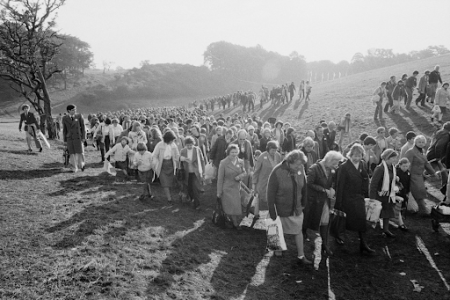
The following podcast is the second installment in the Art in Focus series, where we explore different photographs and themes from the Martin Parr: Time and Place exhibition. For this episode, we have invited Professors Monsignor Liam Bergin and Joshua Snyder of the Theology Department to discuss Catholicism in Ireland and how Martin Parr’s photograph “The Pope Gives Mass at Phoenix Park, Dublin,” documents Pope John II’s historic visit in 1979.

Categories
Podcast Archive

Art in Focus: “Aftermath” with Professors Mark Cooper and Jane Cassidy

The McMullen Student Ambassadors are pleased to present Art in Focus, featuring an informal discussion between professors from various academic departments at Boston College. With each new episode, we aim to uncover a unique perspective on the works on display, informed by research and methodologies in areas of study across the University. In addition, each conversation will bring the exhibition’s works “into focus” to highlight art’s expansive reach and interdisciplinary nature.

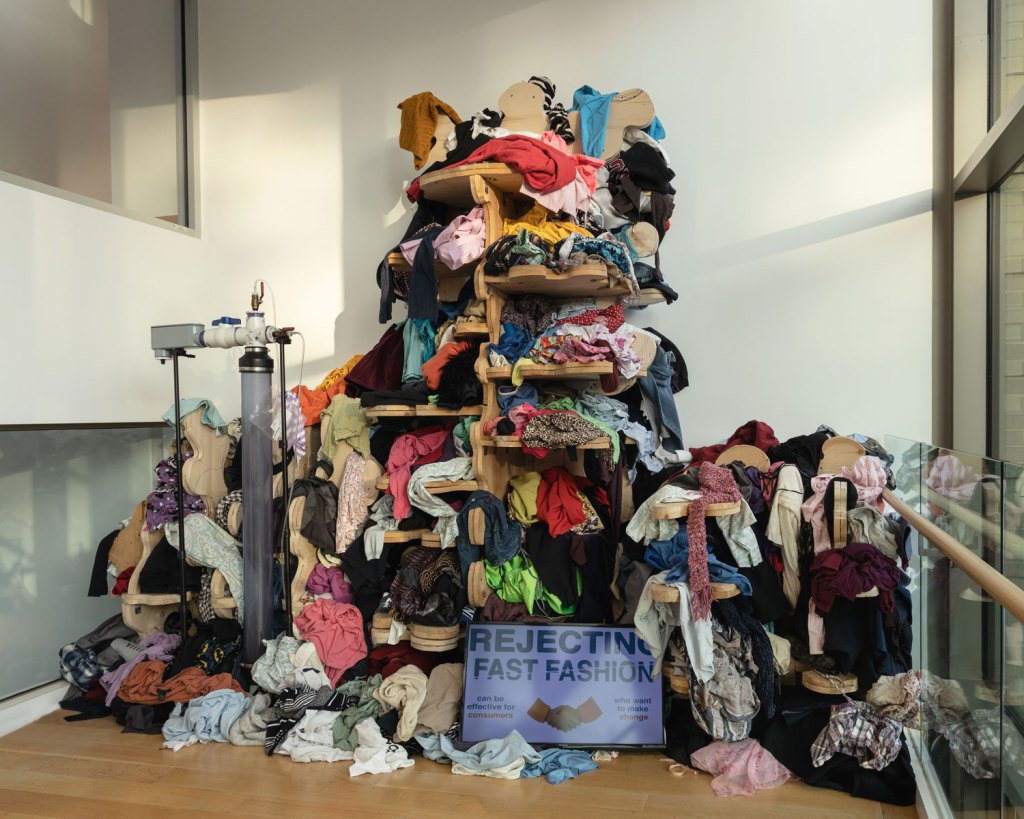
The following podcast is a special installment in the Art in Focus series, where Student Ambassador Christopher Rizzo interviews the co-artists who created Aftermath, an installation on view in the winter. For this episode, Professors Mark Cooper and Jane Cassidy of the Art, Art History, and Film Department discuss their roles as collaborators in the creation of Aftermath and how the piece offers a critique on “fast-fashion” and global economic trends based on throwaway consumption. 

Aftermath has now traveled on to the ACCelerate Creativity + Innovation Festival, where it will be exhibited at the Smithsonian Museum of American History in April 2022. 
Categories
Podcast Archive

Art in Focus: “Martin Parr” with Professors Robert Savage and Sean McGraw

The McMullen Student Ambassadors are pleased to present Art in Focus, featuring an informal discussion between professors from various academic departments at Boston College. With each new episode, we aim to uncover a unique perspective on the works on display, informed by research and methodologies in areas of study across the University. In addition, each conversation will bring the exhibition’s works “into focus” to highlight art’s expansive reach and interdisciplinary nature.

The following podcast is the first installment in the Art in Focus series, where we explore different photographs and themes from the Martin Parr: Time and Place exhibition. For this episode, we have invited Professor Robert Savage of the History Department and Visiting Professor Sean McGraw of the Political Science Department to discuss how Martin Parr’s photographs capture an Ireland in transition through history, politics, and culture.

St Mary’s Holy Well, Killargue, County Leitrim, 1981 © Martin Parr | Magnum Photos
Sandy Row Bonfire, Belfast, 2016 © Martin Parr | Magnum Photos

Categories
Uncategorized

Museums and Ethics: A Series of Questions

As part of our initiative to be more reflective on our role in upholding systems of oppression, we have compiled a list of questions from the Student Ambassadors and McMullen Museum staff addressing the intersection between museums and ethics. There is a lively debate over the ethics of museums and the pieces that they showcase, especially in the Western world, where many objects on display were stolen during periods of colonization. Additionally, museums often charge entry fees or offer membership privileges that limit access to art to only those who can afford it. Many museums participate in perpetuating racial and class divisions, but despite this, they also can combat them. The intersection of museums and ethics is a complicated topic that we do not have all the answers to; therefore, we hope to bring attention to this issue and spark conversation by gathering questions to reflect upon and consider as workers at the McMullen Museum. We encourage you to look at our questions below and join us in our reflection on the nuanced existence and operation of museums.

Questions: 

  1. How do countries that have colonized other countries deal with the return of artifacts or the politics of displaying art from the countries they colonized?
  2. What sort of representation do museums engage in (i.e., artists and the subject matter of works)? What is the value of this representation?
  3. Who are museums for? Is there a sort of elitism connected to museums? 
  4. Should museums display works of art that are problematic? 
  5. Is it ethical to have a fixed cost associated with entrance? (i.e., in London, you pay as much as you can, but in the U.S. can be upwards of $20 per person)
  6. How do museums decolonize their collecting, display, curatorial, and education practices?
  7. As public funding to museums decreases over time, how do museums balance the need to attract wealthy patrons with aims to make museum management more inclusive and equitable? 
  8. Does the mission and priorities of an academic museum like the McMullen Museum differ from public museums like the Museum of Fine Arts, Boston?
  9. Does the use of technology in exhibitions and programming encourage or hinder access?
  10. Should the McMullen Museum model itself as a temple for quiet reflection and reverence of art or a forum to discuss and debate what is displayed? Can it be both?
  11. Is spectacle inherent in museum exhibition practice? If so, does this compromise or hinder learning?
  12. Whose stories should museums tell? Whose values should they highlight? What objects deserve attention? And who decides?
  13. Do museums have a responsibility to enter the discourse on current affairs?
  14. Can museums be objective in their interpretation practices?
  15. What objects should be collected, and is it ever ethical to deaccession (remove from a collection to sell) objects?
Photo of the McMullen Museum of Art

Featured Image Credit: Tom Lobo-Brennan

Categories
Problematic Visual Culture

Problematic Visual Culture: Hair Removal Advertisements & Beauty Standards

By Joy Cheng, class of ‘23

Do you know where our beauty standard of the 21st century comes from and why we shave?  What we find attractive today is rooted in the advertisement boom of the 1950s. Along with the rise of fashion styles like short sleeves and bikinis, companies advertised hair removal products and perpetuated beauty standards of hair removal, especially for women.1 We should, therefore, be wary of the constant exposure and pressure from advertising agencies of profit-hungry companies that harmfully dictate shaving and hair removal trends.

When we think of advertisements, the words “visual culture” are not usually the first thing to pop into our minds. However, advertisements often are forms of visual culture—like paintings, photographs, or videos and it is through these mediums that advertisers can associate beauty and happiness with hair removal. When we see ads like the one below, we often compare ourselves with these models—desiring to be happy, proud, and feeling good about our bodies. We draw an interesting connection between being beautiful and shaving; “if I want to be just like that model, I should shave my body hair too!” As a result, we come to the conclusion that “if I want to shave my body hair, I’ll need to buy a razor.” In other words, advertisements are a form of visual culture that attempts to influence consumers’ actions in a way that leads them to purchase products. As a result, corporations promote hair removal, making products like razors a necessity to gain profits.

Pictured above is a 1978 magazine ad for the hair removal product Nair.

In the modern digital age, we are more exposed to advertising than ever before. Advertising is omnipresent, from billboards on the highway to Instagram ads to full-page spreads in newspapers and magazines. Sometimes advertisements are not evident at first glance—a shelf of sleek Gillette razors at CVS is a form of advertising too. With ‘winner of Allure’ or ‘best of 2021’ signs, our eyes are bound to pay attention to these catchphrases. Yet, most of the time, we do not realize how they influence our thoughts. With so much exposure to advertising, it is no wonder that we begin to internalize the messages they present. As we internalize messages about hair removal, we may perceive ourselves as ugly for having body hair—even though body hair is perfectly normal! The goal of advertising is to sell products and capitalize on both real and manufactured insecurities. By perpetuating beauty standards of hair removal, advertisers influence women’s self-perception in unhealthy ways by telling people that they need to shave in order to be beautiful.

Advertising taglines reveal explicit attempts to create beauty standards for hair removal. For example, one ad from the 1900s asks us, “are you going to permit unsightly hair on your face, arms, underarms, and limbs to spoil the freedom which awaits you at the beach?” while another reads, “summer dress and modern dancing combine to make necessary the removal of objectionable hair.”2 These ads are trying to generate shame about our body hair—it is something shameful that spoils our fun and how others perceive us. We see similar ideas in modern-day ads, like a Gillette Venus advertisement that states, “you’re a woman, shave like one,” implying that shaving is necessary for women.3 The message is consistent throughout decades—we need to eliminate body hair because it impedes us from being viewed as beautiful.

Gillette’s advertisement for Venus Embrace Razor in 2012.

Today, people are challenging the notion that we need to shave to be beautiful. Body hair is becoming more and more accepted as beautiful, and we see that some celebrities are confronting conventional beauty norms that mainstream culture imposes onto us. Julia Michaels, a singer, announced on Twitter that she is “not shaving [her] armpits ever again… social norms can eat an eggplant.”4Mo’Nique, a comedian, says, “I tried shaving one time, and it was uncomfortable and painful… I said never again would I do that to myself.”5 Beyond celebrities, we see public opinions moving towards body hair acceptance through movements like #Januhairy, a social media campaign encouraging women to grow their body hair for the month of January.

Left: Pictured above Mo’Nique showing off her unshaven legs at the Golden Globes in 2017. Photo courtesy of Getty Images. Right: Instagram account showing support for #Januhairy movement.

Beyond celebrities and popular sentiment, there are also emerging shaving companies that promote body hair acceptance. One such company is Billie, a razor company, which states that “what you do with [your hair] is up to you – grow it, get rid of it, or comb it.”6 Another company, Estrid, is running a “Super Hairoes” campaign to help women feel more comfortable about their body hair.7Although we could be cynical about the whole thing and claim that these companies are just trying to profit from public sentiment, it does do its part in bringing us to question certain status quos and their origins. Even though they sell hair removal products, they are not trying to generate insecurity about body hair and profit from it. Rather, they are trying to support consumers with their own choices about body hair. I think this is what we need—advertising that supports our body hair choices rather than enforcing uncomfortable beauty standards.

Categories
In Case You Missed It Museum Events

In Case You Missed It: Spring 2022 Lunar New Year Celebration

Photographs and captions prepared by Sunny Lee, class of ’22

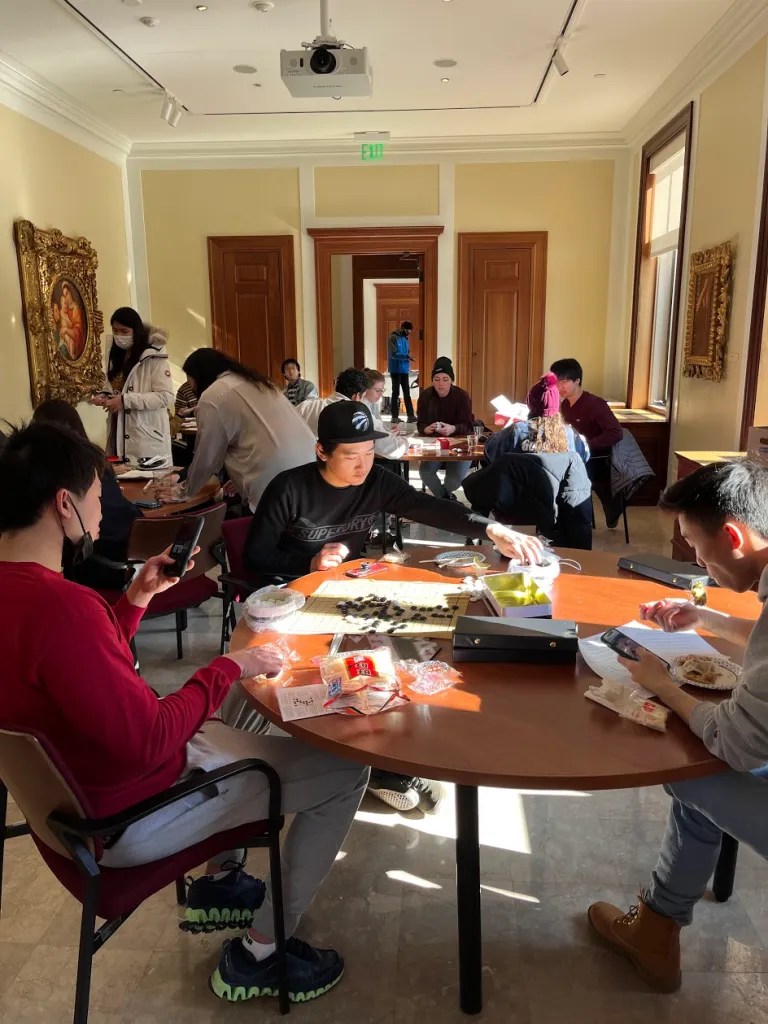
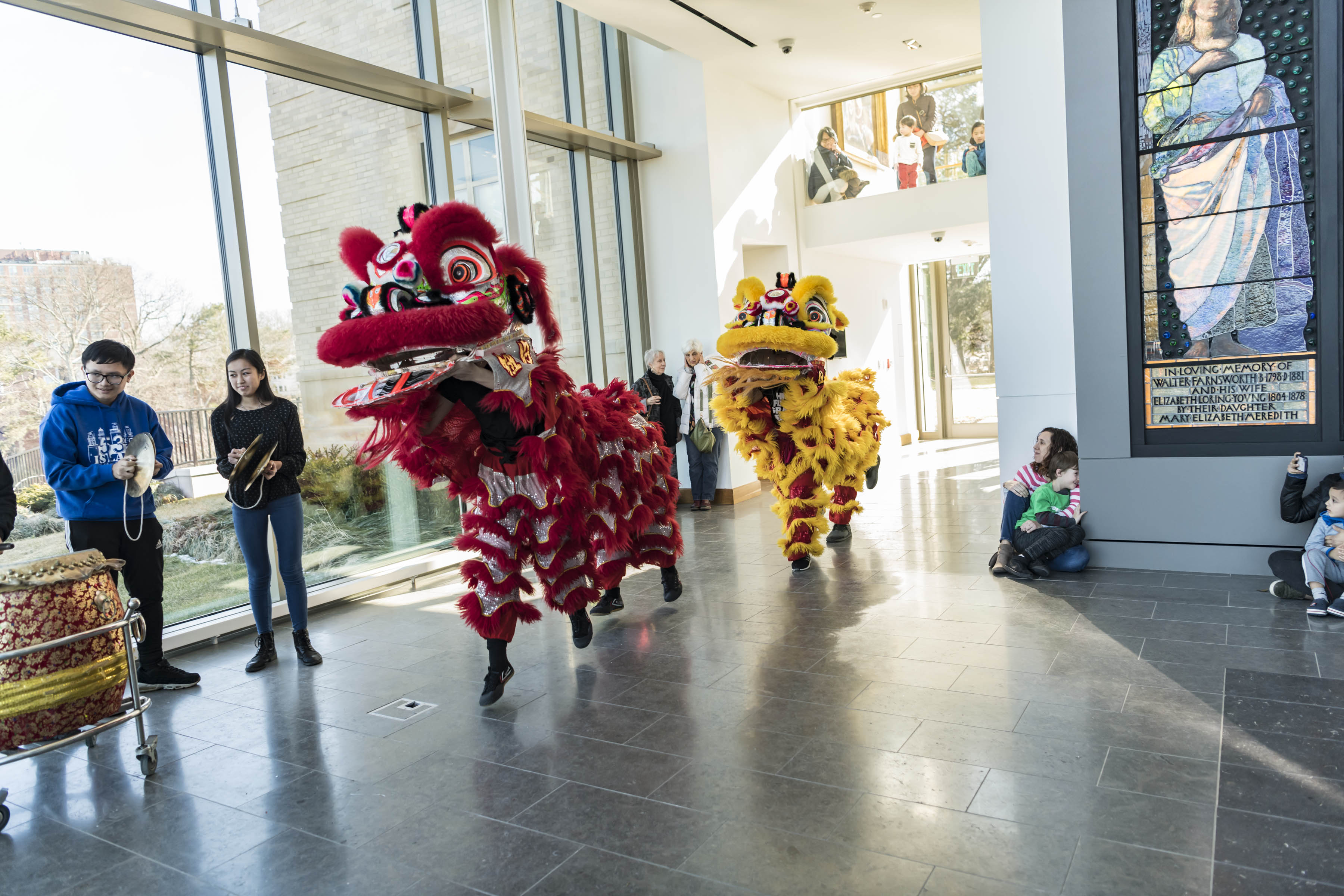
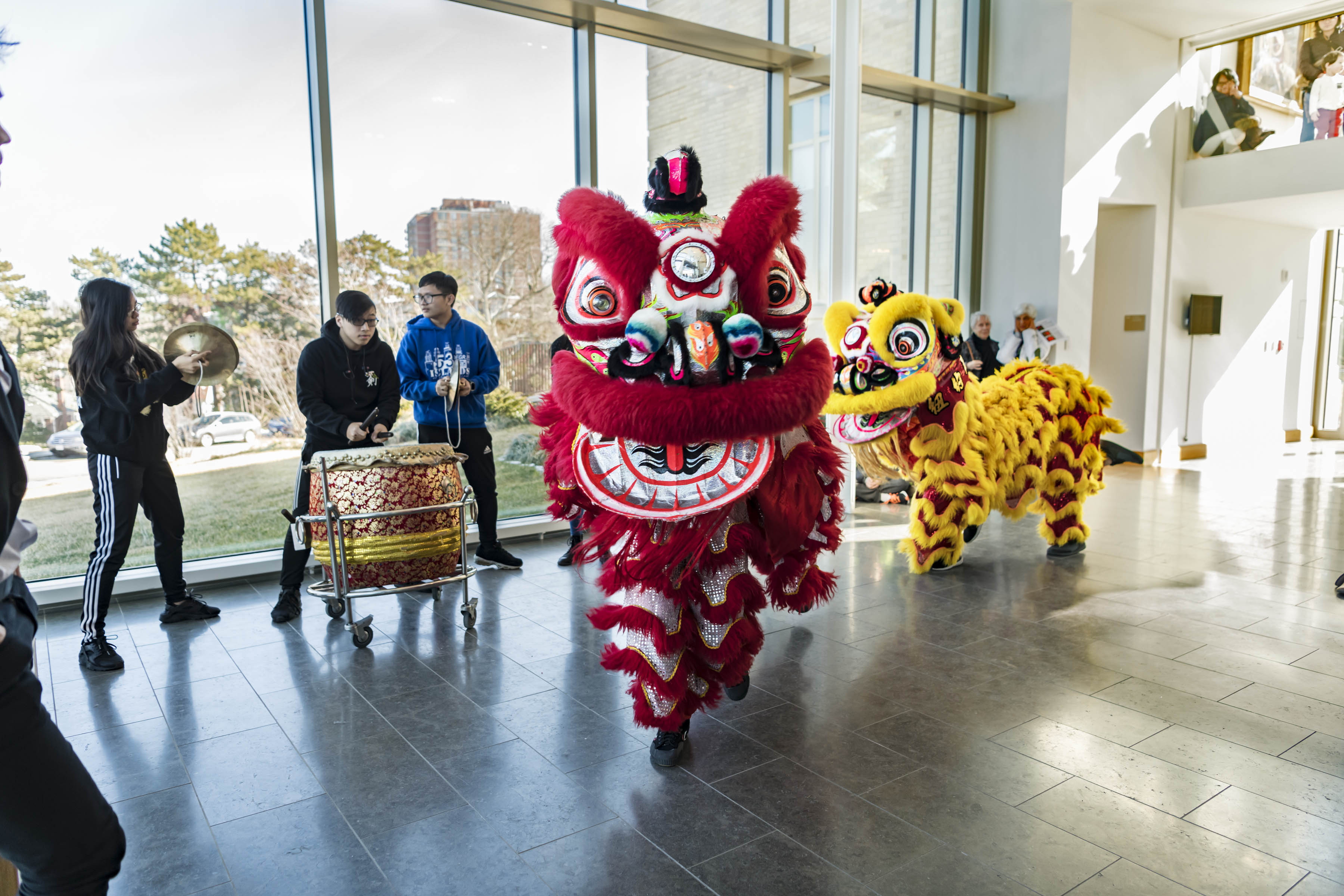
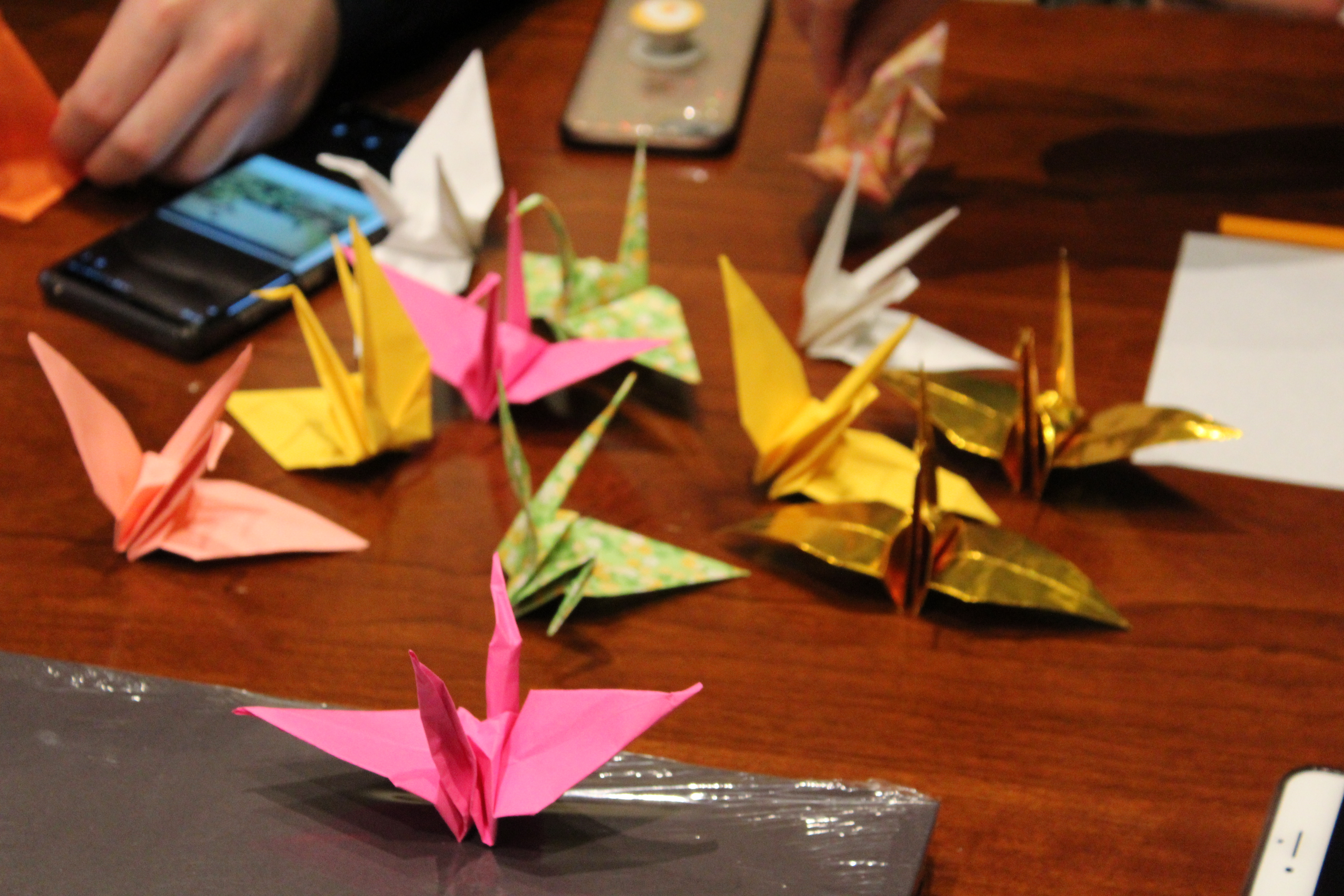
On Saturday, February 5th, 2022, the McMullen hosted a Lunar New Year event with Boston College’s Asian student organizations. This event was open to the public, and it was fabulous to see many students and members of the local community enjoying their time in the festive halls of the Museum. The Asian Caucus, Chinese Students Association, Korean Students Association, Taiwanese Cultural Organization, and the Vietnamese Student Association presented New Year’s food from various countries, games, and opportunities to make New Year’s decorations to celebrate Lunar New Year. The games played were Go, Mahjong, and Feilong. Additionally, attendees tried their hands at decorating red envelopes, fortune-telling, origami, and making Chinese lanterns and New Year’s knots. 

Board members of the Vietnamese Students Association (VSA) Gina Yoo and Vivienne Le smile for the camera while preparing to serve Vietnamese cuisine.

Left: The mouthwatering dumplings the Chinese Student Association (CSA) brought were a popular hit among the attendees. Right: The Taiwanese Culture Organization (TCO) brought delicious egg tarts and crackers that are popular staples at Asian supermarkets.

The button-making machines worked by McMullen Student Ambassadors allowed participants to create their own button pins.

Right: participants in the game room busied themselves with the various traditional Asian games provided, such as Mahjong and Go. Left: attendees used their artistry and dexterity in creating paper crafts such as a Chinese lantern ornament.

If you did not have the chance to catch our TikTok video on social media, you can watch it here!

Categories
Podcast Archive

Art in Focus: “Mariano” with Professors Oliver Wunsch and Kevin Lotery

The McMullen Student Ambassadors are pleased to present Art in Focus, featuring an informal discussion between professors from various academic departments at Boston College. With each new episode, we aim to uncover a unique perspective on the works on display, informed by research and methodologies in areas of study across the University. Each conversation will bring the exhibition’s works “into focus” to highlight art’s expansive reach and interdisciplinary nature.

The following podcast is the second installment of two in the Art in Focus series, where we explore different themes and artwork from the Mariano: Variations on a Theme | Variaciones sobre un tema exhibition. For this episode, we have invited Assistant Professors Oliver Wunsch and Kevin Lotery of the Art, Art History, and Film Department to discuss a series of three sketches commissioned by the Cuban government for an airport mural.

Mariano Rodríguez (Havana, Cuba, August 24, 1912-1990) boceto para mural Historia de la Aviación | sketch for mural History of Aviation, ca. 1954 ink and watercolor on board | tinta y acuarela sobre cartón, 12.1 ✕ 30.3,″ Col. Fundación Mariano Rodríguez.
Mariano Rodríguez (Havana, Cuba, August 24, 1912-1990) boceto para mural Historia de la Aviación | sketch for mural History of Aviation, ca. 1954, ink and watercolor on board | tinta y acuarela sobre cartón, 11 ✕ 30.3,″ Col. Fundación Mariano Rodríguez. 
Mariano Rodríguez (Havana, Cuba, August 24, 1912-1990) boceto para mural Historia de la Aviación | sketch for mural History of Aviation, ca. 1954, ink and watercolor on board | tinta y acuarela sobre cartón, 14.3 ✕ 30,″ Col. Fundación Mariano Rodríguez.

Categories
Uncategorized

Religious Art: Buddha is not Home Decor

By Ivana Wijedasa, class of ‘22

Art is a significant component of many religions: from the geometric patterns along the walls of mosques and the golden crafted statues of Hindu gods to the stained glass windows of churches. However, the art belonging to Buddhism has become a source of decoration for non-believers, especially in Western countries. For example, you have likely seen a statue of Lord Buddha on a friend’s desk or a poster hanging with a meditative image of Buddha saying, “Let that sh** go.” 

Having a Buddhist mother and a Catholic father, I’ve questioned why aspects of Buddhism have become a part of popular culture and home decor for non-believers while symbols of Christianity and other religions have not. My observations have led me to wonder: What is the popular appeal in displaying the arts of Buddhism? Is Buddhist art as home decor a form of appropriation? Today we view art as something to be enjoyed by the general public, but perhaps, in the case of religious iconography and art, only practitioners of the religion and those who understand its intricacies should be allowed to display these forms of art.

The visual appearance and the fundamental values that Buddhist art represents appeal to people. The mandala, a symbolic image of the universe in Tibetan Buddhism, is displayed on tapestries hanging on dorm walls of non-Buddhist students. It consists of intricate circular patterns, geometric patterns, and symbols, including a lotus flower, wheel, or sun to represent balance or a perfect universe. Mandalas are a meditation tool to transform ordinary minds into enlightened ones and to assist with healing. They are not just an exotic form of art to be displayed carelessly. If a non-Buddhist uses a mandala as decoration, there should be both respect and understanding of its meaning. 

The most common religious iconographic image found displayed in the homes of non-believers is the statue of Lord Buddha. For many, the appeal in this artistic icon stems from a vague understanding of Buddhism as a peaceful religion that emphasizes meditation and enlightenment. For others, the statue of Lord Buddha only holds aesthetic appeal as a form of trendy decoration. The typical statue features Lord Buddha sitting with his legs crossed and his hands in various positions ranging from down on his lap or together as if praying. In Buddhism, each stance of Lord Buddha has meaning; most importantly, the statue represents the teachings of Siddhartha Gautama, the Lord Buddha. For example, the sitting pose of Lord Buddha represents teaching, meditation, or an attempt to reach enlightenment. On the other hand, the standing stance of Lord Buddha represents a rise from meditation to teach the Four Noble Truths or to repel conflict. 

Artists created the first icons of Lord Buddha centuries after the death of Siddhartha, and they did not represent his physical attributes accurately. Instead, each image represents the spirit of the teachings of Buddha. These teachings include beliefs in reincarnation, karma, a refrain from harming all living creatures, and the practice of meditation to achieve an enlightened state of mind. Therefore, there is so much more to the artistic elements of Buddhism that get lost when used simply as decor.      

Photo of a statue of Lord Buddha at a temple in Princeton, New Jersey. Photo Credit: Malik Lyons (link here).

My mom is Buddhist and has expressed her unease with the sacred objects of her religion being used as home decor by people who have no knowledge of Buddhist teachings. Art is deeply ingrained in religion and is a tangible form to represent what is often intangible such as the universe, gods, or teachings. In navigating the consumption of art, the meaning of religious icons and symbols should be thoroughly understood and align with one’s values before being displayed. In addition, we should be conscientious of how Western culture appropriates different elements of Buddhism such as meditation. It is crucial to understand what Buddhism is and what its symbols represent so that there is an appreciation for the faith when it is displayed.   

Sources

Perkins, McKenzie. “Buddha Statues: Meaning of Postures and Poses.” Learn Religions. January 13, 2020. https://www.learnreligions.com/buddha-statues-meaning-of-postures-and-poses-4781351

Piontko, Lauren. “Buddhism is my religion, not your decorations.” The Temple News. September 5, 2017. https://temple-news.com/buddhism-religion-not-decorations/

“Sacred mandala.” BBC. November 23, 2009. https://www.bbc.co.uk/religion/religions/buddhism/customs/mandala.shtml

“What is a Mandala? History, Symbolism, and Uses.” Invaluable. December 18, 2019. https://www.invaluable.com/blog/what-is-a-mandala/

Categories
Podcast Archive

Art in Focus: “Mariano” Interview with the Curator Elizabeth Thompson Goizueta

Dr. Elizabeth Thompson Goizueta giving a speach at the Mariano: Variations on a Theme | Variaciones sobre un tema Patrons Opening. Photo by Meegan Minahan, class of ‘22.

The McMullen Student Ambassadors are pleased to present Art in Focus, featuring an informal discussion between professors from various academic departments at Boston College. With each new episode, we aim to uncover a unique perspective on the works on display, informed by research and methodologies in areas of study across the University. Each conversation will bring the exhibition’s works “into focus” to highlight art’s expansive reach and interdisciplinary nature.

The following podcast is the first installment of two in the Art in Focus series, where we explore different themes and artwork from the Mariano: Variations on a Theme | Variaciones sobre un tema exhibition. For this episode, Student Ambassador Meegan Minahan, class of ‘22, speaks with the curator and Boston College professor Elizabeth Thompson Goizueta on her experiences working in collaboration with the McMullen and reflections on Mariano’s career as an artist. 

Categories
In Case You Missed It

In Case You Missed It: Fall 2021 “Art After Dark: Grotesquerie of Lights”

By Luis Rivera, class of ‘23

Photos by Sasha Jouldjian, class of ‘24

On Friday, October 22nd, the McMullen Museum welcomed all to celebrate the spooky season and this semester’s exhibition: Mariano: Variations on a Theme | Variaciones sobre un tema

Following a frightening year without Art After Dark, its reincarnation brought life to the museum and Boston College community. Under the waning gibbous, students enjoyed a game of manhunt, told ghost stories, and occasionally rolled down the front lawn’s hill. Those who dared to get lost in the fog became fascinated by BC visual media professor Jane Cassidy’s immersive installation on the back lawn. 

As art lovers entered the McMullen, live performances from members of the Boston College Music Guild greeted them. On the first floor, visitors made fall LED lanterns out of black cardstock and transparent colored vellum. The smell of apple cider and donuts in the adjacent room stimulated their senses, as well as the sights and sounds of The Host above them. 

The Immersive Projection Pop-Up Exhibition on the second floor showcased the magic of Boston College students. The projections added a new layer to the Mariano exhibit. Additionally, painters illuminated the dark terrace by creating glow-in-the-dark pieces that glistened under black lights. 

The third floor celebrated the richness of Cuba. Thrill-seekers anxiously waited for their numbers during Loteria Cubana. Women and roosters watched jugadores play Cubilete and Cuban Dominoes in the Monan Gallery. 

It was a pleasure reviving Art After Dark with all those who contributed and attended. Mariano: Variations on a Theme | Variaciones sobre un tema will be available for viewing until December 5th, 2021. Watch out for more thrills at the McMullen in the near future by going to our events calendar

Categories
Uncategorized

Halloween: The Art of the Grotesque

By Amina Cassis, class of ’23

Mariano Rodríguez (Havana, Cuba, August 24, 1912 -1990) Mozambique, 1965, Oil on canvas, 35 ✕ 30. Col. Fundación Mariano Rodríguez.

From cubism to abstract expressionism, many different art styles influenced Cuban artist Mariano Rodríguez as he traveled widely in his lifetime. Unfortunately, however, here in the United States, our exposure to his work has been limited due to challenging political relations with Cuba. Luckily, for those who would like the opportunity to view his artwork, our current exhibition at the McMullen Mariano: Variations on a Theme | Variaciones sobre un tema, features many of his impressive paintings and drawings.


In honor and keeping with the Halloween season, it seems fitting to consider his Baroque Grotesque work from the 1960s. His painting “Mozambique” is typical of this style; it invokes a sense of mystery, darkness, and strangeness. The grotesque art form often involves the mixing of animal, human, and plant forms. The subject in this painting appears half-human and half-animal (dog? fox?). The creature’s facial expression is one of intensity and intelligence. We can see the human images of a face and hand behind the orange creature. The vivid Halloween orange is juxtaposed with the somber charcoal background, which grounds and locks in our attention. The creature is not frightening but somewhat mysterious and fantastic. Great art is meant to invoke a human response, and with this painting, our response and interpretation are highly personal. This painting easily grabs the viewers’ attention, and one’s reaction is influenced by his or her own imagination and sensibilities.

Francis Bacon (Dublin, Ireland, October 28, 1909 – Madrid, Spain, 1992) Three Studies for Figures at the Base of a Crucifixion, 1944, oil paint and pastel on Sundeala fiberboard, 94 × 74 cm each. Tate Britain, London.

Artist Francis Bacon may have been a contemporary artist who influenced Mariano’s grotesque period. One work in particular by Bacon, the Three Studies for Figures at the Base of a Crucifixion, embodies the grotesque art form. He created this painting in 1944, following one of the most devastating years during WWII. He painted a horrific triptych of anthropomorphic, disembodied, faceless creatures writhing in agony. Bacon’s images go beyond the historical and religious significance of the Crucifixion; his images symbolize extreme universal human suffering. He evokes images of the brutality of the slaughterhouse and death. We can see slabs of meat in the left panel and the butchered carcass of an animal in the right panel. The bloody man in the center panel further depicts the inevitability of death. Bacon’s work is dark, disturbing, and filled with despair. The grotesque art form presents freakish images that often disgust, frighten, and confuse us. We can’t relate what we see to standards of normalcy. However off-putting a painting is visually, many are still drawn to it, perhaps because of the visceral emotion it evokes. We all struggle with the concept of beauty and perfection. Grotesque art must appeal to that part of our psyche that recognizes the truth of human imperfection.

Pablo Picasso (Málaga, Spain, October 25, 1881 – Mougins, France, April 8, 1973) The Woman Weeping, 1937, 61 x 50 cm. Tate Modern, London.

Pablo Picasso also explored universal human suffering in his painting, The Woman Weeping. This painting is part of a series that expressed Picasso’s distress over the Spanish Civil War. The image evokes the Mater Dolorosa, the weeping Virgin, a traditional image in Spanish art, often represented by graphic presentations of tears and pain. His model for this painting was his mistress, and it symbolized the grief experienced by mothers and sisters following the death of loved ones in wartime. When asked about this painting, Picasso said, “women are suffering machines.” The fragmented features and the use of acid green and purple heighten the emotional intensity of the painting. It has become a visual representation of the tragedies of war, an anti-war symbol, and an embodiment of desire for peace.

Hieronymous Bosch (Duchy of Brabant, Burgundian Netherlands c. – 1516), The Garden of Earthly Delights (detail from the center panel), 1503–1504, oil on oak panels, 205.5 × 384.9 cm. Museo del Prado, Madrid.

The Garden of Earthly Delights, painted by Hieronymous Bosch, is yet another triptych and example of the grotesque and fantastical. This series of painted oak panels represents a sequential narrative of man’s fall from grace. The left panel shows God presenting Eve to Adam in this initial state of innocence, surrounded by exotic and grotesque animals. The center panel depicts a panorama of male and female naked forms engaged in all types of lustful and creative sexual abandon. Fantastical creatures, real animals, and engorged fruits all take part in the carnal celebration. Finally, the right panel illustrates Hell as the ultimate punishment for man’s carnal sins. The setting is a dark night devoid of natural beauty. The figures are brutalized and tortured in retribution for their failings. 

James Ensor (Ostend, Belgium, April 1860 – 1949), Skeletons Fighting over a Hanged Man, 1891, oil on canvas 59 × 74 cm. Royal Museum of Fine Arts Antwerp, Antwerp.

Finally, we can’t let Halloween go by without mentioning the artist James Ensor and his famous painting entitled Skeletons Fighting over a Hanged Man. He utilized the grotesque art form to depict two skeletons fighting over a dead body on the floor and the dead man hanging between them labeled ‘civet’ (hare stew). Ensor creates humor and the macabre by depicting the skeletons in masks and women’s clothing; their weapons are a broom and umbrella. The scene is twisted, full of aggressive imagery and sarcasm. Art critics offer two main interpretations of this work. Some say that the two skeletons represent the artist’s wife and mistress fighting over him. Other critics support the view that the skeletons represent his critics, and he is the powerless prize, and the people waiting in the wings are his divided fan base. Interpretations aside, the mood is dark and disillusioned and seems to comment on the absurdity of life. Ensor did not see ‘art’ as pretty decoration but rather as a means to explore the ugliness of the human condition. 

The grotesque presents the opportunity for artists to push the limits of what society deems acceptable by placing on display and exploring dark subject matters that make us uncomfortable. From different artists and vastly different periods, all these paintings are perfect accompaniments to the spirit, mystery, and spookiness of the Halloween season.

Categories
Uncategorized

Looking Back: the Met Gala, Covid, and Black Lives Matter

By Amina Cassis, class of ’23

The Met Gala 2021, “fashion’s biggest night out,” was held at the Metropolitan Museum of Art on September 13th. The museum usually holds this fundraising event in May, but with Covid-19  looming last spring, they decided to delay the event. The guest list included celebrities, fashion icons, and new designers who agreed to the vaccine mandate. Some of the impressive star-studded guests strolling down the red carpet were Rihanna, Kendall Jenner, Gigi Hadid, and Simone Biles. The co-chairs of the 2021 Met Gala included Billie Eilish, Timothée Chalamet, Naomi Osaka, and Amanda Gorman. The Costume Institute’s theme for Part One of the exhibit is “In America: A Lexicon of Fashion,” and the goal was to establish a modern vocabulary of American fashion based on its expressive qualities. Part Two will open on May 5, 2022 with the theme “In America: An Anthology of Fashion.”

Photograph: Ringer Illustration.

The curated fashion displays for this year’s event were organized around a patchwork quilt, begun in 1856, and housed in the Met’s American Wing. This quilt served as a metaphor for the United States and its varied cultural identities. The museum invited guests to present themselves in original fashion which would reflect this metaphor. It is not surprising that several guests used fashion to express political statements. Congresswoman Alexandria Ocasio-Cortez (AOC) wore a white gown with the message, “Tax the Rich,” in bold, red lettering emblazoned across her back. Aurora James designed the gown and is also the founder of the 15% Pledge, which asks major retailers to devote at least 15% of their shelf space to Black-owned businesses in order to achieve economic justice. Sephora, West Elm, and Vogue have agreed to partake in this pledge. On the red carpet, Congresswomen Ocasio-Cortez happily reported that as of present, consumers had directed  $10 billion dollars towards Black businesses. Congresswoman Carolyn Maloney wore a gown in the suffragette colors of green, white, and violet with a train printed with the words, “Equal Rights for Women.” She carried a clutch bearing the letters ERA, reflecting the equal rights amendment.

AOC before the Met Gala / Photograph: Jun Lu. 

Cara Delevigne wore a shirt with the message “Peg the Patriarchy” to express her desire for women’s empowerment and gender equality. Billie Eilish wore an Oscar de la Renta gown, reminiscent of the glamour of Marilyn Monroe, on the stipulation that the fashion house terminate all fur sales. Megan Rapinoe, the soccer olympian, wore a bright red pantsuit and a royal blue shirt with silver stars. Her bag read “In Gay We Trust.” Another new face brought Indigenous representation at her first Met Gala invitation. Quannah Chasinghorse is a 19 year-old model of Han Gwich’in and Oglala Lakota ancestry that recently took the modeling industry by storm after her first New York Fashion Week. Chasinghorse, an Alaskan activist, proudly reclaimed her culture and represented her Indigenous pride wearing a dress designed by Peter Dundas, who made sure that her heritage was accurately captured. 

Quannah Chasinghorse at the Met Gala / Photograph: Evan Agostini/Invision/AP.

Police arresting a Black woman at the “Defund the Police” protest on September 13th Photograph: The Sun/ AFP.

Amid all the glitz and glamour inside the Met, a far greater political drama was occurring outside its steps. A Black Lives Matter protest was in full swing; reporters described it as an “autonomous group of NYC abolitionists who believe that policing does not protect and serve communities.” The protesters were incensed that state funds allocated $11 billion in resources to the NYPD and that Mayor Bill de Blasio attended the gala. De Blasio has enabled abuse from the NYPD, especially with how he handled the death of Eric Garner at the hands of the police. They called for police accountability and that this money should go to Black and brown communities in need of support. 

Image depicts protesters kneeling and raising their fists for Black Lives Matter / Photograph: Clay Banks on Unsplash.


The aftermath of the George Floyd protests sparked hope for a long awaited progressive change in the justice system and in the police force nationwide, but many politicians have already disregarded these calls for action. The media also gave minimal coverage to the fact that many were tackled, zip-tied, and arrested during these protests. Protestors should have the right to express their First Amendment rights without being brutalized by police officers, which is, ironically, the very system they are trying to protest against. Some protesters felt that resuming the Gala did not indicate a move to normalcy, but rather, a willingness to overlook inequality. For them, the Gala was not a celebration; it merely represented a party for the privileged who were all too willing to ignore the call for social justice right outside. Many influential people and politicians were able to show their form of protest for other issues in America. However, there needs to be an actual initiative for these problems without the performative flair, and that starts with giving adequate attention and support for these important causes.

Categories
In Case You Missed It

In Case You Missed It: ASO Taste of Africa

By Dana Connolly, class of ’22

The African Students Association of Boston College brought live programming back to the McMullen in style last Saturday with their annual Taste of Africa celebration. The program, led by new student leaders of the ASO, was the first significant, in-person event hosted by BC students at the McMullen since the start of the COVID-19 pandemic. 

The night began as students gathered on the museum’s scenic lawn facing Commonwealth Avenue. Groups of students reunited, introduced themselves, laughed, and stared longingly at the tantalizing tin foil catering trays of food. BC ASO has regularly hosted Taste of Africa each year, often collaborating with nearby Black student organizations like those at Harvard. The menu featured dishes representing the various African cultural organizations on campus, from injera to jollof rice. 

After more than one hundred students had arrived, the ASO representatives introduced themselves and their new positions in the group, led by Edil Mohamed, LSEHD ’22, co-president of BC ASO. Afterward, the ASO brought out the ladies of F.I.S.T.S., BC’s only all-women step team. However, as their performance proved, F.I.S.T.S. is much more than a dance group—they are a family. The crowd was hyped to see live dance performances again. 

The line for food was long and filled with hungry patrons. While some groups ate, others congregated beneath the massive tent, fortuitously left standing after a wedding the night before. Students could not resist the alluring music provided by DJ Wonka, a local talent and the proprietor of The Chocolate Factory (@djwonka_ on Instagram). When the catering trays were scraped clean, the ice-buckets melted, and the sun set on McMullen’s backyard, the party continued with dancing and laughter. 


Be sure to check out upcoming events at the McMullen by visiting our website.

Below are some photos taken at this year’s Taste of Africa by Sasha Wong, class of ’24.

Categories
Uncategorized

A Letter from the Editors

Welcome back to the McMullen Museum and The Terrace! As the co-chairs of the Publications Committee, we want to extend a warm welcome to our visitors and readership. This year, we are excited to be open to the public again with a few protocols in place, such as a mask mandate regardless of vaccination status. However, you no longer have to make appointments when visiting the museum, so we hope to see you soon, checking out our fantastic exhibit or studying on the terrace! 

Our exhibit through December is Mariano: Variations on a Theme | Variaciones sobre un tema which features the Cuban artist Mariano Rodríguez. Mariano, a modernist painter, references Cuban national identity in his work, sometimes symbolized by el gallo (rooster), and draws connections between abstraction and reality. He went through several changes in style throughout his career, as seen in the paintings and drawings in our galleries. In addition, many of his works exhibited here are on display for the first time in the United States.

During the 2020-2021 school year, The Terrace began to focus more on art as it relates to social issues—how does art perpetuate systems of oppression? How does art fit into our world, and vice versa? As a result, we began a series called ‘Problematic Visual Culture,’ which specifically aims to address these questions.  

As editors of The Terrace, our utmost goal is to craft and publish engaging articles for and about our community, whether it be the McMullen Museum, Boston College, or Greater Boston. We will continue our commitment to using our experiences with art to spotlight social justice issues and amplify marginalized voices. Additionally, we welcome submissions from all students across campus, which can be arranged by contacting Rachel Chamberlain. We hope that our readers feel a little closer to the McMullen and to each other through the process of reading our content.

We are excited to present numerous upcoming events at the museum, some virtual and some in person. Our own Museum Student Ambassadors will be hosting our popular “Into the Collection” series on October 25th, featuring the art of Roberto Estopiñán. The presentation will be virtual, but the works discussed will be on display in the museum the following day, October 26. There are numerous other upcoming events as well. For a full calendar, click here. If you have any questions or are interested in working with the McMullen Museum on events or projects, contact Rachel Chamberlain at rachel.chamberlain@bc.edu

We thank you for being readers of The Terrace and for being part of The McMullen community.

Sincerely,
Ivana Wijedasa, ‘22, and Michaela Brant, ‘23

The Co-Chairs for the Publications Committee. Michaela Brant is pictured on the left and Ivana Wijedasa on the right.
Categories
Uncategorized

Letter from the Co-Editors: Signing off

Dear McMullen Community, 

The past two years as Student Ambassadors and co-chairs of the Publications Committee have been incredible. We’ve had the opportunity to see several exhibits come and go, meet wonderful friends, and acquire knowledge and skills that will serve us throughout our academic and professional futures. We’ve been able to engage with art and helped continue to cultivate an atmosphere of curiosity and inclusion, encouraging our visitors to question their perspectives and open themselves to new points of view. We have published a wide array of articles during our tenure as co-editors and put together a series of works, such as our Problematic Visual Cultural series that focuses on the unjust systems at work behind the art and media we enjoy.

We’ve been exposed to parts of the world that we never knew existed, further expanding our world views and getting to marvel and appreciate extremely diverse works of art. We’ve written and read content about a wide range of topics and shared them with you, such as titles like “Orientalism and Expedition Photography,” “The Art of Food,” and “Fashion, Art, and Social Justice Podcast.” 

During the past academic year, the McMullen Museum has given greater attention to the role that diversity, equity, and inclusion play in institutions like museums and universities. In addition to the McMullen’s new EDI committee, we at The Terrace have been making sure that we use our platform for good, spreading information and awareness on topics we care about. The Terrace has always been committed to being a place where students’ voices can be amplified and heard by the community. We will continue to commit ourselves to further social justice and calling out and addressing injustices we experience, either here on-campus or beyond. We hope that new ventures, including the podcasts and the Problematic Visual pieces series, continue to shed light on unique perspectives of art and raise awareness of ongoing dissonances between the world and its artistic styles.

 Working here has been an invaluable experience, and while it’s sad to say goodbye, we’re so excited to pass the Terrace onto the committee’s new co-chairs: Ivana Wijedasa (‘22) and Michaela Brant (‘23). 

Sincerely, 

Alex Hull and Arvin Mohapatra

Categories
Problematic Visual Culture

Problematic Visual Culture: Orientalism and Expedition Photography

By Michaela Brant, class of ‘23

The Problematic Visual Culture series seeks to highlight works of art, film, and other media that display and perpetuate harmful, discriminatory ideas. The series also aims to address the effects of these works on our individual and collective biases.

On April 22, 121 people logged onto a Zoom webinar to hear Assistant Director Diana Larsen and student ambassadors Ata Chowdry, Matt DiBenedetto, Ethan Starr, and Peyton Wilson (from the Collections Management Committee) present their research on items in the McMullen’s permanent collection. The presentation centered around expedition photography in the Middle East and North Africa, and how the photos and practices embody the idea of Orientalism. 

DiBenedetto contextualized the discussion through the framework of Edward W. Said, a literary theorist who coined the term “Orientalism” in his 1978 book of the same name. “The Orient,” while it often refers generally to the areas east of the Mediterranean Sea and Southeast Europe (the Middle East, Asia, and North Africa), does not technically refer to an actual geographic region. Instead, “the Orient” is a region of imagination. It is a place for Europeans to project their curiosities, fascinations, and anxieties. DiBenedetto summarized that the point of the “Orient” (East) and the “Occident” (West) was to create two disparate essences. This binary was key for the rationalization and subsequent explosion of European imperialism and colonialism. European powers were able to convince people that places in the “Orient” needed to be “civilized” by “benevolent” countries. 

Larsen discussed that Orientalist works began as propaganda paintings to display non-European regions in a light that justified imperialism and colonialism. By the late 1800s, these works also became popular decoration and tourists’ souvenirs. Expedition photographers accompanied royal family members and the wealthy on trips to photograph “the Orient.” One example of an expedition photographer that Larsen gave was Francis Bedford. Born in London, Bedford began his career photographing architecture mainly in England during the 1850s to sell to middle-class tourists. The Queen of England hired him to travel with Albert Edward, Prince of Wales, on his trip to the Middle East, where Bedford photographed landscapes, architecture, and figures.

Bedford and other photographers of this time, capitalized on the abundance of sun in the region, making the manipulation of contrast between light and dark easier while producing photographic prints. According to Larsen, this contrast added mystery and provided the viewer with a “tantalizing glimpse of the Orient.” The problem with these expeditions and resulting photographs was that the monarchy funded them to justify imperialism and colonialism, providing a constructed, idyllic view of these regions and people. 

Schroeder & Cie. (Zürich, Switzerland), Karnak: Way of the Sphinxes and the Pylon of Euergetes II, c. 1870-75. Image courtesy McMullen Museum of Art.

DiBenedetto tied these scholarly ideas about Orientalism to the Swiss company Schroeder & Cie.’s photograph Karnak: Way of the Sphinxes and the Pylon of Euergetes II. The photo depicts Karnak, a massive and complex religious center of the Kingdom of Thebes in Egypt. DiBenedetto pointed out the positioning of the Egyptians on the road versus the European expeditioner on the side. He noted how the photograph seemed posed, and the separation between the two groups of people visually reinforces the binary of East versus West and other Egyptians. Additionally, the location of the photograph, and the ruins in the background, leave out the signifiers of the vibrant modern society of Egypt in the 19th century. Between the distinct othering of the Egyptians and the intentional background construction, this photograph suggests that Europeans of this time had a moral obligation to “civilize” Egypt.

Unknown, Rue de la Casbah d’Alger c. 1870s. Image courtesy McMullen Museum of Art.

Wilson chose a photograph by an unknown photographer, titled Rue de la Casbah d’Alger. Algeria was France’s oldest North African colonial holding. Wilson invited the audience to consider the composition of the photograph: the subject is isolated from any other people or structures that could give a sense of the vibrant society in Algiers. The social and geographical contexts that would make French presence there problematic were wholly left out. French occupation of Algiers led to the destruction of religious spaces, turning them into Christian churches and military buildings. Again, photographs like this disregard the reality of “the Orient.” This image is stripped of its context and is used to reinforce French imperial and colonial agendas through staging Algerian society in opposition to European values. 

C. and G. Zangaki (Greece), Arabs Posing in Front of Suez Canal at Suez City c. 1885. Image courtesy McMullen Museum of Art.

Chowdry presented a photograph from 1885 by the two Greek brothers, the Zangakis, who photographed Europe and the Middle East. Chowdry used this opportunity to tie the history of the Suez Canal into the concept of Orientalism. The location of the Canal played an essential role in the “Scramble for Africa,” as Britain and France fought over who would control the land. Europe developed imperialist interests in India and China (especially in the South Pacific for France) once they realized they could connect the Mediterranean and Red Seas, allowing for shorter trips to Asia. England seized control of Egypt in 1882—and the troops that had invaded and occupied it did not leave until 1956. The construction of the Suez Canal in Egypt, which put Egyptian workers like those in the photograph in immense danger, allowed Westerners to have more control over the East as both colonizers and tourists. With little to no real benefit to the Egyptians, the Canal became a symbol of British and French imperialism. The photograph and the Canal are yet more examples of Europeans capitalizing on the sentiments of fascination and entitlement cultivated around Asia. 

Avraham Hay (Baghdad, Iraq, 1944), The Wilderness of Sinai, 1986. Image courtesy McMullen Museum of Art.

Starr rounded out the presentation with a more recent photograph, Avraham Hay’s The Wilderness of Sinai, which the McMullen featured in a 1996 exhibition. This photograph, among others, was originally paired with engravings by J. M. W. Turner, a Romantic artist. The carvings and photographs are from similar visual perspectives. However, Hay is operating as a documentarian. His objective, said Starr, was to show the facts on the ground, contrary to other photographers from earlier in the presentation. Since Hay is both from and lives in the region being documented, he has a unique perspective. However, there are still questions to be asked with this work. How do we consider this work in the context of today’s conflict between Israel and Palestine? What do we make of the presence of a church in this photograph, and who has a claim to this site? Although on the outer limits of Orientalism, this photograph still invites us to ask questions about where and from whom the work originated.

This “Into the Collection” event, which McMullen Museum Director Professor Nancy Netzer called “absolutely dazzling,” was the most attended of its kind this year. If you missed it, you can watch the full talk here. This event highlights the importance of thinking critically about the origins of different artworks within our museum’s holdings. All art is intentional, so it is important to consider the historical, political, and social contexts surrounding a work. Whether in a museum, on the internet, or anywhere else, DiBenedetto said it best: “the images that we encounter in daily life are more than meet the eye.”

Works cited:

Edward W. Said, Orientalism, (New York: Vintage Books, 1979).

Diana Larsen, Ata Chowdry, Matt DiBenedetto, Ethan Starr, and Peyton Wilson, “Into the Collection: Orientalism and Expedition Photography,” April 22, 2021, McMullen Museum of Art, Boston College. https://www.youtube.com/watch?v=lm2TPPQK3-4&t=2724s. 

Categories
Podcast Archive

Art in Focus: “Taking Shape” with Professors Peter Krause and Ali Banuazizi

The McMullen Student Ambassadors are pleased to present Art in Focus, featuring an informal discussion between professors from various academic departments at Boston College. With each new episode, we aim to uncover a unique perspective on the works on display, informed by research and methodologies in areas of study across the University. Each conversation will bring the exhibition’s works “into focus” to highlight art’s expansive reach and interdisciplinary nature.

The following podcast is the third installment in the Art in Focus series, where we explore different themes and artwork from the “Taking Shape: Abstraction from the Arab World, 1950s–1980s” exhibition. For this episode, we have invited Associate Professor Peter Krause and Professor Ali Banuazizi of the Political Science Department to discuss how artwork within the exhibition relates to nationalist movements and cultural identity.

Abdallah Benanteur (Mostaganem, Algeria, 1931–Ivry-sur-Seine, France, 2017), To Monet, Giverny, 1983, oil on canvas, 47¼ × 47¼ in. Courtesy the Barjeel Art Foundation.

Kamal Boullata (Jerusalem, Palestine, 1942–Berlin, Germany, 2019), Fi-I Bid Kan-al-Kalima (In the Beginning Was the Word), 1983, silkscreen, 35¼ × 28⅜ × 1¼ in. Courtesy the Barjeel Art Foundation.

If you did not have the chance to catch our trailer for this podcast on social media, you can watch it here!

Categories
Podcast Archive

Art in Focus: “Taking Shape” with Boston College Professor Dana Sajdi and College of the Holy Cross Professor Sahar Bazzaz

The McMullen Student Ambassadors are pleased to present Art in Focus, featuring an informal discussion between professors from various academic departments at Boston College. With each new episode, we aim to uncover a unique perspective on the works on display, informed by research and methodologies in areas of study across the University. Each conversation will bring the exhibition’s works “into focus” to highlight art’s expansive reach and interdisciplinary nature.

The following podcast is the third installment in the Art in Focus series, where we explore different themes and artwork from the “Taking Shape: Abstraction from the Arab World, 1950s–1980s” exhibition. For this episode, we have invited Associate Professor Dana Sajdi of  Boston College’s History Department and colleague Professor Sahar Bazzaz of the College of Holy Cross’s History Department to discuss how artworks within the exhibition mirror moments in history.

Left: Professors Sahar Bazzaz and Dana Sajdi in London during the summer of 2015. Right: Portrait painted by Professor Bazzaz of Professor Sajdi based on the photograph to the left.  Oil on canvas, 18 x 23 in.

Kamal Boullata (Jerusalem, Palestine, 1942–Berlin, Germany, 2019) La Ana Illa Ana (There Is No “I” but “I”), 1983, silkscreen, 35¼ × 28⅜ × 1¼ in. Image courtesy the Barjeel Art Foundation.

Kamal Boullata (Jerusalem, Palestine, 1942–Berlin, Germany, 2019) Lam Alif, 1983, silkscreen, 35¼ × 28⅜ × 1¼ in. Image courtesy the Barjeel Art Foundation.

Omar ibn Said, The Life of Omar ben Saeed, called Morro, a Fullah Slave in Fayetteville, N.C. Owned by Governor Owen (1831). Images of manuscript courtesy the Library of Congress.  

Najat Makki (Dubai, United Arab Emirates, 1956–) Window, 1987, henna and acrylic on paper, 18⅞ × 12¼ in. Image courtesy the Barjeel Art Foundation.

Left: Utagawa Hiroshige (Edo, Japan, 1797–Japan, 1858) Plum Estate, Kameido (Kameido Umeyashiki), No. 30 from One Hundred Famous Views of Edo, 11th month of 1857, woodblock print, sheet: 14 3/16 x 9 1/4 in. (36 x 23.5 cm). Brooklyn Museum, Gift of Anna Ferris, 30.1478.30 (Photo: Brooklyn Museum, 30.1478.30_PS1.jpg). Right: Vincent van Gogh (Zundert, Netherlands, 1853–Auvers-sur-Oise, France, 1890), Flowering Plum Orchard (after Hiroshige), October-November 1887, oil on canvas, 55.6 cm x 46.8 cm. Van Gogh Museum, Amsterdam (Vincent van Gogh Foundation).

Weltkarte des Idrisi vom Jahr, Charta Rogeriana. Originally drawn by Muhammad al-Idrisi, 1154. Facsimile by Konrad Miller, 1928. Geography and Map Division, Library of Congress.

If you did not have the chance to catch our trailer for this podcast on social media, you can watch it here!

Categories
Problematic Visual Culture

Problematic Visual Culture: “Pentagon Pictures: What is the Military-Entertainment Complex?”

By Dana Connolly, class of ‘22

In an article recently published in Harper’s Magazine, the acclaimed director wrote that the art of moviemaking has been “systematically devalued, sidelined, demeaned, and reduced to its lowest common denominator,” that is, movies have become “content.” In the patois of marketing and business analytics, “content” is any media that is rapidly shared through the internet, consumed, and dismissed without critical thought. TikToks, celebrity endorsements, YouTube videos of cats, Twitch streams, viral memes, tweets, and everything in between. The torrent of readily available, instantly gratifying visual media on the internet is by no means less legitimate than movies and literature. However, the endless flood of “content” may be hindering our ability to critically engage with visual media—making us more susceptible to bias and propaganda as a result. 

In the kingdom of “content,” profitability reigns supreme. For that reason, major Hollywood blockbusters are becoming increasingly more expensive to produce. Production companies are happy to overspend on the assumption that bigger sets, better visual effects, and star actors will reap greater rewards at the box office or on streaming services during the COVID-19 pandemic. However, not only must these movies wow audiences, but they must also compete with the constant barrage of other, more instantaneous media like Snapchat or Youtube. 

Image from Patty Jenkins, 2020, Wonder Woman 1984, Atlas Entertainment.

Film producers want to make as much money as possible without overspending their precious millions of dollars. For planned blockbusters like Wonder Woman 1984 and WandaVision, a surefire way to keep production costs down is to partner with the United States Department of Defense (DoD). Most moviegoers are completely unaware of the Pentagon’s involvement with the film industry, and the U.S. military would like to keep it that way. As of 2016, the Department of Defense has helped produced more than 410 movies, including classics like James Bond’s License to Kill, biographical thrillers such as Captain Phillips, and many more popular movies like Transformers: Dark Age of the Moon. The most successful entry in the DoD’s oeuvre is Top Gun. Directed by Jerry Bruckheimer in collaboration with the Pentagon, Top Gun was a massive box office success and grossed $356.8 million from a budget of $15 million. However, the return on investment for the US Navy was even greater. The well-timed release of Top Gun led to a 500% increase in young men signing up to become naval aviators and, crucially, portrayed the pro-military, colonialist themes to help rehabilitate the U.S. military’s post-Vietnam public image.

The agreement is dead simple. Films that portray the U.S. military in a positive light receive taxpayer funding, set locations, and military consultation from the Department of Defense. However, the specific criteria for film selection and military involvement are still highly classified. I personally don’t think that the Department of Defense should influence the film industry. Some critics argue that in the competitive movie market, the military-entertainment complex is a necessary evil. If that is true, why the total lack of transparency from the Department of Defense? If taxpayers must line the pockets of the film industry, don’t we deserve to know where our money is going and how much is being spent? On social media, we know the individuals behind the screen and can evaluate biases using our own judgement. For movies backed by wealthy producers, funded by the Pentagon without any government transparency, American moviegoers cannot critically evaluate the ideological undertones of movies.

Image from Clint Eastwood dir., 2014, American Sniper, Warner Bros.

More importantly, when audiences return to the movie theaters, will we treat these movies the same as any other piece of content? As it stands, the Department of Defense wields its power to toy with the narratives of major blockbusters to benefit their public image. There are no checks and balances for a government agency able to alter the narratives on important historical events like the Vietnam or Iraq War. As it stands now, American audiences risk absorbing hawkish, colonial ideologies from popular films. If we allow the Pentagon into our theatres and streaming services, what will be next?

Categories
Uncategorized

The Art of Food

By Ivana Wijedasa, class of ’22

Art is everywhere, from the photos and posters on your wall to the street signs that you pass on your way to work. More subtly, but perhaps most importantly, art exists in the very thing that sustains us: food. In the culinary world, strawberries are transformed into roses, chocolate molded into sculptures, and cake shaped into everyday objects (popularized by a recent Tik Tok trend “Is it real or is it cake?”). Food has become a medium for artwork in numerous different ways, from intricately decorated cakes to decaying bananas. 

The image depicts strawberries that have been delicately cut to appear as roses. Photograph: Nathan Congleton, TODAY.

There is a common saying that cooking is chemistry, but I want to focus on the phrase “food is art.” Culinary means “related to cooking,” and arts refers to any broad area of interest. Therefore, culinary arts refer to the art of preparing, cooking, presenting, and serving food. The presentation of food has always intrigued me the most. On popular cooking shows like “Chopped,” time constraints are no excuse for poor presentation. There is an art to food in not only how it tastes, but perhaps, more significantly, in how it looks. A new popular phrase that demonstrates this is “phone eats first.” Today many people take pictures of their food before they eat it, to both save to admire later and share on social media for others to see. Self-proclaimed foods have come to value food for its aesthetic appeal over its taste. One of the clearest examples of this is in the craft of cake making.      

The popularity of cake decorating and sculpting is evident through the many shows that revolve around it, such as Cake Boss, The Great British Bake Off, and Ace of Cakes. The process of constructing cakes into a form of art is one that requires patience and a lot of time. The Alice in Wonderland inspired cake pictured below represents the artistic techniques bakers employ in creating cakes that resemble art more than food. Before decorating this cake, the sculpting of it is essential. The cake is composed of four teacups stacked upon one another, balancing asymmetrically. The construction and balance of the cake takes on a process similar to creating sculptures. This process perhaps requires more precision than traditional sculptures, as the material used is a sponge-like, crumbly cake, in contrast to solid stone or marble. The baker uses fondant to construct figures that resemble the characters from the movie and in transforming the sculpted cake into teacups. This cake demonstrates the painstakingly detailed artistic elements of cake decorating. 

Photograph: Mike McCarey, Mike’s Amazing Cakes. 

The influence of art in cake making is not just evident in their visual appeal and construction, but also in the message that they display. The trend “is it real or is it cake?” popularized on TikTok has demonstrated the power of art in food to make the viewer question reality. It focuses on the prospect of deception and the connection between reality and fictitious worlds. Similar to the purpose of traditional forms of artwork, it highlights the limitations of our eyes and makes us question the truth of what we see. In the image below, we see an example of a hyperrealist illusion cake created by Natalie Sideserf. At first glance, the image on the left side appears to be a regular onion ready to be chopped up and sauteed. However, as the image on the right reveals, it is actually a cake. 

Photograph: Natalie Sideserf, Sideserf Cake Studio 

Beyond the art of food that is visible in our homes and on social media, the artist Dieter Roth uses food in an unconventional, yet insightful way. He examines the symbolic nature of food’s temporariness in comparison to human life. In a talk hosted by Harvard on March 31, titled “Food in Art,” the speakers discussed how Roth uses decomposing and rotten food as material in his art. Two examples of Roth’s work with food that the lecture mentioned include his “Pocket Room” and “Chocolate Lion (Self-Portrait as a Lion).” The “Pocket Room” consists of a slice of banana pressed onto a card with a rubber-stamped image of a table placed in a plastic playing-card box. The banana slices have gradually grown mold and decomposed. In “Chocolate Lion,” the artist uses chocolate to construct the figure of a lion. Roth uses chocolate as a material to represent himself and to manifest the truth of his human body with how it ages, deteriorates, and turns to dust. Roth chose chocolate because it is known for its immediate consumption and not longevity—just as life is not permanent but temporary.

Roth draws connections between art and food in his physical use of food as material in his artwork and in its deeper representation of life. Art is often associated with its most represented forms as paintings, sculptures, or drawings, which museums display, such as our very own McMullen. But evidently, art takes on more unconventional forms in food. Perhaps art in food will encourage us to examine the less traditional and unexpected forms of art in our everyday lives. 

On the left: Dieter Roth (Hanover, Germany, 1930–Basel, Switzerland 1998), Pocket Room, 1969, banana slice tacked to stamped paper in a plastic box stored within a custom-made cardboard box. Harvard Art Museums/Busch-Reisinger Museum, ©️ Dieter Roth Estate/Hauser & Wirth. On the right: Dieter Roth (Hanover, Germany, 1930–Basel, Switzerland 1998), Chocolate Lion [Self-Portrait as a Lion], 1971, marbled chocolate. Harvard Art Museums/Busch-Reisinger Museum, ©️ Dieter Roth Estate/Hauser & Wirth.

Works Cited

Dellatto, Marisa. “What Does the ‘Is It Cake?’ Meme Trend Mean on Twitter and TikTok?” New York Post (blog), July14, 2020. https://nypost.com/2020/07/14/what-does-the-is-it-cake-meme-trend-on-twitter-and-tiktok-mean/

Ruby Awburn, Lauren Hanson, Leonie Mueller, and Julie Wertz. “Food in Art.” Lecture, Harvard University, Cambridge, MA, March 31, 2021. 

“What Is Culinary Arts?” Accessed April 20, 2021. https://hospitalityinsights.ehl.edu/culinary-arts

Categories
Podcast Archive

Art in Focus: “Taking Shape” Interview with the Barjeel Art Foundation founder Sultan Sooud Al Qassemi and Curator Suheyla Takesh Part II

The McMullen Student Ambassadors are pleased to present Art in Focus, featuring an informal discussion between professors from various academic departments at Boston College. With each new episode, we aim to uncover a unique perspective on the works on display, informed by research and methodologies in areas of study across the University. Each conversation will bring the exhibition’s works “into focus” to highlight art’s expansive reach and interdisciplinary nature.

The following podcast is the second installment of a two-part interview in the Art in Focus series, where we explore different themes and artwork from the Taking Shape: Abstraction from the Arab World, 1950s–1980s exhibition. For this episode, Student Ambassador Ata Chowdhry, class of ‘21, speaks with the Barjeel Art Foundation founder and Boston College visiting instructor in the Islamic Civilization & Societies Program Sultan Sooud Al Qassemi and curator Suheyla Takesh to discuss themes of gender, identity, and social activism within the exhibition.

Menhat Helmy (Helwan, Egypt, 1925–Cairo, Egypt, 2004), Space Exploration/Universe, 1973, oil on canvas, 38½ × 38½ in. Copyright/Courtesy of the Barjeel Art Foundation.

If you did not have the chance to catch our trailer for this podcast on social media, you can watch it here!

Categories
Podcast Archive

Art in Focus: “Taking Shape” Interview with the Barjeel Art Foundation Founder Sultan Sooud Al Qassemi and Curator Suheyla Takesh Part I

The McMullen Student Ambassadors are pleased to present Art in Focus, featuring an informal discussion between professors from various academic departments at Boston College. With each new episode, we aim to uncover a unique perspective on the works on display, informed by research and methodologies in areas of study across the University. Each conversation will bring the exhibition’s works “into focus” to highlight art’s expansive reach and interdisciplinary nature.

The following podcast is the first installment of a two-part interview in the Art in Focus series, where we explore different themes and artwork from the Taking Shape: Abstraction from the Arab World, 1950s–1980s exhibition. For this episode, Student Ambassador Ata Chowdhry, class of ‘21, speaks with the Barjeel Art Foundation founder and Boston College visiting instructor in the Islamic Civilization & Societies Program Sultan Sooud Al Qassemi and curator Suheyla Takesh to compare and contrast the role of art collector and curator.

If you did not have the chance to catch our trailer for this podcast on social media, you can watch it here!

Categories
Problematic Visual Culture

Museum Current: “The Power of Place: Public Art and Indigenous Representations”

By Alex Hull, class of ’21

On Wednesday, March 17th, Jami Powell, Associate Curator of Native American Art at the Hood Museum of Art and Native American Studies Lecturer at Dartmouth College, joined the McMullen to speak about her role as the first curator of Native American art at the Hood, misrepresentations of Native and indigenous peoples in art, and the responsibilities that museums have in dismantling these harmful misrepresentations. Powell mentioned that one of her main goals is to “disrupt the false binaries we have of Native American people” (Powell). This is a challenging project to undertake since so many of the representations she speaks of persist widely throughout our culture, despite progress being made in how we see Native peoples. These false binaries in American art, media, and even history are not only incorrect, but are actively harmful to indigenous individuals and communities. Powell says, “the power relations embodied within these images are deeply entangled and omnipresent within many of the spaces we occupy each day.”

Powell spoke about her own experience as a member of the Osage Nation, as an anthropologist, and as a curator. Citing her own experience as both a visitor and curator, she noticed many microaggressions against indigenous people in museum settings. During her time at the Field Museum in Chicago, she raised concerns about the depictions of Native peoples through the way the art was presented and was ignored by museum staff. She went on to speak about the harmful representations of indigenous people at Dartmouth, where she is currently employed. A series of murals named the Hovey Murals, tell the fictitious story of the founding of Dartmouth, based on a Dartmouth drinking song, in which a white settler paid an indigenous tribe with barrels of rum for the land that the college would be built on. The University realized that these murals contradicted the values it wanted to uphold as an educational institution, so the murals have been removed and will soon be placed in the Hood Museum of Art, where they can be viewed and studied from a place that acknowledges their history, as well as their false and negative depictions of Native Americans. 

Walter Beach Humphrey (Elkhorn, Wisconsin, 1892–Glens Falls, New York 1966) Hovey Murals (the first panel), 1938, mural, oil on canvas adhered to wall. Hood Museum of Art, Dartmouth College. Image courtesy Dartmouth News.

Powell then spoke of the role and responsibility of museums in dismantling harmful representations of indigenous people in art. Museums are upheld in our culture as institutions of knowledge and education; people trust them to provide the public with true, valuable information. The art that museums showcase and the perspectives they display shape the way that their visitors view art more broadly. Historically, art museums in the United States have perpetuated harmful images of indigenous people, and people of color are now responsible for engaging in action and conversation that works to display history accurately, that gives a space for artists of color to showcase their work. Therefore, museums should be taking on the responsibility of thinking about and changing the way they display art and the artists they choose to represent. An example of a museum currently self-reflecting on its history and collection is the Metropolitan Museum of Art in New York. In the Great Hall, the museum has installed a diptych by Kent Monkman, titled “mistikôsiwak,” which translates in English to “Wooden Boat People.” This piece challenges the artistic canon and art history itself, as Monkman reworks depictions of indigenous people in the Met’s collection.

Kent Monkman (First Nations, Cree, born Saint Marys, Ontario 1965) mistikôsiwak (Wooden Boat People): Welcoming the Newcomers, 2019, acrylic on canvas,11 × 22 ft. (335.3 × 670.6 cm). © Kent Monkman, image courtesy of the Metropolitan Museum of Art, New York.
Kent Monkman (First Nations, Cree, born Saint Marys, Ontario 1965) mistikôsiwak (Wooden Boat People): Resurgence of the People, 2019, acrylic on canvas,11 × 22 ft. (335.3 × 670.6 cm). © Kent Monkman, image courtesy of the Metropolitan Museum of Art, New York.

Powell says, “It’s not always about taking things down, museums should be about celebrating the creative expression and knowledge…that comes from populations around the globe” (Powell). The Hood Museum of Art changed the spatial layout of the museum, placing the African and African diaspora art in the front rooms, before the European art. Also, some exhibitions have been combined temporally and geographically, with pieces from different places and time periods being placed near each other. These actions are essential to disrupting the traditional Eurocentric focus of museums, allowing for new ways of seeing art, and giving a voice to those artists who have been silenced in the past.  

References: 

Powell, Jamie. “The Power of Place: Public Art and Indigenous Representations.” Lecture, Boston College, Chestnut Hill, MA, March 17, 2021. 

Humphrey, Walter Beach. Hovey Murals. 1938. Oil on Canvas. Hood Museum of Art, Dartmouth College. 

Monkman, Kent. Welcoming the Newcomers. 2019. Acrylic on canvas, 132 x 264 in. (335.28 x 670.6 cm). The Metropolitan Museum of Art, New York. 

Monkman, Kent. Resurgence of the People. 2019. Acrylic on canvas, 132 x 264 in. (335.28 x 670.6 cm). The Metropolitan Museum of Art, New York.

Categories
Problematic Visual Culture

Problematic Visual Culture: Orientalism in American Action Films

The Problematic Visual Culture series seeks to highlight works of art, film, and other media that display and perpetuate harmful, discriminatory ideas. The series also aims to address the effects of these works on our individual and collective biases.

A white American man is a protagonist, and Muslim terrorists are the antagonist. Can you guess the movie being described in this plotline? Most likely, many movies popped into your head, ranging from True Lies, Argo, Zero Dark Thirty, and even to Iron Man. The stereotype of Muslims—specifically from the Middle East—as terrorists have infiltrated the Hollywood film industry for decades. This process of othering Middle Eastern people and declaring the vast territory that encompasses Egypt, Turkey, Syria, and many other countries as the “Middle East” has its roots in the ideology of Orientalism. 

Although many American films perpetuate stereotypes, I will focus on a more in-depth analysis of Orientalism in the American action film genre by deconstructing the movie American Sniper. I will begin by analyzing the plot of American Sniper and connect it through addressing the origins of Orientalism as an academic discipline described by Edward Said. American Sniper is an example of how art is used to perpetuate divisions and stereotypes in our society. In direct contrast, our current exhibit Taking Shape: Abstractions from the Arab World, 1950s-1980s uses art to break stereotypical boundaries and present the complex reality of marginalized groups.  

The action and war drama American Sniper, made in 2014, recounts the true story of a U.S. Navy SEAL named Chris Kyle. The movie depicts the life of Chris Kyle, who is known as the most lethal sniper in U.S. history. Inspired by the August 1998 terrorist attacks on the U.S. embassies in Tanzania and Kenya, Chris joins the U.S. Navy and is deployed to Iraq. The movie takes place during the 2003 U.S. invasion of Iraq, and the first scene depicts a woman in a head covering holding a grenade, who Chris kills. The movie continues to present similar imagery of the Iraqi people as villains and a threat to American safety. Kyle and his fellow SEALs are searching for an al Qaeda leader in an evacuated city in Iraq, and they are told that any military-aged male who is still in the city should be a threat. When one of Kyle’s fellow SEALs expresses regret about the war, he reminds him that they are patriots serving their country and protecting their families. The movie depicts Chris as a hero and patriot helping America fight against terrorism or, more realistically, Islam, as American society conflates the two. 

Beyond dismissing the fact that the U.S. instigated this war, American Sniper embodies how problematic American media is, as it exacerbates the issue of terrorism and perpetuates the image that all Muslims are foes. American Sniper participates in the othering of Middle Eastern people that Edward Said calls “Orientalism.” Said defines Orientalism as the academic discipline representing institutionalized Western knowledge of the Orient, resulting in a collection of images and vocabularies in different forms such as museums, paintings, novels, movies, etc. The Orient is a construction made by the West where the Orient or “the other” becomes the opposite of the West. The West views itself as rational and superior, and therefore, in its obverse, the Orient is irrational and inferior. These characteristics of irrationality and inferiority attributed to the Orient resulted in the implication of certain types of political action to be taken by the West, including colonialism, domination, and military invasions.  

Orientalism is not based on the reality of people in the geographical region that it entails; instead, it is based on this promotion of an “other” and a manifestation of all the qualities that the West deems as bad. In American Sniper, this ideology is apparent as immense amounts of violence is glorified against Middle Easterners and made into entertainment. This violence is “justified” as Hollywood portrays Middle Easterners as villains and threats to the American way of life. The viewer is meant to fall for the historically fantastical concept that all Middle Easterners are terrorists threatening American security, while the American military men loaded with guns and shooting down hundreds of Iraqi citizens are seen as patriots and heroes. This is clear when Chris dismisses his companion’s doubts about the war by saying that they are patriots who are protecting their country. In reality, the so-called “patriots” have fallen for an ideology that associates all the problems of America with the Middle East, a distraction to the real internal issues that our society suffers from. 

Issues of discrimination and “othering” in our society are not only rooted in political institutions but also in the culture and the art that we consume. Perhaps, a new movement needs to emerge in which visual culture and art no longer perpetuate discriminatory ideologies such as Orientalism but are made to represent the complex realities of people’s diversity beyond their attributed stereotypes. 

Image Credit: El Tecolote. The image represents a use of art to depict the Islamophobia present in the U.S. and the violence used in response to it. 

1 Said, Edward W. Orientalism. First ed., Pantheon Books, 1978.

Categories
Uncategorized

CURRENTS Presents: Artist Talk with Nyeema Morgan

McMullen Student Ambassador Sunny Lee reflects on the meaning of artist Nyeema Morgan’s work during a CURRENTS Presents virtual lecture.

On February 18th, 2021, Boston College’s Art, Art History, and Film Department welcomed American interdisciplinary and conceptual artist Nyeema Morgan to share the thoughts and meanings behind her work during a CURRENTS Presents virtual lecture. 

Although Morgan works with sculpting and print-based works, she mainly identifies as a drawer. The Chicago based artist defines drawing as the delineation of space. When Morgan looks at the world, instead of spaces, she sees distinct edges, contours, and lines. She shares that this is her way of organizing and perceiving information. Her creative process begins with using observations of the world and questions that help her brainstorm meaning, prompting her to make diverse artworks. 

One of the works she shared is Forty-Seven Easy Poundcakes Like Grandma Use To Make. Morgan began this series during her time as a graduate student at California College of Arts in 2007 and completed it in 2012. This series consists of forty-six pound cake recipes, including her grandmother’s, typed up and drawn over with lines. The lines negate certain parts of the recipes in what she described as a “rule-based process.” Each drawing took her around six to seven hours to create. Her observation that inspired this creation is that her grandmother’s “easy pound cake is the quintessential pound cake. All others are of a lesser quality.” This observation led her to inquire how our lives mold our understanding of the world and the extent to which one thing can change before it becomes classified as another. 

In Morgan’s most recent show, THE STEM. THE FLOWER. THE ROOT. THE SEED, she presents works that examine power dynamics, specifically the relationship between gender and identity. Morgan began her creative process with the observation that women’s right to vote, as a result of the suffrage movement, did not secure the right for all women. She thus asked herself “how do I make a work that embodies offense and defense,” and “how do I implicate the viewer?” The result is her sculpture installation, The Flower (No. 4), where sculpted hands protrude from the museum’s wall holding staffs. The pieces are positioned in an arc to make the viewer feel surrounded. Morgan’s intention is for the viewer to take an identical newsprint sheet which is draped on each staff. Printed on each sheet are stories of women, both fictional and nonfictional, concerned with how the lives of BIPOC and queer women vary from mainstream perceptions of women. The majority of the stories are contrived from Morgan’s own memory. 

In Morgan’s career, she has found herself contemplating her role as an artist, specifically what she wants from her art and the art world. She ponders her place in art history as a Black female artist and how her contributions are rewarded or not rewarded in the field. To learn more about Morgan and her art, you can check out the CURRENTS Presents: Nyeema Morgan recording on the McMullen Museum’s YouTube channel or visit her website at https://www.nyeemamorgan.com/.

Categories
Uncategorized

Fashion, Art & Social Justice: “My Brother’s Friend” Podcast

By Nisha Momin’21 and Sofia Yepes’21 

This past spring, during another mundane day in quarantine, we were left longing for the days of study abroad in Cape Town and Madrid–full of great food, great art, and great fashion. Nostalgic for these experiences, we hopped on a call, and together, we started a podcast that would allow us to discover all the world’s creativity without stepping foot outside. We called this podcast My Brother’s Friend, which represents how random mutual relationships are the primary way people discover new brands, music, restaurants, and artists. 

The original aim of My Brother’s Friend was to show how culture infiltrates fashion, and how different brands reflect their community. Our first guest, Loyiso Ndlondo from Cape Town, explained that their resourceful youth rely on thrifting and re-purposing to express themselves. Our second guest, Rafhael Castro from Brazil, talked about how his brand ZYPER combines colors of the 90s tech boom with the playfulness of Brazilian beaches. Our third guest, Mariia Melnykk from Ukraine, gave us insight into the emerging post-Soviet Union fashion industry. 

As our network continued to grow, our conversations evolved. We became more comfortable speaking about the intersectionality of politics and art, and how fashion can be a tool for social justice. Meera Albaba, a Palestinian fashion designer, uses her work as a designer and entrepreneur to reclaim the artistic liberty of Palestinians living under siege in Gaza. Anwar Bougroug, owner of the fashion label, Bougroug, is paving the way for Moroccan youth to transcend traditional gender norms.  

Meera Adnan
Anwar Bougroug

Not only do Anwar and Meera use their work to depict progressive images and styles artistically, but their impact is crucial to their communities as well. For example, Anwar designs his clothing to be genderless, drawing attention to the taboo concept of gender in the MENA region. His brand further evokes change in the community by relying on the work of Moroccan artisans, restoring quality craftsmanship to an industry that notoriously capitalizes on cheap labor and environmental destruction. In our interview, Anwar explains how these artisans are an integral part of the design process. He says, “I’ve learned that the artisans are also designers. They are creative people, and you can’t just see them as manufacturers. They help me improve the product by working with the fabrics and details.” To produce ethically or unethically is out of the question for Anwar. He makes an active choice to preserve the environment, pay fair wages, and produce art in a sustainable way. Bougroug is just one example of how an artist can use their craft to evoke cultural and economic change.

Photo by @bougroug on Instagram.

For Meera, fashion is more than the clothes we wear on our backs. Fashion is a form of art, and art is a fundamental right that Palestinians have had to forgo while living under siege. They are living with limited resources and mobility and experience bouts of extreme violence daily. Meera explained that art is the last thing that anyone can think about when living under these conditions. The Palestinian youth are being deprived of concerts, museums, and other forms of creative consumption that many of us take for granted. By proving her resilience, dedication, and passion for creating clothing through her brand, MEERA ADNAN, she is reclaiming her artistic narrative and her right to creative expression. With all odds stacked against her and her success as an entrepreneur, the existence of Meera’s company is a form of protest in and of itself. Maintaining her brand has not been easy, as her production facilities are in Jordan, and amidst the pandemic, she’s faced even tighter restrictions. Nevertheless, she has persevered. 

Photo by @meera_adnan on Instagram.

No Title

No Description

We share with you the account of Anwar and Meera so that together we can may look at fashion as a form of art, and as a form of art with a vast reach politically, culturally, and economically. If you are interested in hearing Anwar and Meera’s story firsthand, check out My Brother’s Friend, available on all major streaming platforms. 

Links: 

Meera’s Brand: https://meeraadnan.com/

Anwar’s Brand: https://www.bougroug.com/

My Brother’s Friend: https://anchor.fm/mybrothersfriend

Our instagram: https://www.instagram.com/mybrothersfriend/

Categories
Podcast Archive

Art in Focus: “Indian Ocean Current” an interview with one of the curators, Professor Prasannan Parthasarathi

The McMullen Student Ambassadors are pleased to present Art in Focus, featuring an informal discussion between professors from various academic departments at Boston College. With each new episode, we aim to uncover a unique perspective on the works on display, informed by research and methodologies in areas of study across the University. Each conversation will bring the exhibition’s works “into focus” to highlight art’s expansive reach and interdisciplinary nature.

The following podcast is the last of four episodes in the Art in Focus series, where we explore different themes and artwork from the “Indian Ocean Current: Six Artistic Narratives” exhibition.  For this episode, we have invited Professor Prasannan Parthasarathi of the History Department to speak on his experience as a co-curator of the exhibition with Student Ambassador Nisha Momin Class of 2021.

Categories
Podcast Archive

Art in Focus: “Indian Ocean Current” with Professors María de los Ángeles Picone and Sylvia Sellers-García

The McMullen Student Ambassadors are pleased to present Art in Focus, featuring an informal discussion between professors from various academic departments at Boston College. With each new episode, we aim to uncover a unique perspective on the works on display, informed by research and methodologies in areas of study across the University. Each conversation will bring the exhibition’s works “into focus” to highlight art’s expansive reach and interdisciplinary nature.

The following podcast is the third of four episodes in the Art in Focus series, where we explore different themes and artwork from the “Indian Ocean Current: Six Artistic Narratives” exhibition.  For this episode, we have invited Professors María de los Ángeles Picone and Sylvia Sellers-García of the History Department to speak on art created by Shilpa Gupta. They discuss how their work on Latin America and borders intersects with Gupta’s installation and wall drawing pieces, the Speaking Wall and Untitled (There Is No Border Here).

Untitled (There Is No Border Here), 2005–06 wall drawing with self-adhesive tape, 118 x 118 in. Copyright Shilpa Gupta, courtesy of the artist and Galleria Continua, San Gimignano, Beijing, Les Moulins, and La Habana.

Speaking Wall, 2009–10 interactive sensor-based sound installation: LCD screen, bricks, headphones, 8:00 interaction loop, 118 x 118 x 118 in. Museum Voorlinden, Wassenaar Copyright Shilpa Gupta, courtesy of the artist and Galleria Continua, San Gimignano, Beijing, Les Moulins, and La Habana, Photo: Museum Voorlinden, Wassenaar.

If you did not have the chance to catch our trailer for this podcast on social media. You can watch it here!

Categories
Podcast Archive

Art in Focus: “Indian Ocean Current” with Professors Mara Willard and Andrew Grant

The McMullen Student Ambassadors are pleased to present Art in Focus, featuring an informal discussion between professors from various academic departments at Boston College. With each new episode, we aim to uncover a unique perspective on the works on display, informed by research and methodologies in areas of study across the University. Each conversation will bring the exhibition’s works “into focus” to highlight art’s expansive reach and interdisciplinary nature.

The following podcast is the second of four episodes in the Art in Focus series, where we explore different themes and artwork from the “Indian Ocean Current: Six Artistic Narratives” exhibition.  For this episode, we have invited Professors Mara Willard and Andrew Grant of the International Studies Program to speak on art created by Shiraz Bayjoo, Nicholas Hlobo, and Hajra Waheed. They discuss how religion and geography meet at a crossroad within this exhibit’s artwork.

Madagascar, 2017 acrylic on board, resin, metal, 9.4 x 6.7 x 6.1 in. Copyright Shiraz Bayjoo, courtesy of the artist and Ed Cross Fine Art, London.

Extraordinary Quarantines #15, 2014, giclée print, 20 x 20 in./24 x 24 in. (with border). Copyright Shiraz Bayjoo, courtesy of the artist and Ed Cross Fine Art, London.

Untitled (MAP), 2016 (edition 1/6) infographic print on vellum, 304 x 25 in. (unfolded)/191.9 x 25 in. (folded). Copyright Hajra Waheed, courtesy of the artist.

Untitled (MAP), 2016 (edition 1/6) infographic print on vellum, 304 x 25 in. (unfolded)/191.9 x 25 in. (folded). Copyright Hajra Waheed, courtesy of the artist.

Ngumgudu Nemizano, 2008 rubber inner tube, ribbon, rubber boots, and vinyl, c. 47.2 x 39.4 x 47.2 in. Collection of Midori Yamamura and Luis H. Francia. Copyright Nicholas Hlobo, courtesy of the artist and Lehmann Maupin, New York, Hong Kong, and Seoul. Photo: Matthew Herrmann.

If you did not have the chance to catch our trailer for this podcast on social media. You can watch it here!

Categories
Podcast Archive

Art in Focus: “Indian Ocean Current” with Professors Laura Hake and Heather Olins

The McMullen Student Ambassadors are pleased to present Art in Focus, featuring an informal discussion between professors from various academic departments at Boston College. With each new episode, we aim to uncover a unique perspective on the works on display, informed by research and methodologies in areas of study across the University. Each conversation will bring the exhibition’s works “into focus” to highlight art’s expansive reach and interdisciplinary nature.

In the next four episodes of the Art in Focus podcasts series, we will explore different themes and artwork from the “Indian Ocean Current: Six Artistic Narratives” exhibition. For this episode, we have invited Professors Laura Hake and Heather Olins of the Biology Department to speak on art created by Penny Siopsis. They discuss how to use art as a pedagogical tool and the importance of creating narratives in science.

Warm Waters [3], 2018–19 glue, ink, and oil on paper, 9.1 x 11.8 in. Copyright Penny Siopis, courtesy of the artist and Stevenson Cape Town.

Warm Waters [8], 2018–19 glue, ink, and oil on paper, 13.2 x 9.3 in. Copyright Penny Siopis, courtesy of the artist and Stevenson Cape Town.

Warm Waters [17], 2018–19 glue, ink, and oil on paper, 11.8 x 8.9 in. Copyright Penny Siopis, courtesy of the artist and Stevenson Cape Town

If you did not have the chance to catch our trailer for this podcast on social media. You can watch it here!

Categories
Uncategorized

Professor Luke Jorgensen’s creative dramatic works with “Indian Ocean Current”

McMullen Student Ambassador Dana Connolly reflects on Professor Jorgensen’s interactions with the museum to fuel his creative endeavors in the classroom.

Pictured above: Professor Luke Jorgensen, Associate Professor of the Practice of Theatre at Boston College

Professor Luke Jorgensen, BC ‘91, whether demonstrating children’s improvisation exercises, sharing anecdotes from his twenty-five years of experience on and off the stage, or declaiming “MORE THEATRE!” between student performances, throws every item in his theatrical bag of tricks to create electrifying drama classes. Once a year, he plans a field trip for his Creative Dramatics classes to the McMullen Museum for a change of scenery. 

While the quiet, reflective McMullen Museum hardly seems like a suitable venue to capture theatrical lightning in a bottle, Jorgensen has integrated museum education into his classes for years, each time beginning anew with the McMullen’s changing exhibitions. This Fall, the McMullen Museum reopened Indian Ocean Current: Six Artistic Narratives, a multifaceted exhibition of videos, collages, paintings, sculptures, interactive installations, and photographs by contemporary artists whose work reflects the changing landscape of the Indian Ocean and surrounding geography. 

After the abrupt transition to remote learning last Spring, Jorgensen was eager to bring his classes back to the McMullen to explore the exhibit. For this visit, he brought a class to Indian Ocean Current to demonstrate creative dramatics. For the unfamiliar, creative dramatics is “an improvisational, non-exhibitional, process-centered form of drama in which participants are guided by a leader to imagine, enact, and reflect upon human experience.”1 Using creative drama exercises, students create new works, entirely without scripts or cues, using only the exhibition and their imaginations. 

From a kindergarten classroom to upper-level theatre courses at Boston College, creative dramatics empowers young people to take risks, devise new theatrical experiences, and develop their artistic eye through recreating for the stage their shared human experiences. At the museum, the vocabulary of a creative dramatics work is less explicit; Jorgensen loves to teach what he calls “happenings,” a short written, devised, or performed piece written collaboratively by a class of drama students. For Indian Ocean Current, Jorgensen let his class loose in the museum. He tasked them with collectively writing short stories—thirteen stories for thirteen students—in response to pieces from the exhibition that created vivid mental images and stories, the kindling of creative dramatics work to come.  

Jorgensen loves the chain reaction effect of devised theatre pieces like these. In his words, devised theatre captures the “immediate reaction to a piece of art,” empowering the actor to build upon the original work in a collaborative process. Students react to a piece in the museum and use their classmates’ reactions to spark new ideas, reopening the stories behind Indian Ocean Current and continuing them through live performance. During his class, students in Jorgensen’s class used Wangechi Mutu’s digital piece, Amazing Grace, to collaboratively write a story about live zoo animals inexplicably washing up on the shore of a small coastal town.

Jorgensen’s dream for collaboration between the Boston College Theatre Department and the McMullen Museum is something to behold: a (socially distanced) site-specific devised theatre piece accompanied by student musicians and performed throughout the McMullen galleries. Actors and audience members could move freely through different spaces, encounter new scenes and “happenings.” Luke’s description echoes the inventive Macbeth adaptation, Sleep No More, which premiered in nearby Brookline at the abandoned Old Lincoln School. The immersive experience of site-specific theatre creates exciting and authentic dramatic experiences. 

Though the future of live theatre is uncertain, Luke Jorgensen has high hopes for the theatre students and faculty at Boston College. For now, he’ll happily keep the ghost light lit until all audiences can return to the theater.

Sources Cited:

 1 Davis, Jed H., and Tom Behm. 1978. Terminology of drama/theatre with and for children: A redefinition. Children’s Theatre Review XXVII (1): 10-11. 

Categories
Uncategorized

Films We’re Watching: Movies about Art

by Alex Hull

COVID has made it difficult for people to go out and view art, either at museums, through travel, or gatherings with others.  However, during and after quarantine, most of us have taken to watching more movies than we have ever before (I have, anyway).  Here are four films that explore art, artists, and art history that I think are worth watching.


The Painter and the Thief (2020) dir. Benjamin Ree

Image courtesy: rogererbert.com

The Painter and the Thief is a film about an unlikely friendship that begins between a young Czech artist, Barbora Kysilkova, and Karl Bertil-Nordland, a criminal.  When one of Barbora’s paintings is stolen from a gallery, she decides to track down the thief and meets Bertil, the man who stole her painting.  She asks if she can paint his portrait and the finished product changes Bertil’s life from the moment he sees it.  This story is rich with emotion and tension, asking viewers to question art’s value to its viewers, respective artists, and who they dedicate their art to.  This film reveals the more painful sides of the artistic process and the formation of ideas, and the real power that art can have over its viewers.  I wanted to watch this whole film over again immediately once the credits rolled.  Available on Hulu.


Loving Vincent (2017) dir. Dorota Kobiela and Hugh Welchman

Image courtesy: albanymuseum.com

This movie submerges you within the mystery surrounding Vincent Van Gogh’s death and one man’s obsession in uncovering the truth.  The story is arranged in a series of meetings with several characters who provide pieces of information about Vincent, which sometimes causes the film to feel slow at times.  However, the animation style, which imitates that of Van Gogh’s paintings, makes the film captivating.  125 painters from around the world worked on painting over the original live-action footage which gives the scenes a unique sense of animated movement.  I appreciated Loving Vincent because it shows how classical methods such as painting can be transformed in unexpected and beautiful ways using modern media like film.  Available on Hulu.


Portrait of a Lady on Fire (2019) dir. Céline Sciamma

Image courtesy: newstatesman.com

Commissioned in secret, a young painter named Marianne heads to an isolated island to paint Héloïse, a stubborn bride who has refused to pose for her wedding portrait.  The two fall in love as they await Héloïse’s dreaded wedding day.  The film focuses on painting as an act of intimacy and as an instrument of memory.  Art works in the background of this heart-wrenching and impossible love story between two women.  The film asks what it means to hold an authentic image of someone in their mind, as painting becomes a vital, rebellious, and secretive act. Art becomes critical in this story, and the only way Marienne can hold on to Héloïse.  Available on Hulu.


Beyond the Visible––Hilma af Klint (2020) dir. Halina Dyrschka

Image courtesy goldcoastarts.org

Beyond the Visible is a documentary about the Swedish artist Hilma af Klint (1862-1944), a modernist painter, virtually unknown during her time, who has had a considerable impact on the art world.  Many of her paintings were far ahead of her time, and as specified in her will, none would be shown until twenty years after her death.  Her style includes vibrant colors and often engages elements of geometry.  This documentary looks at her work and personal life, highlighting her interest in science and spiritualism.  I had never heard of Hilma af Klint before, but after watching this documentary, I have found a new favorite artist. Available on Amazon Prime.

Categories
Uncategorized

The Museum of Fine Arts’ Journey Toward Inclusion

Since the killing of George Floyd and the following national reckoning for racial justice, institutions of all kinds have raised their standards. Many of these institutions, including museums, have been working in recent years towards inclusivity. The racial violence that occurred over the summer made it clear that these institutions need to take more direct and visible actions towards equality. The Museum of Fine Arts in Boston has risen to the occasion by pushing toward “a more inclusive MFA,” as stated on their website.1

The MFA’s commitment to inclusivity reaches back almost a year before the murder of George Floyd, to May 2019. A group of middle schoolers and chaperones from the Helen Y. Davis Leadership Academy visited the museum and filed a complaint. While visiting the museum, they encountered racism and verbal abuse from staff and visitors. In response, the MFA instituted unconscious bias and conflict resolution training with its staff, barred two visitors from the museum, and organized meetings with students and staff from the Davis Leadership Academy.

Since that incident, the MFA has shown a strong commitment to making the museum more welcoming and inclusive. In July 2019, the museum announced that they would be hosting four paid teen scholars from Boston to “build curatorial skills, enabling the interns to develop the themes of their exhibition, select and study the works of art, and collaborate on the design, interpretation, and programming.” In September, nearly four months after the Davis Leadership Academy visit, the museum rolled out an extensive plan to improve the school group experience and create “an environment where all young people trust that they will feel safe and celebrated.” The updates position students and teachers as participants rather than visitors and provide school groups with resources and designated staff to make their visit more welcoming and rewarding.

At the close of 2019, the MFA announced a new position within their Division of Learning and Community Engagement: the Senior Director of Belonging and Inclusion. Along with making the MFA more inclusive for all, the position included reaching out and deepening connections with the museum’s current audiences, as well as “diverse yet historically underrepresented audiences.” Over the summer of 2020, Rosa Rodriguez-Williams was appointed as Senior Director of Belonging and Inclusion, with a start date of September 9, 2020. Ms. Rodriguez-Williams received a  M.A, in social work from Boston College.

On June 1, in response to George Floyd’s murder, the MFA released a public message of support. In the rest of its summer update, the museum also outlined its resolve to examine its internal policies and culture, engage a diversity consultant to evaluate the museum, and institute paid college internships to diversify the museum field. The update also contained a nod to Ms. Rodriguez-Williams, stating that her work will “play a critical role in delivering on the MFA’s promise to be a Museum for all of Boston.” In an email to The Terrace, Rodriguez-Williams said she plans to “prioritize the visitor’s experience to foster belonging and be a Museum where everyone who walks through our doors feels seen, valued and respected.”

Rodriguez-Williams also attributed her “desire to lead within organizations” to her experience as a student here at Boston College. She described her time at BC as a formative period responsible for “laying [the] groundwork that set me up for success and my heart for inclusion.” She is grateful for her time at the Boston College School of Social Work, where she “matured personally and evolved professionally as a social worker.” For Rodriguez-Williams, “Impacting the world, through my work with organizations and the people in them is not only an honor but a privilege.”

The MFA’s recognition of its own shortcomings, its efforts to be better in the future, and its specific action items are commendable. Institutional racism exists in every facet of life, and therefore needs to be dismantled on each of those levels. The MFA is committed in the fight against racism and should serve as an inspiration and example to the broader community. The fight for racial justice is ongoing, but actions like these taken by the MFA get us closer to our ultimate goals of equality and inclusion. 

“Toward a More Inclusive MFA” Museum of Fine Arts, Boston. https://www.mfa.org/about/toward-a-more-inclusive-mfa 

Categories
Uncategorized

Beauty and Pain: Street Art’s Contribution to Gentrification

Student Ambassador Ivana Wijedasa reflects on her time in Madrid, Spain and speaks about the effects of street art on communities.

My eyes fixated on a large mural depicting bright rainbow colors and the head of a monkey with the illusion of being 3-Dimensional. The mural painted against the building’s wall, whose original purpose, beyond displaying this work of art, is unknown. The colorful mural is hard to miss amongst a street filled with monotonous gray and red brick buildings. Street Art has become increasingly popular over time and was originally a form of social and political commentary through graffiti and murals. In Spain, “political street art has a long history as a communication tool in times of political changes.”1 During the Spanish Civil War in the late 1930s, Pablo Picasso painted the Guernica. This mural has become one of the most popular examples of artwork portraying a political message as it criticizes war and the leadership of Franco.2 In the present day, street art and murals continue to convey political messages. Catalonians in Northern Spain have used graffiti to write words such as “Libertad”or “Freedom” on buildings to reiterate their calls for independence.3 However, street art has also veered towards becoming a tool for gentrification as developers commission murals and paintings to beautify neighborhoods and enhance their physical appeal.4 

The beauty of street art is unquestionable. It draws people’s attention and can transform a dull, grey, impoverished community into a bustling, bright tourist attraction. However, with the increasing popularity of beautiful street art comes the pain and possibility of gentrification. 

Photo by Ivana Wijedasa (Madrid, Spain) 

In the summer of 2019, I studied abroad in Madrid, and took a course entitled “Spanish Art History: From Al-Andalus to Picasso.” As a part of our class, we took a street art tour in the neighborhood of Lavapiés.  Lavapiés is a diverse community which is home to the Spanish working class and immigrants from South America, the Middle East, and various other regions. The population of Lavapiés consists of a large portion of immigrants and elderly people who are from lower-income backgrounds.5 As a result, the infrastructure of the neighborhood has typically been neglected by property owners, resulting in low quality housing. As a way to improve the physical appearance of this underserved community, developers contracted artists to paint murals on the deteriorating buildings. When we walked down the neighborhood streets, we were in awe of the unusual designs and figures painted throughout the town. Occasionally, we would stop and admire the art while the tour guide gave us an interpretation of what the artwork was supposed to mean or a little background on the artist. While stopped by one mural, a lady passing by on her bike came to a halt as she saw us, a group of 20 students, touring her neighborhood. I cannot recall the exact words the lady told us as she spoke in Spanish, but my professor later explained that her words consisted of complaints about us touring her neighborhood. She professed her concern of not being able to live there anymore as housing prices were increasing due to people like us touring her hometown to see the street art.    

Photo by Ivana Wijedasa (Madrid, Spain)

The increase in housing prices that this lady was experiencing was due to gentrification caused by the addition of beautiful street art to her low-income neighborhood. According to the Urban Displacement Project, gentrification is defined as “a process of neighborhood change that includes economic change in a historically disinvested neighborhood —by means of real estate investment and new higher-income residents moving in – as well as demographic change.”6  Developers commission artists to create murals on the sides of buildings to reel in upper-class white adults.7 In this case, the investment in street art for Lavapiés had contributed to economic changes in the neighborhood by attracting higher-income residents to a typically lower-income area.  Resulting in rising house prices and potential displacement of former residents who can no longer afford to live there.

Photo courtesy Catherine McGloin

The use of street art as a means of gentrification is not unique to a small neighborhood in Spain, but happens around the world, including in our very own city of Boston. Areas such as Dorchester, Roxbury, and South Boston are among those that have gentrified partly due to the presence of street art.8 Now, as you admire beautiful street art, it is also important to recognize its contribution to gentrification and the pain of its beauty. Perhaps, new forms of policy need to emerge to prevent art from becoming a tool of displacement. 

1 Jonna Tolonen. 2017. “Power of Paint: Political Street Art Confronts the Authorities .” SAUC.

2 Editors, History.com. 2010. “Picasso’s “Guernica” is returned to Spain.” History. February 9. Accessed October 6, 2020. https://www.history.com/this-day-in-history/guernica-returned-to-spain.

3 Alfonso L. Congostrina. 2019. “Thousands of Officers on Hand to Protect Real Madrid-Barcelona Match.” El País. December 18. Accessed October 6, 2020. https://english.elpais.com/elpais/2019/12/18/inenglish/1576662885_210080.html.

4 Bojan Maric. 2014. “The History of Street Art.” WideWalls. July 29. Accessed September 26, 2020. https://www.widewalls.ch/magazine/the-history-of-street-art.

5 Matthew Isaiah Feinberg. 2011. Lavapiés, Madrid as Twenty-First Century Urban Spectacle. PhD Thesis, University of Kentucky.

6 n.d. “Gentrification Explained.” Urban Displacement Project. Accessed September 26, 2020. https://www.urbandisplacement.org/gentrification-explained.

7 Claire del Sorbo,. 2019. “The Changes of Street Art in the Face of Gentrification.” Fresco Collective. Accessed September 26, 2020. https://frescocollective.org/articles/2019/1/11/changes-street-art-gentrification.

 8 Claire del Sorbo. 2019. “The Changes of Street Art in the Face of Gentrification.” Fresco Collective. Accessed September 26, 2020. https://frescocollective.org/articles/2019/1/11/changes-street-art-gentrification.

Categories
McMullen Updates Uncategorized

A Letter from the Editors

By: Publication Committee Co-chairs Arvin Mohapatra and Alex Hull

Welcome back to the Terrace and the McMullen Museum! As editors and co-chairs of the Publications Committee here at the McMullen, we wanted to welcome you back to your museum officially, whether that be in-person or remotely.  The last few months have been overwhelming and have taken some getting used to, but we are happy to be connected again.  We have welcomed both new and returning students to our Student Ambassador program for the 2020-2021 school year. Working both inside the museum and remotely, these students will continue to keep working within their committees and with the broader BC community to help facilitate bringing the museum to you during this strange and unprecedented moment in history.  

Even though many museum operations and events look different this year, the McMullen remains open to the BC community and will continue to host virtual events throughout the year.  The museum is open this semester, by appointment only, to the BC community.  Since the exhibition on display in the Spring was only available for about two months before the museum closed, the museum decided to keep the exhibition, Indian Ocean Current: Six Artistic Narratives, open for this semester. If you are interested in viewing the exhibit, the best way to schedule an appointment is by contacting Rachel Chamberlain at rachel.chamberlain@bc.edu.  The museum also remains a study space on campus.  If you are interested in using the museum study spaces, you can also email Rachel about setting up a time slot for studying.  

All of our programs for this semester will take place virtually.  Some of the upcoming events we have planned include weekly docent tours at 3:00 PM every Friday, an Art History and Film colloquium on September 21, and a publication highlight on Ming Era architecture on September 29, to name a few for the rest of September.  To find the complete events calendar, visit https://www.bc.edu/sites/artmuseum/about/events.html.  We hope to “see” many of you there!

Categories
Uncategorized

India’s Forgotten Palace: The Amer Fort

McMullen Student Ambassador Arvin Mohapatra, MCAS 2021, reflects on his trip to India over the winter break.

It’s funny how the most unconventional encounters can lead to some of the most meaningful revelations. Behind the scenes, the dynamic duo that is Art and History has been weaving its way to the forefront of contemporary visionaries. Their deeply rooted stories and traditions provide us with some of the strongest foundations imaginable to build modern, more progressive ideologies that are symbolized and expressed through contemporary works of art and literature. When I first learned of the unveiling of the McMullen’s Museum’s Indian Ocean Current exhibit last winter, my first thoughts were, “Finally.”

Why, “Finally,” you may ask? Over the winter break, I traveled to India, specifically to the states of Odisha and Rajasthan, not only to visit family, but to also immerse myself in the country’s profound, yet often understated stories regarding the effects of decolonization on some of the grandest landmarks of India’s rich history. A concept that is highlighted throughout the exhibit. One of these landmarks was the Amer Fort in Rajasthan. 

A view from the Amer Fort
Photo by Arvin Mohapatra

Built in 1592 by Raja Man Singh, the fort’s purpose was to house the Rajput Maharajas (the rulers of the state). It was named a UNESCO World Heritage Site in 2013 in order to preserve the remnants of the historically significant fort. 

Photo by Arvin Mohapatra

The developing resurgence of previously colonized countries, like India, had surprisingly masked the significance of ancient markers, including the Amer Fort. For years after decolonization, the fort was cast aside like an old remnant of the past, only to be “rediscovered” relatively recently as a significant feature of India’s ancient, and impactful history.

The exhibit bridges a gap between the sites of decolonization and those who are interested in the seldom-told stories of the phenomenon. The Amer Fort is one of many landmarks that underwent a similar journey, and to see that connection from the Indian state of Rajasthan all the way to our McMullen Museum is nothing short of a miracle. 

Photo by Arvin Mohapatra

Sources Cited:

“Amber Fort Jaipur – History, Architecture, Visit Timings & Facts.” Jaipur – History, Architecture, Visit Timings & Facts, Cultural India, http://www.culturalindia.net/indian-forts/amber-fort.html.

Categories
In Case You Missed It

In Case You Missed It: Lunar New Year Celebration, 2020

By Kathrine Lathrop

The McMullen museum welcomed the year of the rat this Saturday, February 1st, with a grand community celebration for the Chinese New Year. Student organizations under the Asain Caucus including the Chinese Student Association, Korean Student Association, and the South East Asian Association came together to bring crafts, games, and home-cooked food to create the perfect event. 

There were many activities for visitors to enjoy, including origami crafts. Guests made red paper fans, lanterns, and three-dimensional Chinese characters. Red string was also provided for some to try their hand at making Chinese knots. 

Across the hall, the McMullen featured a button-making station. Visitors of all ages came to design their own pins and have them come to fruition with a simple pull of a lever. 

Guests were also invited to watch a student presentation on the New Year celebration. After the slideshow, many visitors continued into the game room where they could play cards or Mahjong. To take a break from the activities, many visitors enjoyed the home-cooked food offered by the students. Scallion cakes, dumplings, and fried rice were a big hit!

In the atrium of the museum, long tables were arranged where guests could decorate envelopes for the new year. Gold chocolate coins were provided to put in the envelopes for good luck or a sweet treat. 

The Lunar New Year celebration ultimately brought BC and the surrounding community together under good food, fortune and of course, creative crafts. The year of the rat has just begun and will surely be filled with more fun celebrations at the McMullen!

Categories
Student Ambassador Winter Series Uncategorized

Wynwood Walls: Miami’s Take on an Open Air Museum

McMullen Student Ambassador Alex Hull, MCAS 2021, reflects on part of her winter break in Miami, Florida.

When I hear the words, “art museum,” I see paintings––ornate, revered paintings; I see rooms full of silent people, squinting their eyes and leaning forward, eventually deciding to lean over to the person they brought with them to whisper some theory they have about the piece; I see the beautiful, exterior walls which enclose the hypothetical place, which give its visitors an imposing first impression.  My experience of viewing art within a museum has always felt somewhat sacred, and what a beautiful experience this has been for me. However, this experience of mine, this particular face of a museum, is one of many.  

I had the chance to escape the Massachusetts winter over the holidays, and Miami was my first destination.  After a few long, sunny days at South Beach, I headed into the city, to pay Wynwood, Miami’s energetic art district, a visit.  

Here’s a little bit about Wynwood.  Tony Goldman, a developer from New York who played a key role in making South Beach what it is today, invested time and money in Wynwood, Miami, an area previously filled with the empty, abandoned warehouses of a forgotten garment district, in the early 2000s, hoping that the area would experience an artistic revival.  He started by opening a restaurant, and soon, galleries and shops popped up near it. However, what set Wynwood apart from other empty-warehouse-districts-turned-trendy was the introduction of several huge street murals, placed in a central courtyard open to the public and appropriately named Wynwood Walls.  Goldman called this area of Wynwood a “museum of the streets.”

Photo by Alex Hull

With over 200 of these street murals, Wynwood has now become the artistic hub of Miami, complete with private galleries and beautifully unexpected street art covering nearly every building and abandoned warehouse. The art district has also become a popular place for locals to gather, as tourists tend to flock to South Beach, especially during the summer months.  

Photo by Alex Hull

What I had missed completely during my previous visits to the Wynwood Walls was the fact that this place really was a museum, even though it functioned completely differently from what I associated with my personal template of a museum.  This museum’s only walls were the canvases themselves; their sole purpose was to provide material for the artists to work upon. Instead of the walls enclosing the art inside of a building, these huge canvases are placed in a way that guides visitors through the courtyard, from one work of art to another.  Thus, the focus is on the art itself. The walls become the artistic medium; they can be thought of as huge canvases that are set up to act as walls, that do so without boxing anything in or pushing anything out. The surrounding atmosphere rules this particular museum. The sunny weather, the groups of people chatting to each other freely, and the colorful notes of the murals together all make for an inviting, cheerful, and most importantly, accessible gathering space for those interested in art.  

Mural by Shepard Fairey, Wynwood Walls. Courtesy FloridaDailyPost.com

This museum model draws a larger and more diverse crowd as well.  Everyone from gallery owners to small children to lifelong Miami residents is welcome to enjoy the murals, to stay as short or as long as they please, and to take photos of all of it.  Wynwood, most importantly, is accessible to all people no matter their backgrounds in art. Both the experts and the newcomers gather here to celebrate street art and the artists who love creating it.  

Sources Cited:

Sandra Schulman, “Shepard Fairey Mural at Wynwood Walls Honors the Power of Men,” Florida Daily Post, June 6, 2017, https://obeygiant.com/wynwood-walls-mural-revisited-x-shepard-fairey/.

Terry Pristin, “A SoHo Visionary Makes an Artsy Bet in Miami,” New York Times, March 30, 2010, https://www.nytimes.com/2010/03/31/realestate/commercial/31goldman.html.

Wynwood, “Our Story,” accessed December 28, 2019, https://wynwoodmiami.com/learn/our-story/.

Categories
In Case You Missed It

In Case You Missed It: Spring 2020 “Art after Dark”

By Dana Connolly

On Friday, January 24th, the McMullen Museum opened its doors once again to inaugurate Spring semester and debut this semester’s exhibition: Indian Ocean Current: Six Artistic Narratives.

Like last semester’s Hieroglyphs of Landscape exhibit, Indian Ocean Current explores the complex, rugged beauty of the natural world. The six artists in Indian Ocean Current display how humans have profoundly affected our planet, through climate change, borders, and global trade. The activities at Art After Dark served to highlight the importance of climate health and the movement of people and ideas. 

On the first floor, students made their own Jellyfish creatures from craft and recycled materials. These unique sea creatures featured LED lights to recreate the bioluminescent glow of real Jellyfish.

Throughout the night, several talented BC student groups performed in the main lobby, including BC Music Guild, The Sharps, BEATS, The Dynamics, and Jammin’ Toast.

On the first and third floors, students played environmentally-themed board games, such as Morels and Settlers of Catan: Oil Springs, while upstairs students made DIY Lorax Masks to speak for the trees.

One of the most popular activities of the night was DIY Button Making in the Permanent Collection gallery room. Students were able to wear their politics on their sleeve with custom “DIVEST” and “CHANGE POLITICS, NOT THE CLIMATE” buttons. Many students also took the opportunity to draw and create their own designs.

As always, there was never a dull moment at this semester’s Art After Dark student opening. Keep an eye out for new and exciting events at the McMullen, such as our Every Thursday Night program featuring this week’s gallery discussion: “Borders: Beyond the Wall,” and next week’s DIY Night: Knitting with Plastic Yarn (Plarn). 

Categories
Lecture Archives

“Indian Ocean Current”: Lecture by Curators Prasannan Parthasarathi and Salim Currimjee

As part of the McMullen Museum’s 2020 spring opening celebration of Indian Ocean Current: Six Artistic Narratives, curators, Boston College Professor of history Prasannan Parthasarathi and founder of the Institute of Contemporary Art Indian Ocean (ICAIO) Salim Currimjee, introduce the major themes and artists of the exhibition.

This lecture took place at the McMullen Museum of Art on January 26, 2020.

Categories
Podcast Archive

Art in Focus: Alen MacWeeney with Professors Lisa Kessler and Greer Muldowney

The McMullen Student Ambassadors are pleased to present Art in Focus, featuring an informal discussion between professors from various academic departments at Boston College. With each new episode, we aim to uncover a new perspective on the works on display, informed by research and methodologies in areas of study across the University. Each conversation will bring the exhibition’s works “into focus” as both historic records and living objects that trade in today’s cultural and economic capital.

For this episode of Art in Focus, we have invited Photography Professors Lisa Kessler and Greer Muldowney from the Art, Art History & Film Department. Each professor was asked to choose a works from Alen MacWeeney and a Century of New York Street Photography, and share anything and everything that strikes them as interesting or curious.

Categories
Exhibition Spotlight McMullen Musings

The Perfect Storm: Climate Catastrophes in “Hieroglyphs of Landscape”

Student Ambassador Chris Rizzo (MCAS, 2022) talks about his personal experience with the awful power of nature as a Wisconsin native.

I grew up in suburban Wisconsin, where winter takes up the whole year. Each October we don our heavy winter coats and mittens that transform us into big puffy marshmallows, the default clothing for most of my family and friends until late April, sometimes May. Winter on the water, however, is an entirely different beast. For those of you who have grown up near the Great Lakes, you know the conditions I speak of. Lake Superior, or the “Lake of Storms,” the northernmost and deepest Great Lake, restrained by Minnesota, Wisconsin, and the Upper Peninsula, can become especially dangerous. Hurricane-force winds create waves almost five stories tall, roughly the height of Stokes Hall. In the winter, water temperatures fall as low as -30 degrees Fahrenheit. The majority of the lake freezes over yearly. Storms can rise without warning and have carried at least 350 vessels into the deep since human beings first settled its shores. 

One of the greatest storms to menace Lake Superior was the Mataafa Storm of November 28, 1905. Twenty-nine cargo and fishing craft sank, brought under by massive waves and top winds recorded at 68 miles per hour, smashed against the rocks, or ran aground on shorelines. The SS Mataafa was one of these vessels, broken in two by the sheer force of these massive waves as it attempted to make a run to safety in Duluth Harbor. Nine men died of exposure in the night after the ship broke apart. One body had to be cut out of a solid block of ice when rescue crews could finally arrive the next day. 

The drama of the Mataafa Storm, thought by some to be the worst storm ever seen on Lake Superior, evoked a kind of collective shock in the region that reverberated around the United States, much like natural disasters we face today, such as the California wildfires of recent years or any of the massive hurricanes that have slammed the East Coast and the Gulf of Mexico. People could not conceive of a storm that could sink twenty-nine ships, end thirty-five lives, and inflict damages of over 3.5 million dollars (102 million in today’s currency) all in one night. Natural disasters not only show us the raw, unadulterated power of Mother Nature, but also our own weakness and fragility.

Natural disasters not only show us the raw, unadulterated power of Mother Nature, but also our own weakness and fragility.

Since ancient times shipwrecks have fascinated and horrified us. We need look no further than the tale of the Titanic to know that this is true. Imagined calamities in literature can hold just as much power as the real. From the tales of Homer’s Odyssey to a modern novel like Yann Martel’s Life of Pi, the shipwreck is a classic disaster. This event represents a derailment of the hero’s journey and a decisive start of something new. These authors recognize that not only does a shipwreck offer a clean slate upon which a new story can be told, but it also speaks an important message of who we are and where we come from, as well as our own naivety. In the case of the SS Mataafa and all the other ships that sunk in Lake Superior on that stormy November night, the outcome was seen as unexpected and unavoidable, but in reality, it was anything but. 

Storms are the perfect challenge our boldness; when the sea asserts itself and batters our fragile boats with massive swells and howling winds, we are no match for Nature’s uncaring destruction.

The very act of sailing is one that issues a challenge to nature. Water is meant to be a barrier to humanity, but sailing allows us to traverse the sea, carrying people and cargo from place to place. Shipbuilding is such a precise art because a balance must be struck; a vessel cannot be so heavy that it sinks like a stone, but it also cannot be so light that it is overturned by a ripple on a pond. Storms are the perfect challenge our boldness; when the sea asserts itself and batters our fragile boats with massive swells and howling winds, we are no match for Nature’s uncaring destruction.

Shipwrecks and the messages they convey also weighed heavily on the minds of Romantic painters. William Trost Richards, whose seascapes are currently on display at the McMullen Museum, dwelled on these themes. Several of his works show remnants of ships washed ashore as a central element in a lonely beach scene or a twilight view of the coast. Russian Romantic Ivan Aivazovsky also shows a preoccupation with sinking ships and ships in trouble. This naval motif really does reflect the mood of the nineteenth century. Unlike centuries past, Romantic thinkers, authors, and artists were comfortable dwelling in a space of uncertainty and meditating on themes of mortality and fragility.

So often in modern life we take our apparent mastery over the seas and skies for granted. Over 90 percent of the world’s trade in cargo and raw materials moves in vessels over the sea, and travel by planes is one of the greatest luxuries of modern life. But we often forget just how fragile these networks of transport and trade are. As the Mataafa Storm on Lake Superior and the works of nineteenth-century Romantics like William Trost Richards prove, nothing can be taken for granted. When we lower the sails and batten down the hatches, we are acting in defiance of greater powers. We hold contempt for any authority that seeks to control us, and rebel against a fundamental part of our own humanity, that our fragile lives can all be extinguished by the waves of a single storm. 

William Trost Richards, “Beach Scene with Wreck,” Brooklyn Museum, accessed November 19, 2019. https://www.brooklynmuseum.org/opencollection/objects/67563.

Categories
McMullen Musings

Alvin Epstein, Beckett, and the Absurdity of The Fulbright Triptych

McMullen Student Ambassador Dana Connolly, LSEHD ’22, reflects on The Fulbright Triptych and actor Alvin Epstein’s legacy in art and theatre.

A few years ago I had the opportunity to meet Alvin Epstein at the Actor’s Shakespeare Project Spring Gala. During his storied life on stage, Mr. Epstein established himself as the authoritative actor-interpreter of Samuel Beckett’s absurdist drama. Epstein made his Broadway debut as Lucky in Beckett’s opus, Waiting for Godot. Soon after, he played the leading role of Estragon, launching his career into the absurd world of Beckett.  

After a stint of Broadway successes, Epstein became a founding member of the American Repertory Theatre at Harvard, establishing himself in the Boston theatre scene. In Boston, Epstein supported local and nonprofit theatre ventures, and was a lover and cultivator of Boston’s Artistic Heritage. 

Alvin, at age 92, spoke in hushed tones but indelible wit. Sitting upon a monumental career in the art world, he seemed mostly unbothered.  I felt as though he had embraced the absurdity of the life that he imitated on stage for so many years. Epstein’s contribution to The Suspension of Time: Reflections on Simon Dinnerstein and Fulbright Triptych, echoes this sentiment. 

The title, “Where Are We? When Are We?” is pulled straight from Beckett’s oeuvre (although in truth, it’s a Back To The Future Quote). Epstein bemoans the lack of guard rails that Dinnerstein gives to the viewer: no “dynamic diagonals to lead [the] eye,” the paintings “immense” size feels suffocating to the casual interpreter. Every intricate detail is so carefully organized, only a fool would attempt to decode a painting layered in this much symbolism and personal history! Like Beckett’s long, confusing, inane plays, The Triptych overwhelms the viewer with content, giving them no point of entry. 

So Epstein has a piece of advice: “read it,” not as a book but an anthology of family history. Wade into the uncertainty, sample the absurdity, “linger,” where you wish. Waiting for Godot taught audiences the paramount importance of choice. The Triptych is so dense with meaning that the viewer must pick and choose what to focus on. Each texture, inscription, portrait, and sketch ensures that no person experience the Triptych the same way twice. To describe the Triptych, as Epstein tried to, is to describe how one viewer experienced it in one fleeting moment. 

That’s okay. Epstein found comfort in the indefinite. If you’re still looking for concrete answers, consider Wittgenstein’s message, inscribed in the bottom left of the center panel of the triptych: 

“Every form of life could be other than it is.”

  1. Simon Dinnerstein (1943—), The Fulbright Triptych, c. 1971-74, oil on wood panels, 79.5 x 168 in. Palmer Museum of Art, Pennsylvania State University, Gift of the Friends of the Palmer Museum of Art.
  2. Mili, Gjon. First American Production of “Endgame,” in 1958The New York Times. December 11, 2018. https://www.nytimes.com/2018/12/11/obituaries/alvin-epstein-dead.html
Categories
Podcast Archive Uncategorized

Art in Focus: William Trost Richards with Professors Margaret Summerfield and Scott Reznick

The McMullen Student Ambassadors are pleased to present Art in Focus, featuring an informal discussion between professors from various academic departments at Boston College. With each new episode, we aim to uncover a new perspective on the works on display, informed by research and methodologies in areas of study across the University. Each conversation will bring the exhibition’s works “into focus” as both historic records and living objects that trade in today’s cultural and economic capital.

For this episode of Art in Focus, we have invited Professors Margaret Summerfield and Scott Reznick from the English Department. Each professor was asked to choose a single piece from William Trost Richards: Hieroglyphs of Landscape, and share anything and everything that strikes them as interesting or curious. They chose William Trost Richards’s Guernsey Cliffs, Channel Islands, 1899.

Categories
Uncategorized

Get to Know the 2019-2020 McMullen Student Ambassadors!

Categories
Lecture Archives Uncategorized

Linda S. Ferber: “How the Sea Kills the Trees: William Trost Richards and New Narratives for Marine Painting” (10.3.2019)

In conjunction with William Trost Richards: Hieroglyphs of Landscape, the McMullen Museum invited premier scholar on William Trost Richards, Linda S. Ferber, Director Emerita and Senior Art Historian of the New-York Historical Society, to examine the arc of Richards’s career and the artist’s ability to respond to changes in taste and emerging scientific interests.

This lecture took place at the McMullen Museum of Art on October 3, 2019.

Categories
Lecture Archives Uncategorized

Museum Current: “Science in an Art Museum”: Lecture by Richard Newman (9.19.2019)

As part of its Museum Current lecture series, which focuses on recent scholarship, discoveries, and trends in Museum Studies, the McMullen Museum invited Head of Scientific Research at the Museum of Fine Arts, Boston and Visiting Professor of Museum Studies at Boston College Richard Newman for a brief review of the history of science in art museums followed by three stories from the MFA’s research lab. One story focuses on the “Boston throne,” a marble sculpture, probably of fifth-century BCE Greek origin, whose authenticity has often been questioned. A second story focuses on the many uses of madder, a family of plants whose roots provide a red dye used around the world on textiles and in paints (including on Egyptian mummy portraits). The third story involves an unusual chewing-gum-like resin (mopa mopa) used by the Inca and craftspeople in southern Colombia to decorate wooden objects.

Richard Newman has been a research scientist at the Museum of Fine Arts since 1986. He has an undergraduate degree in art history, a graduate degree in geology, and completed a three-year apprenticeship in art conservation science at the Harvard Art Museums. He has received research grants to study stone sculpture in India, paintings by Diego Velázquez in Spain, and cultural heritage research In Japan. He oversees a lab that carries out analyses on 100–200 objects from the MFA collection each year and collaborates with curators and conservators at other museums, including most recently the Victoria and Albert Museum in London and the Field Museum in Chicago.

This lecture took place at the McMullen Museum of Art on September 19, 2019.

Categories
Lecture Archives Uncategorized

“Alen MacWeeney and a Century of New York Street Photography”: Lecture by Curator Karl Baden (9.8.2019)

As part of the McMullen Museum’s 2019 fall opening celebration of Alen MacWeeney and a Century of New York Street Photography, Professor of photography and curator, Karl Baden, introduces the artists in the exhibition while contextualizing the history of their practices.

This lecture took place at the McMullen Museum of Art on September 8, 2019.

Categories
Lecture Archives Uncategorized

“William Trost Richards: Hieroglyphs of Landscape”: Lecture by Curator Jeffery Howe (9.8.2019)

As part of the McMullen Museum’s 2019 fall opening celebration of William Trost Richards: Hieroglyphs of Landscape, Professor Emeritus of nineteenth-century art history and curator, Jeffery Howe, introduces William Trost Richards and the significance of hieroglyphs in the artist’s work.

This lecture took place at the McMullen Museum of Art on September 8, 2019.

Categories
Lecture Archives

“The Fulbright Triptych”: Lecture by Simon Dinnerstein (9.8.2019)

As part of the McMullen Museum’s 2019 fall opening celebration of Simon Dinnerstein: “The Fulbright Triptych”, artist Simon Dinnerstein introduces major themes in his work and how the triptych was conceived.

This lecture took place at the McMullen Museum of Art on September 8, 2019.

Categories
Podcast Archive

“Tracking the Eagle” Podcast Part 3

In this third and final installment of the “Tracking the Eagle” podcast from the Digital Humanities Committee, we hear from  Professor Nancy Netzer (the Robert L. and Judith T. Winston Director of the McMullen Museum of Art), as well as from Robert Shure, the sculptor who both recast and restored the original eagle statue. Thanks for listening!

Categories
Podcast Archive

“Tracking the Eagle” Podcast Part 2

The Digital Humanities Committee is back with the second part of their ongoing podcast about the Boston College eagle statue! Listen below to hear interviews with both of the Eaglemania exhibition co-curators, Diana Larsen and Victoria Weston.

The third and final installment is coming soon. Check out the complete series on Soundcloud!

Categories
Feature Series Uncategorized

Employee Spotlight: Peter Madis

By Ileana Lobkowicz

image1

“A Greek Security Guard and Friend of Honor”

Most museum security guards are there to yell at you, but not this one. This one is there to be your new best friend.

Meet Peter Madis—the animated, wispy-haired, unapologetically Greek security guard, responsible for opening and closing the doors of Boston College’s McMullen Museum of Art.

Entering the glass-enclosed museum feels like walking into a zen Japanese garden. The tranquility is almost jarring. Before you have a chance to be drawn into a meditative state, you are greeted with an unanticipated, bellowing “Hellllooooo!” from above. It’s Peter, standing at the second-floor balcony like a Greek god.

It bears asking how a man who once spent his days delivering pastries and cigarettes under the Mediterranean sun ended up in the polar climate of the American Northeast, making his rounds meandering through galleries of exhibited works of art. Peter hails from a small village in the eastern part of Greece called Geraki. If you don’t know where it is, he will show you on a map. If you wonder what it looks like, he will show you with a picture. He emphasizes the G with every essence of his Greekness. Ggggeraki. His family had farms. And olive trees. And no electricity. Living a life frozen in the medieval history of the region’s Byzantine ruins, Peter left his home to semi-complete his high school education in Sparta.

“He wasn’t good in school,” says Joanne, Peter’s devoted wife of 45 years, to which Peter laughs, nodding profusely. He never finished his last year of schooling. Maybe he just preferred the company of college students instead.

Peter is effortlessly charismatic — a trait that served him well when it came to finagling his name onto a release list after being conscripted (for a second time) to the Greek air force during the Turkish invasion of Cyprus in 1974. Two years prior, he already spent over 28 months training and working in a position he doesn’t miss. His second draft responsibilities mostly consisted of putting bombs on the airplanes.

Without rescinding his Greek pride, Peter sought the American dream and got it. Selling and delivering baked goods in Sparta could only keep the restless man satisfied for so long. It did, however, introduce him to his wife, whose Uncle Dimitri was a loyal customer. Joanne, who had three other suitors (one of whom also happened to be named Peter), met him in the summer of 1975. They were married two months later.

Germane to his prior military service, Peter’s security apparel is an Air Force blue. A silver tie clip holds his black necktie in place. A black pen peeps out of his left chest pocket. I guess decades of running laundry and dry cleaning businesses means never leaving his house with an un-pressed collared shirt. Before managing Bigelow Cleaners, Peter found his foothold working two jobs making pizza and running a dry cleaner store in Mattapan (the owner apparently ran off to Greece to find a Greek husband). By this point, the then 25-year-old was a husband, father, homeowner, and businessman.

Over the years, Bigelow’s did more than just bring him good business. It also brought him good customers — one of whom happened to be the former president of Boston College, Reverend J. Donald Monan, along with then vice president and dean of faculties, Father William B. Neenan. It was this unexpected introduction that began Peter’s employment as the most beloved security guard on campus. His duties varied over the years, from being the president’s personal bodyguard in the football stadium box to working at one of the on-campus libraries. But his latest post seems to be the most rewarding of all — mostly for those around him.

“With his constant good cheer, enthusiasm for life, and human connection to both colleagues and Student Ambassadors, his presence enhances our everyday experience here so much,” says Diana Larsen, Assistant Director of Exhibition Design, Collections Management, and Curatorial Affairs at the McMullen.

Peter’s Greekness radiates from his olive-toned skin and through his thick, endearing accent. He’s like a reincarnated Aristotle — without a beard, but with an open disposition to engage in philosophical discussion. He’s your willing and able interlocutor. He might ask you what you had for breakfast, if there’s any love interest in your life, whether you actually like the art hanging in the galleries. Even if you don’t understand what he says, you can’t interrupt him, because his mind is already moving on to talk about something else with the same fervor and briskness that lost you in the first place.

“Conversing is my favorite part about working at the museum,” says Peter. “If you work with young people, you never feel old.”

Age feels irrelevant to those who know him. Students flock to the man over forty years their senior for guidance or a good laugh. It’s probably because he has a way of effortlessly simplifying life crises with a funny joke. He’s a confidant, someone in whom you can trust to share your woes and wishes, even if you’ve just met him. It’s the kindling of an unlikely friendship, transcending an unfelt generational divide.

On the rare occasion that Peter is not engaging with people, he might quietly immerse himself with the museum’s art. Hands behind his back, he stares at a painting, likely one that he’s walked by a thousand times, as if it’s a living, breathing person to whom he wants to ask probing questions.

Peter is not just a custodian of the museum, but also of the people in it. He offers more than just free therapy sessions. He will drive you anywhere you want to go (except for Tuesdays when he drives his grandchildren to Greek school) — an outlet, perhaps, to release his exuberant amount of energy. If there is someone he thinks you should talk to, he will undoubtedly make an introduction, conflating your differences by raising up mutual similarities.

One of the many other ways Peter shows his affection is by sharing food.  

“He regularly shares parts of his lunch with us at the Museum, and has been known to dip out for a Starbucks run every once in a while,” says Josh Artman, a student ambassador working at the McMullen.

Peter’s pastry-delivering days are clearly not over, satiating hungry bellies with a mid-afternoon pick-me-up: an assortment of desserts, which he cuts into bite-sized pieces to reveal delicate, flakey layers of phyllo dough, dripping with honey and tumbling pistachio crumbs. He watches in excitement for wide-eyes and satisfied nods. If you’re wondering where to find the best baklava in Boston, there is only one answer in Peter’s mind: Joanne’s kitchen! Don’t ask him if he wants to have any. His response will be the same every time: tapping his stomach with both his hands while shaking his head.

Peter is a veritable encyclopedia of all things Greek — including the etymology of Greek words. Echo Zhuge, another Student Ambassador, recalls him teaching her yasou for “hello” and kukla for “sweetheart.” If you don’t pronounce it correctly, or understand it properly, he won’t let you leave the conversation until you do. This might pose as a challenge when he teaches the untranslatable.

Philotimo — there is no word to replace that in Greek,” says Peter proudly. “It’s not just ‘friends,’ but friends with honor.” It’s no coincidence that Aristotle, the Father of Western Philosophy, first coined the Greek word philia for “friendship.” And if there is any friend with honor, to honor, it is Peter Madis.

At the end of his shift, Peter announces his departure with his signature “OKAY” as the glass double doors of the museum — now fast asleep — close behind him. He ambles outside and down the steps of the entryway, pausing as if to take in a breath of the evening air. He will probably stop to pick up more baklava for the morning shift of working students before heading home.

Categories
Feature Series Uncategorized

My Favorite Museum: The Museum of Chinese in America

By Kevin Deng

Keep in mind that last summer was one of the better summers for me to be Asian. I grew up across the world from my extended family and away from other Asian-American kids who had close ties to their own cultural backgrounds. Couple that with the fact that it wasn’t cool to be Asian when I was a kid—the first and last time I spoke Chinese in front of my friends, I got made fun of. I spent much of my childhood and adolescent period either not knowing where I came from, or running from it. What that means is the majority of my cultural identity came from how hard I could throw a baseball, or something dumb like that. I’d been out of that town for two years before last summer, in a place with a larger and closer-knit Asian community. I felt Asian for the first time. Knowing this, maybe you can see why I chose to go to the Museum of Chinese in America after deciding I was irretrievably late to a work barbecue on the southern tip of Manhattan (the details of which are to be kept private, pursuant to the confidentiality agreement that I signed). I walked to Chinatown.

The Museum of Chinese in America greets its visitors with a sign above its door that says “MOCA,” one of the better museum-name-acronyms I’ve seen in my time. On a sunny day with the light pouring into the windows, you can’t really tell if the museum is open or not. That’s because most of the lighting inside is meant to highlight the various artifacts and photos and pieces of historical context, and general visibility seems to be more of an incidental byproduct of this. I bought a ticket and looked around, waiting for my eyes to adjust to the darkness.

The first exhibit detailed immigration history, divided into three major periods where Chinese immigrants were admitted to the US, the last of which my parents were a part of back in the 80s. These immigration waves were the product of a long and kind of tumultuous cultural and legal battle against leanings that created ugly things like this (a pistol that kicks the “Chinaman” out when activated):

image1

But thinking more positively (though debatably, and by a narrow margin), there was a poem written on the wall of the immigration exhibit. “Last sight of the village, / Looking back / I feel my heart cut in two,” it began. I thought of my parents, who elected to leave China to come to the US together after they finished school. They left everything they had back in their home country—family, friends, connections, culture, native language—and didn’t have the money to return to China for more than ten years. All this, in order to create a better life in a country that didn’t even want them here for over a century. Never mind the comfort zone.

Every now and then I’ll see a family from China walking through Boston Common, with a toddler stumbling around. While the toddler is trying to work through its early stages of fine motor development, I can see it in the parents’ eyes that they’re working through their own issue, slowly piecing together where they even fit into this weird new world that surrounds them. It’s things like this that remind me how much I owe to my parents. They didn’t leave everything behind for me to slack off and let my life slip through my fingers. The poem ended with “Disappearing into the clouds: / What is our fate?” It’s a hard question, but I feel like I’m sharing something unspoken with these other families I see, crafting their own answers.

In the room next door, there was a guy around five years older than me staring intently at a photo in the exhibit. Maybe it’s in my pattern-recognizing nature as a human, but I’d estimate that he was also skipping some other barbecue somewhere else in that humid city, enriching himself on his day off. I didn’t care for his curiosity at first, but if something intrigues someone for long enough that you notice, you kind of have to wonder what’s going on. When he moved on to another section of the exhibit, I snuck up to the photo, as if my interest in it wasn’t correlated with his. The label read “Chinese immigrants on board ship crossing the Pacific, ca. late 1800s.”

image3

The picture was grainy. Black and white. There were two men in the foreground, one squatting with his heels completely on the floor, the other eating rice from a ceramic bowl and looking over at his friend. The bowl, I noticed, had a pattern printed on the side, which I’m 99% sure was blue in real life, drawing from my partial knowledge of Chinese ceramics.

I have to say I never figured out why the guy stared for so long. Maybe it was because he saw another guy a few minutes before him, looking at the photo for an uncomfortable amount of time as well. That history is lost, though. But I stared at the photo for a long while too, the reason for which I’ll try to put into words: if you took a look at the old man eating rice from the presumably blue bowl and told me “this is your grandfather, this is you,” I might even believe it.

image2.jpg

Categories
Podcast Archive

Art in Focus: “Cuenca” with Professors Wan Tang and Elizabeth Rhodes

Professors Wan Tang and Elizabeth Rhodes of the Romance Languages and Literatures department speak about works from the current “Cuenca: City of Spanish Abstraction” exhibition in this episode of Art in Focus.

Categories
Podcast Archive

Art in Focus: “Eaglemania” with Professors Kenji Hayao and Robert Ross

For the first “Art in Focus” episode of the Eaglemania exhibition, we were joined by professors Kenji Hayao and Robert Ross from the Political Science department.

Categories
Podcast Archive

New Podcast Series: “Tracking the Eagle”

“Tracking the Eagle” is the new scripted podcast series from the McMullen Museum’s Digital Humanities committee. Over the course of three episodes, we’ll delve into the history, rediscovery, and campus impact of the iconic Boston College eagle statue.

In this first episode, we hear from Assistant Director Diana Larsen about the statue’s rediscovery and lengthy restoration process.

Categories
Exhibition Spotlight Uncategorized

Exhibition Spotlight: Crystal Ball and Stand

By Michael Kratochvil

This semester, the McMullen Museum is highlighting Japanese art through the “Eaglemania” exhibit and Spanish art through the “Cuenca: City of Spanish Abstraction” exhibit. Every so often, student ambassadors will select one piece from these collections to highlight in The Terrace.

Society of the Cincinnati

Somewhat hidden in the right corner of the “Eaglemania” exhibit is a small but captivating crystal ball, purchased by Isabel Anderson. The artifact was acquired by the Andersons during their 1897 honeymoon in Japan. It is loaned to the McMullen Museum by the Society of Cincinnati in Washington, D.C. and will be on display until June 2nd. 

The ball itself is made of a brilliantly clear rock crystal, giving it almost a mystical feel when one is observing it. At the time of the artifact’s creation, crystal ball gazing was quite popular in Europe and America, and Japan was widely recognized as the world leader in the crystal ball manufacturing industry. Thus, in the spirit of the times, its transcendental “aura” appears all the more plausible.

Supporting the crystal is an ivory stand, meticulously crafted into a mesmerizing dragon figure. From its jagged teeth, to its countless scales, to the sharp spikes on its back, the impressively detailed dragon figure perfectly complements the stunningly smooth and simplistic crystal ball.

While the ball and stand is one of our smaller artifacts, it still attracts a large amount of attention, and justifiably so as it was the second most expensive artifact purchased by the Andersons while they were abroad. Its $1500 price tag in 1897 for two crystal balls would be equivalent to a $45,000 purchase today, and given the piece’s brilliance, it seems that it was well worth the money.

Come to the McMullen Museum to see the Crystal Ball and Stand and other great works of art in person!

Categories
In Case You Missed It Uncategorized

In Case You Missed It: Lunar New Year Celebration

The Year of the Pig kicked off with a bang, as on February 16, the McMullen Museum came alive with music, food and crafts to celebrate the Lunar New Year. The McMullen worked in conjunction with the Chinese Student Association, the Korean Student Association, the South East Asian Student Association, the Vietnamese Student Association and the Asian Caucus to pull off the perfect Lunar New Year event.

021619YC200

There were plenty of activities for visitors. On the first floor, people could try their hands at making paper lantern crafts and Chinese knots. There was also a room for card games and Mahjong.

021619YC008.jpg

Also on the first floor, students gave a presentation on the origin of the Lunar New Year. Following the presentation, a number of clubs offered home-prepared food for the Lunar New Year celebration.

021619YC084

In the atrium, visitors could pull fortune sticks from a jar and examine the fortune board to determine what the year ahead has in store for them. Then they could sit at several long tables to decorate envelopes for the new year—and even put a few chocolate coins in for good luck, or perhaps just a treat later.

021619YC356

But far and away the most exciting part of the Lunar New Year celebration was the lion dance. There were two lions, each comprised of two students, and they performed the dance around the atrium to a large crowd of awed spectators. With dramatic drumbeats and the occasional crash of cymbals providing a musical accompaniment, the dancers showed off their agility and command of the choreography.

021619YC206v1

By late afternoon, it was time for the Lunar New Year celebration to end—but the Year of the Pig was just beginning. Here’s to good times at the McMullen Museum in the year ahead!

021619YC122v1

Categories
Exhibition Spotlight Uncategorized

Exhibition Spotlight: Society of Cincinnati Certificate

By Annabel Steele

This semester, the McMullen Museum is highlighting Japanese art through the “Eaglemania” exhibit and Spanish art through the “Cuenca: City of Spanish Abstraction” exhibit. Student ambassadors on the Publication committee will select one piece from these collections to highlight in The Terrace.

SOTC M.1938.9294 Diploma frame, with contents - Staley 2017

We’re a few weeks past Presidents’ Day, but there’s never a bad time to highlight when presidential artifacts make their way to Boston College. And tucked away in the “Eaglemania” exhibit this semester is a Society of the Cincinnati certificate signed by George Washington himself.

The Society of the Cincinnati advertises itself as “the nation’s oldest patriotic organization.” Founded during the Revolutionary War, the Society of the Cincinnati was originally a club for Continental Army officers. Today, it is a nonprofit run out of Anderson House in Washington, D.C.

And that’s fitting indeed, because the Society of the Cincinnati certificate, like so much of the “Eaglemania” exhibit, comes to the McMullen from the Anderson estate. In the eighteenth century, Larz Anderson’s great-grandfather, Richard Clough Anderson, was made a member of the Society of the Cincinnati. Society rules dictate that membership in the organization is passed down to one male descendant, and so in the late nineteenth century Larz became the Anderson representative in the Society.

The certificate itself features an inscription for Richard Clough Anderson and commends the first American Army’s efforts to defeat British forces. The certificate explains that the Society of the Cincinnati is intended to “commemorate the great event which gave independence to North America.” The inscription is signed by none other than George Washington himself.

Below the inscription is an illustration featuring a Roman soldier running into battle with an eagle by his side, representing the American army. The bottom of the certificate shows a great naval battle, with a lion (representing Great Britain) to the side of the warships.

But beyond the eagle flanking the Roman soldier on the certificate itself, there is more eagle imagery surrounding this piece. When Larz became a member of the Society of the Cincinnati, he had a custom frame made to house the certificate. This gilded frame features the Society of the Cincinnati insignia towards the top, but above that is perched a large bronze eagle, literally on the top of the frame.

Come to the McMullen to see the Society of the Cincinnati certificate and other great works of art in person!

Categories
In Case You Missed It

In Case You Missed It: Spring 2019 Student Opening

By Annabel Steele

The McMullen Museum kicked off the spring semester by welcoming students to Art After Dark on February 8th for the students’ introduction to the new exhibit, “EagleMania: Collecting Japanese Art in Gilded Age America.”

IMG_3665

The exhibit itself shows off a variety of Japanese art, from folding screens and ceramics to a small-scale replica of a pagoda. Much of the art was originally owned by Larz and Isabel Anderson, who collected a great deal of beautiful art during their travels to Japan. The connecting theme of the art is birds—time and time again, the pieces display the beauty of large birds of prey, such as hawks and eagles. Of course, that connects to the centerpiece of the exhibit—the original Boston College eagle.

IMG_3722

This eagle was once perched atop the pole by Gasson Hall on Linden Lane, but it was taken down and later replaced by an imitation eagle that still stands there today. Over the past few years, the original eagle has gone through an intensive restoration process leading up to the opening of the EagleMania exhibit. In the exhibit, it is accompanied by videos of two very similar eagles on display in Kansas City and London.

The third floor gallery houses an exhibit called “Cuenca: City of Spanish Abstraction.” It highlights a variety of works by Spanish artists during the mid-twentieth century, when General Francisco Franco cracked down on artists.

IMG_3685

Students had an extra incentive to visit the two exhibits—a scavenger hunt, complete with McMullen-themed prizes for those who completed it. But besides the scavenger hunt, there was plenty to do at Art After Dark.

IMG_3706

On the first floor, students could visit a photo booth and take pictures with a number of props. Down the hall, they could try their hand at some Japanese games, or even try origami and a paper-lantern craft. Meanwhile, the McMullen Museum teamed up with the Anime Club to play anime in several of the rooms. And, of course, there was food! Up on the third floor, students connected with the Cuenca exhibit by making their own abstract works on paper.

IMG_3779

But the EagleMania student opening wouldn’t be complete without a visit from BC’s very own eagle. There were a number of performances throughout the night, but perhaps the highlight was the visit from Baldwin.

IMG_3681

Categories
McMullen Musings Uncategorized

My Favorite Museum: The Museum of Fine Arts

By Amir Boulos

The Museum of Fine Arts is in Boston, Massachusetts. It was established in 1876 in  one of the oldest American cities. However, bigger cities like New York and Los Angeles have taken larger portions of the American population, dazzling viewers with skyscrapers and lots of lights. Boston has stayed humble, with its quaint buildings dicing narrow streets. And…..

We got the MFA. That’s right. The MFA.

Best Impressionist section in the world.

No, actually, the MFA has the best Impressionist section in the United States.

The Impressionists were the original Avant-Gardes. I have always looked up to the rebels in history and, here, in the quaint, controlled city of Boston, we have the best showcase of the most famous art rebels. Is Boston controlled or rebellious? I’m not sure. The Museum of Fine Arts is no flashy show. We have the occasional exciting exhibition like Takashi Murakami last year, but it is more usually like the Winnie the Pooh exhibition we have currently. Our Impressionist stars put the team on their back and as soon as you drift through their section, you have already been tackled by a 300 pound linebacker – one of differing light.

As you walk down the first hallway in the section, you see the contrast between Renoir’s vividness on the left and Sisley’s more subtle work on the right. Pissarro and Cezanne come next down the hall in a more harmonious manner with their Post-Impressionist styles. Paul Signac wraps it up with some more modern Neo-Impressionism for the touchdown. Through the narrow walls, you have somehow walked down a sunrise and experienced the satisfaction of a beautiful natural scene. It is like the Chestnut Hill Reservoir during a sunny fall day, like the breath of relief from the constant buzz of the city. The earthy feeling of warmth and light in such a scene is a breath of fresh air in the beige-grey architectural context of the MFA.

The relatable subjects hit that nerve of nostalgia or serene bliss. Students need that on those gloomy, cold days with finals up ahead and social drama on their backs. I could bore you with the details of each piece, but that sensation is why I frequent the MFA.

You also have the adjoining rooms with Monet’s Lilies, Monet’s Haystacks, Van Gogh’s House, and Degas’ Dancers. So many of the most impressive pieces by some of the Impressionist movement’s greatest artists have had such an impact.

These kinds of pieces make a student like me want to keep achieving, to give that extra push, to have the chance to have even a tenth of the influence as these legends. So, I go to the Museum of Fine Arts for that happy familiar feeling and the sheer impact of those Impressionist rooms.

Categories
McMullen Musings Uncategorized

My Favorite Museum: The Beatles Story

By Annabel Steele

One of the best parts about my experience studying abroad was my two-and-a-half week long Easter break. I left Ireland for a fortnight and spent time in Scotland, England, Italy and France, enjoying every single second of it (and making good use of every single second, too—I hardly slept at all). And while I was excited to see famous sights like Loch Lomond, Edinburgh Castle, the Tower of London, Buckingham Palace, the Colosseum, St. Peter’s Basilica, the Louvre and the Eiffel Tower, I was even more excited to see something else.

IMG_1757

It may seem odd, but the most excited I was during that entire fortnight was the morning I boarded a train in Preston, Lancashire, England, fresh off of spending a day and a half visiting a friend there. The train pulled out of the station and chugged resolutely towards Liverpool, where another friend awaited along with everything a Beatles fan could ever want to see.

IMG_1758.jpeg

The Beatles are my very favorite band, and they have been for my entire life. I have devoured books and biographies, endlessly re-watched their movies, papered my room with their posters and, of course, played their music on a loop. I cannot identify one single favorite Beatles song, because that answer changes depending on the day. (I can, however, identify a single favorite Beatle: Paul McCartney. Musically, he and Brian Wilson of the Beach Boys are it for me.)

IMG_1759.jpeg

So when I arrived in Liverpool, my friend and I hopped on a Magical Mystery Tour bus and saw the sights around the city, stopped off for a pint in the (new) Cavern Club and had a photo shoot with the Beatles statues on Albert Dock. Two days later, we returned to the dock ready to visit The Beatles Story, a museum devoted to all things Fab Four.

IMG_1760

The Beatles Story is an incredible experience. Guests receive a headset and walk through the museum with an audio tour featuring commentary from Julia Baird, John Lennon’s half-sister. The museum is laid out with rooms resembling the real places the Beatles visited or played; for example, there are replicas of the Cavern Club and the Casbah, allowing visitors to see what those places looked like when the Beatles played them. The tour follows the band’s trajectory chronologically. A special treat is the room devoted to Sgt. Pepper’s Lonely Hearts Club Band, a cacophony of color and sound so reminiscent of 1967 and that seminal album.

IMG_1761

Spread throughout the rooms are actual artifacts from the Beatles’ careers. There are instruments, programs, photographs and even a suit that belonged to Brian Epstein. Music is constantly piped through speakers, giving the entire experience a cheery and familiar feeling.

IMG_1762

The end of the tour focuses on the four Beatles’ post-band solo careers. While I am a Paul girl through and through, I found the most compelling part of this end of the tour to be a replica of the white room from John Lennon’s Tittenhurst estate. It was hopeful and idealistic, with the song Imagine playing through the speakers, and yet also sobering and melancholy, as visitors reflect on John, what he accomplished and what he might have done if not for his untimely murder.

IMG_1763

I walked out of the museum feeling happy, content and so, so lucky to have had the opportunity to visit Liverpool and soak in all of the Beatles sights. While I did go on to have plenty more incredible experiences over my Easter break, every time a Beatles song comes on my shuffle, I think back to the days I spent in Liverpool and give a satisfied smile. I’d go back there any time at all.

Categories
Student Ambassador Winter Series Uncategorized

Student Ambassador Winter Series: The Obama Portraits

By Annabel Steele

There are a lot of advantages to living in Washington, D.C., not the least of which is that practically everything is free.

Well, that’s not exactly true. Not everything is free, not by a long shot. But the monuments and everything associated with the Smithsonian is free, and that’s a pretty sweet deal. Every time I’m home for break and feeling a little bored, I can head to the zoo or the world-class museums downtown and my only expense is a few bucks for the metro.

I like to think I take advantage of all of these opportunities. I had field trips to probably every Smithsonian museum in elementary school, and ever since then I’ve loved going downtown to appreciate the art, history and culture. My favorite is the National Museum of American History—what can I say, I’m a sucker for the actual star-spangled banner. One of my favorite routines over holiday breaks is heading downtown with my brother or a couple of friends and checking out a museum.

This Christmas break, though, I was fortunate enough to see something I haven’t seen in person yet. My friends and I found a couple of free hours in our schedule and decided to visit the National Portrait Gallery. Now, there’s plenty of incredible art in the Portrait Gallery (including the Electronic Superhighway, which I’m pretty sure can hypnotize you if you aren’t careful), but we were focused on two pieces of art only: the Obama portraits.

I was studying abroad in Ireland last year when the Obama portraits were unveiled, but I remember eagerly reading the news about the ceremony and gazing at the portraits. There is something striking about the portraits even when viewed through a smartphone’s screen. In person, they are mesmerizing.

Barack Obama’s portrait hangs in the America’s Presidents gallery along with the portraits of every one of his predecessors. When I visited, there was a fairly long line of people patiently waiting to get their photo taken in front of the portrait. Visitors rushed by Kennedy, passed Reagan without a second glance and made a beeline for President Obama. The stoic look on his face, the vibrant green and the pops of colors with flowers representing important places in his life come together to form an incredible portrait worthy of a historic man.

Upstairs in the 20th Century Americans gallery, Michelle Obama’s portrait is the main draw. (I mean that literally. They had signs throughout the entire gallery directing people past the other incredible works of art and into the room where her portrait is hung.) Mrs. Obama’s portrait, like her husband’s, is enchanting. I admit that when I first saw it online, I didn’t immediately love it, but seeing it in person changed that for me. The pops of color in her dress really worked well. The room with her portrait was crowded with people milling around and gazing up at it.

As it turns out, my friends and I visited the Portrait Gallery just in time. The federal government had shut down several days before we visited, and just a few days later the Smithsonian museums followed suit. For almost a month, nobody at all could go in and see the Obama portraits. Now that the museums are open again (at least for now), I’m sure visitors are streaming in and out every day, eager to catch a glimpse of history through art. If you ever find yourself in Washington, I urge you to do the same.

Categories
Uncategorized

Student Ambassador Winter Series: A Few Words on the (For Legal Purposes) Unnamed Burger Shop

By Kevin Deng

I’m not from anywhere particularly extraordinary, which is probably why it was such a disappointment to both me and my high school friends when the burger shop in town, “our spot,” shut down for good. And when you’re at a lack of much else to do in the vicinity, you start to reflect—there are many different signs that change has become inescapable, but the first is when the burger joints start closing. The expectation for a given burger place is that it’s a local staple, existing second in permanence only to, perhaps, the discount liquor stores. I mean to say: where there are burgers, presumably there are people, and where there are people, the burgers aren’t far. That’s why it didn’t make sense in my head that the place was gone.

If I were to be as objective as possible, I’d say the truth is the burgers weren’t that good. The place prided itself on its long menu, which really just consisted of different subsets of the same, (only slightly) larger set of interesting (yet standard, for a burger restaurant) ingredients. All this was to distract from the fact that, if you were to look down at what you were actually eating, it was really just an overcooked piece of meat between an admittedly decent bun, with some assortment of canned or previously-frozen ingredients serving as cheap visual stimuli. Not to mention the glaring inequity that is the number of sandwiches on the menu versus the number of people that actually came in during a given dinner rush.

I guess I’m not really sure how that became “our spot.” Maybe nobody was willing to admit that they’d prefer another spot in town. Or maybe it’s a result of something that I’ve been thinking about lately: that there’s a very human tendency to ascribe meaning and sentimentality wherever we go—we care because we care because we care. And we don’t always know why, but it just feels right to do so (see: birthdays). Anyway, it wasn’t about the burgers.

Look. If there’s a point to the 400 words I’ve allotted myself, it’s this: I don’t know of any new burger joints popping up around town, but maybe some aspiring restaurant owner will decide to set up in the vacancy left by the burger shop, and give some other customer something worth reflecting on somewhere down the line.

Categories
Student Ambassador Winter Series

Student Ambassador Winter Series: On Doing “Nothing”

By Carolina Gazal

After the peak of finals season, I told myself I would spend every day of my winter break living my best life, hanging out with my friends, exploring New York City and all the magic it had to offer, especially during the holiday season. Unfortunately, my break didn’t pan out like I had imagined. I found myself with a raging fever and pounding headache on the day of my last exam, unable to remember the amazing plans I had meticulously concocted for myself during those cold and brutal study days.

Thus, I spent the first half of my break in bed as I scrolled through Instagram, watching my friends travel the world and embark on service trips as I quickly binged every episode of “The Office” and my only friends became Rachel, Monica, and Phoebe on “F.R.I.E.N.D.S.” I had never believed in FOMO – the fear of missing out – until I realized I had spent my last winter break holed up in my room while everyone else seemed to be having the time of their life. I promised myself that once I felt better, I would spend every single day trying something new.

Though it wasn’t financially feasible to travel somewhere new every day, I found my solution: trying new food in my very own neighborhood. Luckily enough, I live right by a strip of restaurants and bakeries that I often overlook. With my new plan in mind, and my renewed appetite, I was able to discover my city and the unique cuisines and restaurants throughout Queens.

I rung in the New Year with fresh calamari and warm buttery baguettes, stayed toasty in an “igloo restaurant” while eating fried chicken drizzled with lime, ate classic New York City bagels with lox and capers, and spent Three King’s Day eating mouth-watering pomegranate and walnut khoresh with Persian rice. In between, I satisfied my sweet tooth with pastries from the french bakery around the corner from me, trying apricot tarts dusted with powdered sugar, delicate pistachio macarons paired with thick espresso coffees, and flaky croissants.

Even though I didn’t travel anywhere, I quickly cured my FOMO by unearthing the hidden gems in my neighborhood and satisfying my sweet tooth before returning to my usual diet of ramen and El Pelon burritos. Now when friends and peers ask how my winter break was and if I went anywhere, I smile and say, with satisfaction, “No.”

Categories
Student Ambassador Winter Series

Student Ambassador Winter Series: The Yayoi Kusama Museum

by Reeno Hashimoto

Over winter vacation, I traveled to Japan to celebrate the wedding of a dear friend whom I have known since I was ten years old. During the frenzy of wedding festivities, I managed to find time to frequent a few of Tokyo’s many cultural institutions such as the Suntory Museum of Art and 21_21 Design Sight. Of the many venues whose art I admired, one remains most memorable: the Yayoi Kusama Museum in the Tokyo neighborhood of Shinjuku. Founded by Yayoi Kusama in 2017, the Museum presents two annual exhibitions as well as lectures and other events on contemporary art.

Yayoi Kusama is an avant-garde artist. Born in 1929 in Matsumoto City, Nagano Prefecture, Kusama is best known for her techniques of obsessive repetition and multiplication of single motifs.

The Museum is comprised of five floors open to visitors. Upon approaching the futuristic building, an artistic piece in and of itself, one is met by a staff member who scans the museum-goer’s ticket (For those interested in visiting the Yayoi Kusama on their next, or first, visit to Tokyo, please make sure to purchase a ticket in advance).

Once inside the Museum’s reception area, I perused the items on display in the charming gift shop. I then began my odyssey through Kusama’s unique visual world, ascending the stairs to view her current exhibition “I Want You to Look at My Prospects for the Future: Plants and I” (on display until Thursday, February 28, 2019).

Photography was only allowed on the first, fourth, and fifth floors. Like most members of Generation Z, I took a plethora of pictures. The exhibition features different iterations of Kusama’s iconic pumpkin. One part of the exhibition includes a room in which visitors are initially enveloped in darkness. As time elapses, the room begins to light up, one “black-and-yellow-polka-dotted” pumpkin at a time.

pumpkin

The final segment of the exhibition is an outdoor sculpture of a pumpkin. In all its mosaic glory, the pink and golden pumpkin statue is candy for the eye and a pleasure to behold.

Processed with VSCO with av8 preset

A visit to the Yayoi Kusama museum makes for a wonderful day. After experiencing Kusama’s modern art, I recommend going around the corner to the Natsume Sōseki Museum. Sōseki was a Japanese novelist best known for his novels Kokoro, Botchan, and I Am a Cat. Immerse yourself in the world of classic Japanese literature and indulge in some matcha at the museum’s CAFE SOSEKI. Enjoy!

Categories
Student Ambassador Winter Series

Student Ambassador Winter Series: Winter in New York City

By Sthefany Martinez

Winter in New York is truly a magical time of year. Amongst some of the yearly holiday traditions, one can view the holiday train show on display at the Botanical Garden, take a picture with Santa at Macy’s on 34th Street, or see the Rockettes live at Radio City. This year I decided to enjoy a landmark New York tradition and see the Christmas tree at Rockefeller Center. During the Christmas season, Rockefeller Center becomes a hub of wonders unique to this time of the year.

SAKS

When going to see the tree, be prepared to encounter large crowds of tourists who are also drawn to one of New York’s gems. This year the thirteen ton tree was lit on November 28th with over 50,000 lights. I went to see it on the evening of December 25th, hoping that there would be a smaller crowd on Christmas Day. Upon arriving at 5th Avenue I also caught Sak’s Fifth Holiday Show. Its Broadway-themed light show,”Theater of Dream” is a dazzling and whimsical show for all ages. As I entered the plaza area into Rockefeller Center, I saw people ice skating on the rink, people taking pictures with the large toy statues right outside of Legoland, and the seventy two foot tree.

SAKS 1

Whether you go during the day or at night, with friends or family, it is truly a special sight to see. After making your way through Rockefeller Center, you can enjoy a sip of hot cocoa at Rock Center Cafe, which is located just outside the rink. If you are looking for a less crowded option, the Bouchon Bakery, only a block away, offers delicious French-inspired pastries for a great price. So if you are ever in New York for the holidays, make sure to stop by Rockefeller Center and enjoy all that this part of the city has to offer!

Categories
Uncategorized

The Pepper’s Ghost Effect

By Annabel Steele

Carrie Mae Weems’s Strategies of Engagement has evoked all sorts of emotions from McMullen Museum visitors this semester—but perhaps no part of the exhibition is quite as captivating as “Lincoln, Lonnie and Me,” the Pepper’s Ghost installation on the second floor Daley gallery.

DSCF7502

In order to reach the installation, visitors must duck around a curtain and enter a small space similar to a theater. Inside the theater, “Lincoln, Lonnie and Me” plays on a loop, but not on a video screen. Instead, it makes use of the Pepper’s Ghost effect, creating what appears to be holograms out of thin air.

In “Lincoln, Lonnie and Me,” Weems introduces a number of characters, including everything from Abraham Lincoln to a boxer, who discuss things like revenge, change and persistence. Weems has said that “Lincoln, Lonnie and Me” is intended to function as a quasi-history of segregation.

But how exactly does Weems create the Pepper’s Ghost effect? It is actually simpler than one might expect. It involves inserting a pane of clear glass at an angle into the stage area. People looking into the stage area don’t see the glass, but it helps create the hologram effect. Meanwhile, everything else in the theater is completely real. There is no video screen, just the curtains and the hologram created by the Pepper’s Ghost effect.

The Pepper’s Ghost effect was first theorized as far back as 16th century. It became widely known in the nineteenth century, and earned its name after the English scientist John Pepper helped popularize it in theater productions.

Nowadays, people can see the Pepper’s Ghost effect at everywhere from DisneyLand to music festivals and, of course, the McMullen Museum.


Categories
Feature Series Uncategorized

Employee Spotlight: Diana Larsen, Assistant Director for Exhibition Design, Collections Management and Curatorial Affairs

By Ileana Lobkowicz

The McMullen Feature Series is our newest addition to The Terrace, in which we profile a current staff member or student ambassador working at the museum.  

Larsen 3

Diana Larsen has been Assistant Director for Exhibition Design, Collections Management and Curatorial Affairs for the McMullen Museum since 2005. Her responsibilities have varied from designing and curating exhibitions to lecturing on restored artwork. Before settling here in Chestnut Hill, however, her prior schooling, enlightening travels and diligent training have cultivated her interests and career path.
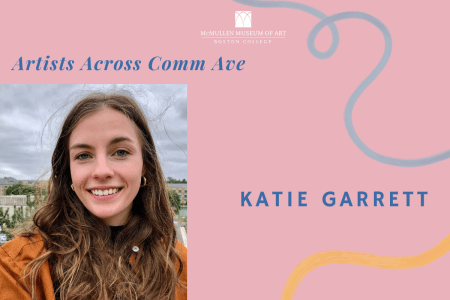
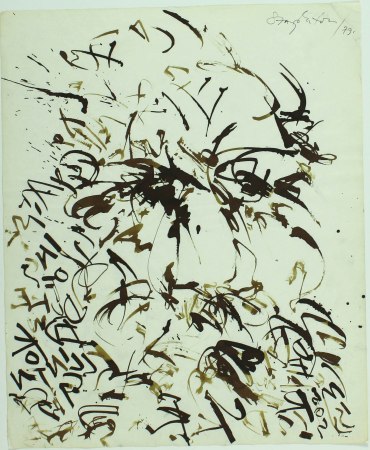
The daughter of a concert pianist and granddaughter of the first conductor of the Vancouver Symphony Orchestra (VSO), Diana grew up in a household that instilled her love of the arts. Diana credits her mother for taking her to see a range of performing arts and traveling to Europe—experiences that broadened her interests and perspective. She fondly recalls the first trip at age nine to see relatives in the Netherlands where she visited the Kröller-Müller Museum housing the largest privately owned collection of Van Goghs (aside from the Van Gogh family).

“I legitimately fell in love with Van Gogh,” she says amusedly.  

Upon graduating with an art history and French language concentration from the University of British Columbia, Diana traveled around Europe before settling in London where she completed a certificate program at Christie’s (the Christies’ Fine Arts course) and wrote her thesis on English silver—an interest she pursued as a research intern in the Metalwork Department of the Victoria & Albert Museum. The opportunities to see museums and works of art first hand, as well as to visit country and auction houses, coined her overall experience as a “rich and wonderful year.”

Diana spent five years working at the MFA in Boston as a Curatorial Assistant in the Department of European Decorative Arts—coincidentally the same department in which current McMullen Director Nancy Netzer also worked.  

Her introduction to working in design began with a masters degree in Museum Exhibition Planning and Design at the University of the Arts in Philadelphia. She returned to Vancouver in 1993 where she curated four local history exhibits. One of the exhibitions entitled “Women in Aviation” allowed her to interview the first female flyers in Canada from the 1930s.

“It was one of the best things I ever did!” she says enthusiastically.

Diana settled back in Boston, only this time across the river at Harvard’s Fogg Art Museum where she served as a Curatorial Associate in the Department of Paintings, Sculpture and Decorative Arts for seven years. Reminiscent of her memorable travels as a girl, Diana’s position enabled frequent journeys to Europe where she picked up Monets from Edinburgh, brought paintings to the esteemed Louvre and Grand Palais in Paris and couriered works of art  to Italy on three occasions.

“The biggest thrill at HAM,” she says, “was the quality and range of the collections and the ability to learn first hand about paintings.”

The dawn of Diana’s career at the McMullen began while visiting the 2004 Fernand Khnopff exhibit in Devlin Hall—what was then the old home for the McMullen on Boston College’s main campus. Diana ran into Ms. Netzer who lent her glasses to Diana’s sister, Mary, who had forgotten them there.

A year later, Diana assumed her current position at the McMullen, working for over a decade with its exhibitions and permanent collection, facilitating its relocation to its permanent home in the former residence of Boston’s Cardinal Archbishop and advancing the museum’s growth efforts.

Diana co-curated two exhibitions with Vera Kreilkamp, a lecturer in the Irish Studies Program: “Rural Ireland: The Inside Story” (2012) and “The Arts and Crafts Movement: Making it Irish” (2016). Diana spent three years researching and finding rare artifacts around Ireland, including stained glass and metalwork from the Honan Chapel at University College Cork—objects that had never travelled outside of the country. Diana describes the research and design of the exhibition as some of her most cherished and rewarding work thus far.

When asked about her favorite part about working at the McMullen, she emphasizes the diversity of the exhibits and the professionals with whom she works.

“This job is custom made for me,” she says. “Being able to work the nuts and bolts on a wide range of exhibits and the thrill of working across disciplines at BC is what makes everything here unique. It all has a richness.”

Rich, indeed, as the McMullen continues to innovate and evolve—making strides with the passion and dedication of its impressive team busily working behind the palazzo’s glass and Neo-Renaissance facade.

Categories
McMullen Musings

Rainy Tuesdays at the Museum

By Carolina Gazal

It just so happens that every Tuesday, it rains terribly during my shift at the McMullen Museum. The second the clock strikes 1:30 pm, it begins to rain right as I head to the Museum. The bright red leaves become soggy piles of mush, puddles of mud flood my walk, and I ask myself why does it have to rain every Tuesday?

IMG_6896.jpg

I walk from Gasson Hall to the Museum, hair drenched and shoes soaked, peeved at Mother Nature for deciding to downpour during my shift. Then I sit at the front desk, watching the rain hit the glass windows of the atrium, wondering when the rain will end, and question why this happens every week.

IMG_7141

Despite it all, I’ve come to realize that the McMullen Museum is the perfect place to be when it’s raining. Although rain is associated with gloom and darkness, I’ve come to love watching the rain fall from the comfort of the glass atrium. I’ve been so accustomed to the darkness of dorm rooms, especially when it rains, and the glass windows of the McMullen Museum are a bright escape from the poorly lit dorm room and dark hallways of Gasson Hall.

IMG_7105

It’s actually quite uplifting to watch the rain fall in the atrium, especially when a beautiful rainbow shines over the Brighton campus. The most beautiful rainbow I’ve ever seen grew over the terrace and circled around the museum. Everyone rushed to the terrace to photograph the double rainbow, and suddenly everything I dreaded before took on a new light. The soggy leaves became crisp and dotted with rain droplets and the puddles were reflections of nature around me – nature I usually neglect amidst heaps of homework and assignments.

IMG_7116

The next time it rains, I highly recommend walking over to the McMullen Museum and watching the rain from the atrium. Grab an umbrella, don your rain boots, set up a rainy day playlist – or even download the McMullen’s podcasts – and make the journey to the museum. I’ve never been one to enjoy the rain, but the museum space provides a cozy nook to admire the Brighton campus and the beautiful nature I usually take advantage of.

Categories
Lecture Archives Uncategorized

“The BC Eagle: A Japanese Masterpiece Restored” by Diana Larsen (Lecture 11/14/2018)

On November 14, 2018, the McMullen Museum welcomed its own Diana Larsen, Assistant Director and co-curator of the spring 2019 exhibition, Eaglemania: Collecting Japanese Art in Gilded Age America, for a lecture recounting the history and recent restoration of the original BC eagle sculpture.

This lecture took place at the McMullen Museum of Art on November 14, 2018.

Categories
Uncategorized

Student Ambassador Summer Series: Naya Joseph’s Summer in Montréal

By Naya Joseph

FullSizeRender 2

This past August, I took my first-ever solo trip to Montréal for five days. I did not know what to expect; those whom I knew spoke highly of its rich, French culture—“Like a slice of Europe in North America,” one said. What I found was a city rich with culture—cuisine, visual art, music, and dance.

FullSizeRender 5

Every day, I spent a little bit of time riding the metro to Place des Arts. An initiative started by Mayor Jean Drapeau, Place des Arts is a cultural and artistic playground—the largest in Canada. Sides of buildings covered in large murals, home to the Musée d’Art Contemporain and six performance halls, and a shopping mall featuring live musical performances and a daily light show in the water fountain—Place des Arts was unlike anything I had ever seen before. Immediately upon exiting the train station, there was a long boulevard that was inaccessible to cars. Pedestrians frequented the various ice cream parlors and poutine shops, blasted jazz music or lo-fi hip-hop from their speakers, and performers set up in the middle of the esplanade gathering large crowds of passersby as they danced, sang, performed magic tricks, etc.  

FullSizeRender 3

I was mesmerized by how so many local artists flocked to the heart of downtown to share their talent with natives and tourists. Moreover, I was amazed that such a space existed—that professionals and amateurs alike could showcase their unique, creative talents in a space where it was appreciated and admired. In a time when underfunded public schools are eliminating creative arts programs, R&B music and artists go unnoticed or under appreciated, and movie theater attendance is on the decline, it was amazing to be reminded that art is still important and impactful—it contributes beauty to the world, speaks for those who do not have the words, and the variety of our art is part of what differentiates us from other life forms on Earth—it makes us human. I hope we all remember to make a place for art; maybe not in the streets our local cities, but at the very least in our minds and hearts.

FullSizeRender 6


Categories
McMullen Musings McMullen Updates Museum Events Uncategorized

Harvard Art Exchange

By Kate Oksen

IMG_7616

On Friday, November 9, student guides and staff members from the Harvard Art Museums came to the McMullen Museum to complete the second component of our exchange program. Harvard students were greeted in the atrium by Professor Nancy Netzer before heading to our first floor conference room.

IMG_7613

Sophia Cocozza, co-chair of the Education Committee, had the opportunity to delve a little deeper into the specific roles and responsibilities of a McMullen student ambassador. The co-chairs of each of our six committees presented an overview of their main projects and goals for the semester while using visual aids to showcase components of our website, 3D-Vista tours of past exhibitions, an inside look at our database, and more.

IMG_7619

The Harvard students were split into two groups and brought on tours of the second and third floor galleries of the museum. The tours were facilitated by members of our Education Committee, who each conducted extra research on components of Strategies of Engagement to inform Harvard’s student guides about Carrie Mae Weems herself and pieces from her vast array of work. Interacting with other student workers, conversing about the exhibition and discussing the differences and similarities of our experiences working in art museums coupled with the actual trips to these unique spaces has been such a positive endeavor for all involved. We are so happy to have had this exchange and so grateful to have had the Harvard student guides participate!

Categories
McMullen Musings Uncategorized

What Issues Concern BC Students?

By Reeno Hashimoto

DotPoster

On Friday, September 7th, Boston College students congregated at the McMullen Museum of Art to kick off the opening of Carrie Mae Weems’s Strategies of Engagement. Ambassadors asked fellow students to weigh in on some of the most polarizing issues of 2018. As students ascended to the third floor, they discovered a poster-laiden window. Each poster presented a series of current issues such as criminal justice reform, climate change, and income inequality with a blank space underneath. Boston College students, always up for a challenge, took only three dot stickers, placing them under issues of particular importance to them.

The twenty-four options from which students could choose their “Top Three” were criminal justice reform (44), climate change (85), free speech (18), national security (5), strengthening unions (4), pro-life legislation (4), gender equality (82), Second Amendment rights (3), promotion of democracy worldwide (6), LGBTQ rights (34), voting rights (7), racism (95), $15 minimum wage (9), freedom of religion (18), campaign finance reform (7), rising student loan debt (13), income inequality (40), national debt (11), cybersecurity (8), affirmative action (7), immigration reform (37), universal health care (42), reproductive rights (31), and gun control (69).

Racism, climate change, gender equality, and gun control were the issues most significant to Boston College students.

The McMullen Museum student ambassadors urge you to consider the following: what matters to you most and why?

Categories
Campus Creatives Museum Events Uncategorized

Darkroom Photography Workshop

By Sydney Bernal

It isn’t often that I ventured into Devlin, and even rarer that I find myself in the basement. However, if you plan on entering Boston College’s darkroom- that’s exactly where you will end up. With the makeshift negatives created in advance from digital files, we were introduced to the process of developing photos and set out to develop our own.

IMG_3061

We entered the dark room through a chamber designed to keep the light out, and once in the room with the exception of the special lights that blanketed the room in an orange and red glow, we were in darkness. Each of us got set up at our own station, stationed between two small walls, as to not let our light bleed onto the paper of anyone else. Then, we got to work, mere seconds of light, 30 seconds in the first solution, agitate, a minute in the next, agitate, three in the last, agitate, then rinse. Now, I know magic isn’t real. But, watching my pictures appear on paper after being placed in what looks like water, after seconds of being exposed to light – feels pretty close.

IMG_3062

It was inspiring to see the vast and varied creativity that exist within Boston College students, from the pictures of dogs, family members, places, stuffed animals, adventures, to the creative liberties that were taken in the creative process. People were creating as well as reproducing.

IMG_3060

It felt both very strange and very romantic to develop photos by hand. I felt instantly like I had entered another world. A world that exists in movies, an analog world. A more careful, precarious world. Unlike, with digital. There was no undo. You can’t be sure of quality until after the fact, and it almost feels more special because of it.

Categories
Museum Events

In Case You Missed It: Trickster’s Eve

By Annabel Steele

The McMullen Museum celebrated the Halloween season on Friday, October 19 with a Tricksters’ Eve-themed Art After Dark. Students flocked to the museum for an evening of fall-themed refreshments and activities.

IMG_2891


Students were greeted with a variety of refreshments in the lobby upon entering the museum. There were assorted types of apple and cheese to sample, as well as hot apple cider to drink. Anyone looking for a sweet treat could also try apple cider donuts and pick from bowls of candy around the lobby.

IMG_2806

The mask-making station was on the first floor. Students used scissors and glue to construct large animal masks out of paper templates, which they could then wear around the museum. There were shark, sheep, rabbit and elephant masks.

IMG_2869

On the third floor, students enjoyed popcorn and horror movies. Throughout the night, the movies “Sorry to Bother You” and “You’re Next” played on a projector outside on the terrace, lending the evening a spooky vibe. While students enjoyed the movies, they painted pumpkins, showing off their individual artistic styles.

IMG_2822

Throughout the evening, the galleries were open, showing off Carrie Mae Weems’s semester-long exhibition. Weems has incorporated a trickster figure into her art before, notably in “Lincoln, Lonnie and Me.” As students basked in the Halloween-themed evening, Weems’s art provided an appropriate backdrop for the night.

IMG_2808

There was also an opportunity to let loose and enjoy games of Ghost in the Graveyard on the McMullen’s front lawn.

Categories
McMullen Updates Museum Events

In Case You Missed It: Open Mic Night with SLAM! + The Laughing Medusa

By Katherine Oksen

On Thursday, October 11th, the McMullen Museum collaborated with SLAM! and The Laughing Medusa to host an open mic night.

With the room filled with the smell of hot coffee and tables laden with macarons, pastries, and baked delicacies, a gorgeous night of poetry and prose began. SLAM! (Soul, Love, and Music) is Boston College’s own spoken word group, and The Laughing Medusa is BC’s only women’s literary and arts journal (striving to bring feminism to a publication near you.)

IMG_6801

Members of each group performed at will, showering us with poems and pieces about love and life and hurt and hate. Despite the rainy weather, providing those darling melancholy vibes, the atrium of the museum was filled with students there to perform, support their friends, and listen to what their fellow peers had to say. The McMullen provided an open, safe space for students to share their words with a kind of fervor, intensity, and passion that cannot be replicated in the typed or written form. Snaps were heard all around in response to beautiful and powerful lines woven from experiences pulled from the full spectrum of human emotion, including abuse, racism, misogyny, ignorance, and heartache.

IMG_6796

Miya Coleman, president of SLAM!, and Taylor Puccini, editor-in-chief of The Laughing Medusa, did an incredible job both performing their own works while also facilitating the entire event and encouraging the audience to to speak their minds.

IMG_6804

The McMullen is hoping to continue hosting events like this, perhaps collaborating with these student groups again in the spring and even making this an annual event each fall. Thanks to everyone who came out to support all of our aspiring poets!


Categories
Museum Events Uncategorized

In Case You Missed It: Trivia Night

By Annabel Steele

On Thursday, September 27, the McMullen Museum played host to a fierce competition as teams battled it out over visual culture trivia.

The stage was set with free pizza and drinks out on the third floor terrace. When all of the teams were fed and watered, the showdown began. There were five rounds, each with five questions apiece. Each question had a visual component, testing students’ knowledge even more than the average trivia night. For example, people might be able to name the ten most popular herbs found in the average grocery store—but at visual culture trivia night, they had to name all ten and match them up with the correct photo.

The questions tested students’ knowledge on a range of topics. Categories represented included sports, art, fashion, architecture, marine biology, anatomy and geography, among others. Some questions had only part, while others included multiple components, allowing teams to earn partial points even if they could not correctly answer the entire question. Each question was displayed over a projector, and teams had anywhere from a minute and a half to 10 minutes to write out their answers.

For most of the night, almost all the teams remained locked in tight competition. Eventually, one team of graduate students, English Experts, began to pull away and build a comfortable lead. Even so, by the final question, the scores were so close that it was anyone’s game. In the final question, teams were asked to name national parks and match them to their location on a map of the United States.

In the end, English Experts held on for the first-place finish, earning McMullen t-shirts, umbrellas and catalogues for their win. The second and third place teams also received prizes.

Categories
Museum Events Uncategorized

In Case You Missed It: Fall 2018 Student Opening

By Annabel Steele

The McMullen Museum kicked off the new year with an Art After Dark event on Friday, Sep. 7. Students enjoyed refreshments and participated in activities while learning about the semester’s exhibitions, Strategies of Engagement by Carrie Mae Weems and Not There, Not Here by Boston College professor Hartmut Austen.

DSCF7408

Weems’s work encourages us to critically examine American society and identify and acknowledge imbalances of power and miscarriages of justice. Accordingly, many of the activities touched upon themes of social justice and American identity.

In the first floor conference center, students were able to take selfies of themselves and write down what America or American identity means to them on the photos. The photos were then clipped up in a room while one of Weems’s videos played in the background. Meanwhile, the button-making station proved to be highly popular, as students designed buttons from templates and from scratch. One of the most popular slogans from the evening was “Bring Back Late Night.”

DSCF7407

DSCF7415

On the third floor, students identified the topics they are most passionate about by putting stickers on posters, creating a visual representation of the issues that concern the student body. On the terrace, students enjoyed the late-summer golden hour over Boston and watched Dear White People and Random Acts of Flyness.

DSCF7495

Throughout the night, students enjoyed performances from groups such as the Beats, Sexual Chocolate and F.I.S.T.S in the museum lobby. They also wandered through the second floor gallery, observing Weems’s works as the exhibition officially opened for the semester.

BEATS

DSCF7385.JPG


Categories
Into the Collection Uncategorized

Into the Collection: Twentieth Century Prints

By Alyssa Trejo

On Wednesday, April 11th, the McMullen exhibited twentieth-century prints from our private collection as part of the ongoing Into the Collection series. Student Ambassadors from the Education Committee presented on prints ranging from lithographs, woodblock prints, sugar-lift aquatints, and more from artists like Picasso, Kokoschka, and Maher.

Into the Collection 1

Alyssa Trejo researched and presented information on Georges Rouault’s Plate 36: Ce sera la dernière, petit père / This will be the last time, father! from the Miserere series. Members of the audience were stunned by the strong contrast and its dreary imagery.

Georges Rouault (1871–1958), Miserere et Guerre, c. 1920, etching on paper, 25.75 x 20 in. McMullen Museum of Art, Boston College, Gift of Ms. Ruth Shikes, 2009.31

The first print depicts a father, who was once a soldier, kissing his son goodbye before he leaves to go to war. As he does so, the son says “this is the war to end all wars.” Death, in the form of a skeleton, foreshadows the imminent demise in this war and in those to come, thus proving the son wrong.

This plate is especially telling since it was made during WWI, but not published until after WWII. It asks the viewer to contemplate our views on war and the destruction it causes, and whether or not we honestly learn from it.

The project was conceived as two volumes, titled Miserere and Guerre, to be made up of 100 large etchings with accompanying text by poet André Suarès. The books were never actualized, but instead resulted in a series of images made by Rouault. The artist himself prepared the plates through etching, which uses baths of acid to bite into the surface of the plate. More specifically Rouault used aquatint, in which rosin is applied in a fine powder and melted to the plate. The acid then etches the tiny spaces in between the motes of rosin, making a matrix of indentations that produce characteristically deep and textured black and greys in the final prints. He also used Sugarlift, where one takes a brush directly to the print using water and sugar and applies rosin to the unbrushed areas to leave a negative area of exposed plate. This negative area is then treated using the aquatint technique.
Alyssa also presented on Alice Maher’s print Magdalene. Although simplistic in its appearance, the print tells a story about Mary Magdalene and the importance of her femininity.

NGI 20882

Alice Maher (1956–), Magdalene, 1998, etching on Johannot paper, 26 x 19.5 in. McMullen Museum of Art, Boston College, Gift of Friends of Art, 1998.4

Human hair is a recurring motif in Maher’s work. Almost every character in her sketchbook has long hair. In this work, Silvestro dei Gherarducci’s painting from the 1380s The Assumption of St. Mary Magdalene inspired her. It shows Mary Magdalene during her assumption, with hands folded in prayer and her body completely covered by her long hair.  In Maher’s interpretation, there is simply the form of long red hair standing by itself. This emphasizes the femininity of Magdalene. We are left to remember that she was not only a great Christian symbol of repentance, but also a woman, something significant within the patriarchal system of Christianity. This contemporary feminist point of view adds a new dimension to Maher’s work and the image of Mary Magdalene we have today.

Categories
Campus Creatives Uncategorized

Student Submission: Photographs from Ralph Stover and Reid State Parks

A collection of photographs from Reid State Park on Georgetown Island, Sagadahoc County, Maine and Ralph Stover State Park in Plumstead and Tinicum Townships, Bucks County, Pennsylvania taken by Boston College sophomore Hannah Petty.  

This  is a submission by a Boston College student.  The Terrace accepts submissions by all faculty, staff, and students on any art- or museum-related topic.  Submissions can be directed to BCtheTerrace@gmail.com.  

By Hannah Petty
English and Political Science major, class of 2020


Categories
Campus Creatives Uncategorized

Student Submission: “The Story of Girolamo Romanino’s The Mystic Marriage of St. Catherine”

This paper is a submission by a Boston College student. The Terrace accepts submissions by all faculty, staff, and students on any art- or museum-related topic. Submissions can be directed to BCtheTerrace@gmail.com.

Picture1
Fig. 1. Girolamo Romanino, The Mystic Marriage of St. Catherine, c. 1535, oil on canvas, 60.25 x 81.75 in. Memphis Brooks Museum of Art, Memphis, TN. Image courtesy ARTstor.

In the third century CE, St. Catherine of Alexandria pledged herself to Christ in a divine marriage. Over a millennium later, Girolamo Romanino captured this moment in his painting The Mystic Marriage of St. Catherine. In this iconographic analysis of Romanino’s sixteenth-century painting, Boston College sophomore Abigail Dagher analyzes the artist’s reinterpretation of the St. Catherine myth in the context of the art and religion of Renaissance Italy.  

By Abigail Dagher
English major, Islamic Studies & Civilizations minor, class of 2020


The Mystic Marriage of St. Catherine by Girolamo Romanino, or Il Romanino (Fig. 1), tells the story of the vision of St. Catherine—a tale in which St. Catherine envisions Christ bestowing a ring upon her finger, symbolizing their eternal and divine marriage. We now know that St. Catherine was martyred for her refusal to marry the pagan Emperor Maxentius due to her belief that she had already been everlastingly betrothed to Christ. German-American author Paul Carus tells the story in his monthly magazine, The Open Court­:

Once, when St. Catharine was praying fervently in her chamber, Jesus Christ, the King of Glory, appeared before her, clad in fine apparel and accompanied by a great throng of angels and saints. As testimony that he accepted St. Catharine for his bride he placed a real ring upon her finger and promised to perform great things for her if she would remain faithful in her love, and when our Lord Jesus Christ had disappeared she knew at once that vision was to be understood in a spiritual sense. She was completely converted to a great divine love and reverent tenderness toward Jesus Christ, her spouse.8

This oil on canvas piece measures 60.25 x 81.75 inches. The painting itself is quite dark except for the vibrant clothing on the foreground characters, who look as if they are living in Renaissance Italy. The Virgin Mary is wearing a bright white silk cloak and turban that reflect the light and symbolize her purity. There is also a halo, that looks more like a luminary spectacle above her head to further accentuate her divinity and connection to light and goodness. St. Catherine is kneeling with her back towards us, giving her full attention to Christ and his gift of a ring. She has taken off her crown and put her sword down in her conversion to this greater love and is standing by a broken wheel similar to the one she was condemned to death on. The saint is wearing a golden and green dress that shines in the light. Gold is a color of power, wealth, and divinity. Green is a color of fertility and nature. The color choices are paralleled with the divine story that is unfolding in the natural setting.  

The legend of St. Catherine’s vision comes from the east, the same region as the Song of Solomon that relishes in earthly delights and love. Our eyes are drawn to the highlighted hues and the piece is asking us to recognize the symbolism revolving around the characters in the painting in order to imagine the allegory within. We are also introduced to new characters that are additions to the original story: an ominous man in the shadows on the left, a woman in red carrying a flag in the upper-right, and another woman to the far right in a nun’s habit.  It is unclear who these characters are, but one can assume that the woman in red is a saint.

Romanino uses chiaroscuro to separate the people in the painting from the faded, darker background setting, which gives us some atmospheric perspective. Both the acute attention to details in the clothing and the atmospheric perspective can be attributed to the influence of two Venetian painters: Giorgione and Titian. Romanino also uses a head count method for proportions in his painting: the baby Jesus figure is about three head counts whereas the adult figures are about seven. The proportions give us a sense of realism that is only heightened by Romanino’s attention to detail in the construction of facial features, figures’ poses, and items of clothing. The baby figure looks quite like a real baby with indentations in his flesh-like baby fat. His head is a bit large for his body, which is a characteristic often found in real infants. The facial figures on the other characters are not idealized; these aren’t perfect figures, rather they are closer to reality.

This sense of realism is amplified by the detailed domestic setting in the background. We are in a specific place. This specific place is actually the hometown of Girolamo Romanino. The castle in the background is his birthplace Brescia, a town in the Lombardy region in northern Italy. The High Renaissance painter lived from ca. 1484 to ca. 1562.9 Romanino, who lived in Venice in his twenties and then in Brescia thereafter, flourished as an artist in a period of observing the natural world and creating a sense of realism in art. The painter’s style was very representative of the High Renaissance environment around him. His works were influenced by Venetian art, evident in his use of rich colors and large forms, but his attention to detail (as seen in the iridescence and pattern-work of the clothing in the piece) is a precursor to baroque styles.

Il Romanino followed the styles of Giorgione and Titian, two Venetian Renaissance painters extant around the same time. Giorgione and Titian switched the “color vs. line” technique often found in Central Italian painting, a process that begins with forming lines that later become colored in. The Venetians went backwards: the new Northern Renaissance Italian style became more focused on color rather than line. Paintings rarely had hard outlines and instead used color and light to generate form. Romanino utilized the sfumato technique to first and foremost create a hazy background but also render the relatively softer figures in the foreground. Sfumato allows colors to gradually come together, resulting in those softened, hazy outlines that are characteristic of northern High Renaissance art. Both the sfumato technique and the atmospheric perspective in The Mystic Marriage of St. Catherine are quite similar to that in Giorgione’s The Tempest, ca. 1510 (Fig. 2). In both of the paintings, characters are in the foreground, a bridge is in the mid-ground, and a building paired with an omniscient storm darkly looms in the slightly faded background.

Picture2
Fig. 2. Giorgione, The Tempest. ca. 1510, oil on canvas, 33 x 29 in. Gallerie dell’Accademia, Venice. Image courtesy ARTstor.

In addition to Giorgione and Titian, German artist Albrecht Dürer was a huge influence to Romanino.10 Dürer was also a High Renaissance painter who focused on naturalism and humanism in his pieces. Although Romanino’s St. Catherine does not include absolutely realistic representations of the human form or facial features, it does incorporate acute attention to detail in articles of clothing and extraordinary attention to the reflection of light in certain places—stylistic choices found in a variety of Dürer’s works.

So, who are those unideal figures accompanying St. Catherine, Mary, and Christ? Art historians now know that the piece was commissioned to commemorate the Ursuline order in Brescia founded by St. Angela Merici on November 25, 1535, the feast day of St. Catherine. The Ursulines created a Roman Catholic religious order and the first institute dedicated to education for females under St. Ursula, who was the patron saint of education and a fourth-century martyr.11 The woman in the upper-right corner of the painting is carrying the white and red flag as a tribute to St. Ursula. Il Romanino’s inclusion of the tribute displays his own personal support to the teachings of the order that prides itself on, “the ability of the creative arts to humanize life.”12 It is fitting that the image St. Catherine, the patron saint of teaching, is paired with the tribute to the Ursuline Order in Romanino’s piece. The woman in the nun’s habit is thought to be Angela Merici, based on the likeness of an earlier portrait, and the mysterious man on the left is thought to be St. Lawrence, the patron saint of church officials.

Saint Angela Merici always thought of her followers, or daughters, as spouses of Christ and repeatedly referred to them as “spouses of the Most High” in her writings.13 Il Romanino created a work of art that was, and still is, representative of all of the elements most important to the Ursuline order. Followers of the order are eternally devoted to their quest of finding a relationship with God and Saint Catherine was an image of the victory of that search. She is an everlasting representation of the feeling of being one with God. St. Catherine is on her knees and has her back turned to us. She is giving all of her attention to Christ who is at the very center of the piece. Everything revolves around this relationship with God. In this painting Romanino has created an ode to the Ursuline order in a realistic and idealized way. This piece has a sense of pictorial drama and is symbolic of St. Catherine’s divine relationship with God, but due to its naturalistic and lifelike elements it is also telling its audience that anyone can find this everlasting divine bond. These are real people in a real setting telling a symbolic story.

Notes:

Categories
Podcast Archive Uncategorized

“Art in Focus” Podcast: “Nature’s Mirror” with Environmental Studies Professors Tara Pisani Gareau and Noah P. Snyder

The McMullen Student Ambassadors are pleased to present Art in Focus, featuring an informal discussion between professors from various academic departments at Boston College. With each new episode, we aim to uncover a new perspective on the works on display, informed by research and methodologies in areas of study across the University. Each conversation will bring the exhibition’s works “into focus” as both historic records and living objects that trade in today’s cultural and economic capital.

For the third episode of Art in Focus, we have invited Professors Tara Pisani Gareau and Noah P. Snyder from the Environmental Studies Department. Each professor was asked to choose a single piece from Nature’s Mirror, and share anything and everything that strikes them as interesting or curious. They chose the works featured here.

Lamoriniere, Landscape in Kempen with Shepherds and Sheep
Jean Pierre François Lamorinière (1828 Antwerp–Antwerp 1911), “Landscape in Kempen with Shepherd and Sheep, n.d., oil on canvas, 62.9 x 85 cm, Hearn Family Trust

Degreef, Undergrowth
Jean-Baptiste Degreef (1852 Brussels–Auderghem 1894), “Undergrowth,” n.d., oil on canvas, 46 x 55.2 cm, Hearn Family Trust

Categories
Lecture Archives Uncategorized

“Scorched Earth: Belgian Artists and the Industrial Landscape” by Sura Levine (Lecture 10/18/2017)

In conjunction with Nature’s Mirror: Reality and Symbol in Belgian Landscape, the McMullen Museum invited Professor Sura Levine, Dean of the School of Humanities, Arts, and Cultural Studies at Hampshire College, to examine ways that Belgian artists rendered the industrial landscapes of the Borinage and the pays noir in the period from c. 1880 to 1920.

This lecture took place at the McMullen Museum of Art on October 18, 2017.

Categories
Podcast Archive Uncategorized

Art in Focus: “Nature’s Mirror” with Professors Jeffery Howe and Mary Armstrong

The McMullen Student Ambassadors are pleased to present our podcast, Art in Focus, featuring an informal discussion between professors from various academic departments at Boston College. With each episode, we aim to uncover new perspectives on the works on display in the museum. These perspectives are informed by research and methodologies in areas of study across the University. Each conversation will bring the exhibition’s works “into focus” as historical living objects that trade in today’s cultural and economic capital.

For the first episode of Art in Focus, we have invited Art History Professor and Curator of Nature’s Mirror: Reality and Symbol in Belgian Landscape Jeffery Howe and Studio Professor Mary Armstrong from the Art, Art History, and Film Department. Each professor was asked to choose a single piece from Nature’s Mirror and share anything and everything that struck them as interesting or curious. They chose the works featured here.

vanKuyck_Marsh_at_Twilight
Frans van Kuyck (1852–1915), “Marsh at Twilight,” n.d., oil on canvas, 52.7 x 70.8 cm, Hearn Family Trust
Khnopff, Memory of Bruges. Entrance to the Beguinage, v2
Fernand Khnopff (1858–1921), “Memory of Bruges. Entrance to the Beguinage,” 1904, pastel and black chalk on paper, 27 x 43.5 cm, Hearn Family Trust
Categories
Uncategorized

Reuniting the Eagle and the Condor at the Edge of the Nation-State

By. Chase Gibson ’26

Walls and fencing enclose 675 miles of the roughly 1,954-mile border between the United States and Mexico. The barriers have a complicated history dating back to the early 20th century when the US Bureau of Animal Industry built fencing to control the flow of livestock from crossing. It wasn’t until 1918, when the mayor of Nogales, Mexico, built more fencing to control the flow of people. Nearly 80 years later, the United States government built modern fences near San Diego, California, out of metal sheets from the Vietnam War. More recently, $46.5 billion from the “Big Beautiful Bill” Act (2025) funded the upgrade and construction of more barriers with the goal of covering 1,350 miles, doubling the current enclosure. 

This wall bisects the continent, dividing communities, sacred lands, and families. It is the physical manifestation of political turmoil over the influx of undocumented immigrants from the south—trouble exacerbated by the rhetoric of the Trump administration. While the president continues to push the narrative of undocumented immigrants as violent criminals, invaders, drug mules, parasites on public provisions, employment usurpers, and threats to the American way of life, artists have taken to displaying murals along the existing border wall. These murals depict the struggle of those who come to the US and those who die trying. They are political statements, messages to families, and reflections on the storied history of migration in the New World. 

Donors from the United States funded a 200-foot mural depicting an eagle and a condor flying together over the vast landscape of America. 11 artists collaborated on the project, including 2 Kumeyaay artists from Baja California, to make an homage to an ancient Native American prophecy. The “Eagle and Condor” prophecy represents the diverging paths of humanity: the eagle as industrial and mind-driven and the condor as intuitive and heart-centered. The two split from one another, the eagle to the north and the condor to the south. The eagle conquered the condor, but their eventual reunion is meant to usher in an era of harmony between heart and mind.

Beyond its prophetic meaning, the mural has more immediate implications for the state of international relations as countries around the world struggle to cope with rapid globalization and the movement of peoples fleeing persecution, war, famine, dangers of all kinds, or even simply in search of work. An estimated 5,260 non-Mexican nationals reside on the southern side of the border wall, unable to cross or forced to return. They find themselves in a state of political uncertainty, devoid of formal citizenship, unsupported by the Mexican government, isolated from their homeland, and faced with limited opportunities. Reports indicate that over 8,000 people have died attempting to cross the US-Mexico border between 1998 and 2020. Some estimates raise the death toll to over 10,000. As a result of the pervasive feeling of helplessness and hopelessness, many stuck at Mexican border cities have fallen victim to an opioid epidemic, as fentanyl overdose-related deaths in northwestern Mexico have surged by 600 percent in the past three years. 

In the political debate Stateside, many have touted the Trump administration’s immigration enforcement efforts—appealing to an artificial conception of American national identity or culture, arguing on the basis of homeland security, and accusing the undocumented of “stealing jobs.” Others have been more sympathetic to the plight of these migrants—insisting that these people meet a demand in the labor market, richly contribute to our culture, and pay their fair share in taxes. However, the murals that decorate the border wall make an appeal that speaks to something more universal, a commonality to even the most malicious among us: our humanity. 

The artists of the “Eagle and Condor” mural challenge our conscience as a society and as a collective citizenry. They ask a question that ought to be on the minds of every American: in our campaign for industrial expansion, how did we lose touch with our ideals that transcend petty political differences? In other words, how did the eagle depart from the condor? When did we lose our heart? More importantly, how do we get it back?

We must contemplate such questions in light of the killings of two American citizens and the dehumanization of the most vulnerable members of our society. We should be reminded of the words of former President Barack Obama: “What makes somebody an American is not just blood or birth, but allegiance to our founding principles and the faith that anyone anywhere can write the next great chapter of our country.” We are, after all, a nation conceived in liberty, dedicated to the proposition that all men (and women) are created equal. 

If our ideals stop at our borders or immigration status, are liberty and justice truly for all?

Categories
Culture Check-In

Culture Check-In: Spring

By: Serenna Sousa ’27

The second it hits 50 and people get even a glimpse of spring, everyone starts acting straight out of a college catalog.

Hoodies are thrown off, spikeball is being played on any free patch of grass, UV levels are suddenly being checked, and half marathon decisions are being made.

Nothing has really changed, but the energy has; and now everything from what we’re wearing to what we’re paying attention to feels slightly different.

What do we even have in store for fashion, tech, art, and everything in between this season?

Keep reading to find out!

Put Together, Kind Of

Sooo we’ve been all rebranding our aesthetics for months now…

And it’s not even subtle anymore. You can see it in what people are wearing; everything feels more intentional, like everyone suddenly has a version of themselves they’re trying to present. Oversized trench, utilitarian pieces, masculine tailoring…like okay, why are we all trying to dress like European casual all of a sudden?

There’s something about it that feels a little…borowed. Like we’re assembling outfits from our situationships. Pieces that aren’t fully ours, but wearing them anyway. Slightly oversized, slightly detached, like we’re trying something on without fully committing to it.

But what’s funny is at the exact same time, we’re leaning just as hard in the opposite direction. Satin, lace, pajama dressing, boudoir everything; like suddenly getting dressed also means looking a little undone, a little softer, a little more intimate.

It’s a weird balance where everything is either structured and put together or intentionally effortless, like you didn’t even try…even though we all know it took you a hot minute to come up with it.

What’s Going on With Tech

And now there’s technology…one of the scariest sectors to even think about right now. It feels like every time you start to understand something, there’s already something newer, faster, and slightly more concerning replacing it. Like we’re all just collectively trying to keep up without questioning enough what we’re keeping up with. 

There’s so much talk around AI verification, trying to prove what’s real online, which somehow makes everything seem less real. And then you have things like Ulta’s AI manicures…which is just the perfect example of all of this.

Instead of picking a color style based on what we actually like, we’re now bringing color theory to our hands…which feels a little excessive. What matches our tone, our vibe, our aesthetic. And it’s supposed to feel personalized, but it almost feels like the opposite.

The more specific it gets, the less it actually feels like a choice.

Honestly, it’s not even that bad, just a little strange. Why are we outsourcing even the smallest decisions about ourselves to ARTIFICIAL intelligence?

And now, microchipping is casually entering the conversation again. Which feels like one of those things that should be a much bigger deal than we’re currently treating it. It’s a little controversial, especially depending on how people interpret it, but somehow still becoming normal. 

Apple of course drops something like the Neo, another sleek, hyper-advanced, budget friendly version of the MacBook which makes it way easier to justify getting one. Same clean look, same feel, just slightly more within reach. Finally, the MacBook has become something people can actually have, not just something some people dream about.

Somehow, the more everything is optimized for us, the less it actually feels like it’s coming from us.

Pop Culture Right Now

We obviously couldn’t forget pop culture…which is somehow struggling with the same thing. Everything is always trying to be everything at once.

Take SYRN, Sydney Sweeney’s new brand, for example. It’s supposed to be all about self-expression, about embracing different sides of yourself. But it ends up feeling a little unclear. Romantic, seductive, playful, effortless…like okay, which one is it?

It’s meant to feel empowering, but still leans so heavily into the male gaze, which kind of contradicts the whole idea. And that’s where it gets a little confusing. It’s trying to say one thing, but visually and stylistically, it’s saying something completely different. It’s trying too hard to be too many things at once, without fully committing to any of them.

The return of things like the America’s Next Top Model documentary on Netflix feels similar. It’s not even about revisiting the show, it’s more like…is Tyra Banks trying to win people back, or is the check inflow just needing a little dusting?

And then, there’s the Oscars, which are supposed to feel like the standard, the final say. You have films like Paul Thomas Anderson’s One Battle After Another dominating with six awards, or Micheal B. Jordan finally winning Best Actor for Sinners, something people have been saying was overdue for a while…at least depending on who you ask.

But even with those big moments, it just doesn’t feel as definitive as it used to. What matters, what gets recognized, all feels like it’s shifting.

What Art Is Turning Into

Art is beginning to feel a little less stable right now. Not necessarily in the work itself, but in what it means and who gets to define it.

With things like Banksy’s identity potentially being revealed, it kind of takes away from what made the work so compelling in the first place. The anonymity was part of it, and once that is taken away, the work starts to feel a little different too.

And with artists like Keith Haring, there’s this conversation around whether his work has been “sanitized” over time, whether something that once felt bold and disruptive is now being softened to fit a different audience. 

The works aren’t even the things that are changing but the way we’re allowed to experience it is. 

And then you have situations like missing Picassos and legal battles over ownership. Where it becomes less about expression and more about control, value, and who gets to claim it. 

It just feels like meaning changes depending on who has control over it.

Maybe that’s just where things are right now. Nothing feels fully set; not style, not meaning, not even what feels real. Everything is sifting, adjusting, being reworked in real time. And instead of having it all figured out, we’re just…kind of going with it.

Categories
Uncategorized

Queer Art and Visibility in Public Spaces

By: Chase Gibson ’26

In a 6.5-acre stretch of cityscape in Chicago, Illinois, there’s a neighborhood colloquially known as “Boystown.” Chicago has a repressive and violent history with the LGBTQIA+ community—routine police raids on gay bars, harassment against same-sex couples, and public exposure in local newspapers. And yet, if you were to walk the streets of Boystown, you could catch yourself forgetting this history as you use rainbow-clad crosswalks, gaze at murals celebrating gay icons, and shop at boutiques bursting with pride. At least in this part of town, the queer community is visible, proud, and directly in your face.

The neighborhood represents a deliberate effort to reshape how sexuality and gender identity appear in public space. For those who call Boystown home, simple acknowledgment of non-heteronormative identities is not sufficient. The area functions as a refuge for people who, for generations, were forced into silence or hidden away in what is commonly described as “the closet.” In response to that history, residents and community organizers have worked intentionally to ensure that the neighborhood visibly and unapologetically affirms queer identity. Through public art, symbols of pride, and community events, Boystown asserts itself as a space where queer presence is not subtle or implied but openly and unmistakably claimed.

The visual language of Boystown also belongs to a longer artistic tradition in which queer artists used imagery to challenge social boundaries. One notable example is Francis Bacon’s painting Two Figures, which depicts two nude men entangled on a bed. Created in the early 1950s, when homosexuality was widely stigmatized and often criminalized, the work carried a quiet but unmistakable defiance. Bacon himself experienced rejection for his sexuality and gender expression, having been cast out of his family home as a young man. In that context, the painting becomes more than a private scene; it is an assertion that intimacy and identity exist beyond the narrow expectations imposed by society. By presenting queer intimacy openly on canvas, Bacon helped push representation out of secrecy and into visibility. In many ways, the visual landscape of Boystown continues this same tradition, translating the once-radical act of depicting queer life into murals, symbols, and public spaces that openly affirm it.

In 2018, Chicago’s Department of Cultural Affairs unveiled a self-portrait mural of queer interdisciplinary artist Kiam Marcelo Junio. The purpose of the mural is to open dialogue about intersecting identities as well as represent non-binary people. However, at the most fundamental level, the mural is a representation of the multiplicity of the human experience. 

Public art such as this mural does more than decorate the neighborhood. It transforms the physical landscape into a kind of cultural archive, preserving the stories of people whose identities have often been erased or ignored. Boystown transforms into an open-air gallery where people constantly reimagine sexuality, gender, and belonging. Each mural, sculpture, and symbol contributes to a collective narrative that insists queer lives are not marginal but central to the fabric of the city. In this sense, Boystown is not simply a place of celebration. It is also a declaration of presence, a reminder that visibility itself can be a powerful form of resistance against the long history of silence imposed on LGBTQIA+ communities.