Categories
Uncategorized

Queer Art and Visibility in Public Spaces

By: Chase Gibson ’26

In a 6.5-acre stretch of cityscape in Chicago, Illinois, there’s a neighborhood colloquially known as “Boystown.” Chicago has a repressive and violent history with the LGBTQIA+ community—routine police raids on gay bars, harassment against same-sex couples, and public exposure in local newspapers. And yet, if you were to walk the streets of Boystown, you could catch yourself forgetting this history as you use rainbow-clad crosswalks, gaze at murals celebrating gay icons, and shop at boutiques bursting with pride. At least in this part of town, the queer community is visible, proud, and directly in your face.

The neighborhood represents a deliberate effort to reshape how sexuality and gender identity appear in public space. For those who call Boystown home, simple acknowledgment of non-heteronormative identities is not sufficient. The area functions as a refuge for people who, for generations, were forced into silence or hidden away in what is commonly described as “the closet.” In response to that history, residents and community organizers have worked intentionally to ensure that the neighborhood visibly and unapologetically affirms queer identity. Through public art, symbols of pride, and community events, Boystown asserts itself as a space where queer presence is not subtle or implied but openly and unmistakably claimed.

The visual language of Boystown also belongs to a longer artistic tradition in which queer artists used imagery to challenge social boundaries. One notable example is Francis Bacon’s painting Two Figures, which depicts two nude men entangled on a bed. Created in the early 1950s, when homosexuality was widely stigmatized and often criminalized, the work carried a quiet but unmistakable defiance. Bacon himself experienced rejection for his sexuality and gender expression, having been cast out of his family home as a young man. In that context, the painting becomes more than a private scene; it is an assertion that intimacy and identity exist beyond the narrow expectations imposed by society. By presenting queer intimacy openly on canvas, Bacon helped push representation out of secrecy and into visibility. In many ways, the visual landscape of Boystown continues this same tradition, translating the once-radical act of depicting queer life into murals, symbols, and public spaces that openly affirm it.

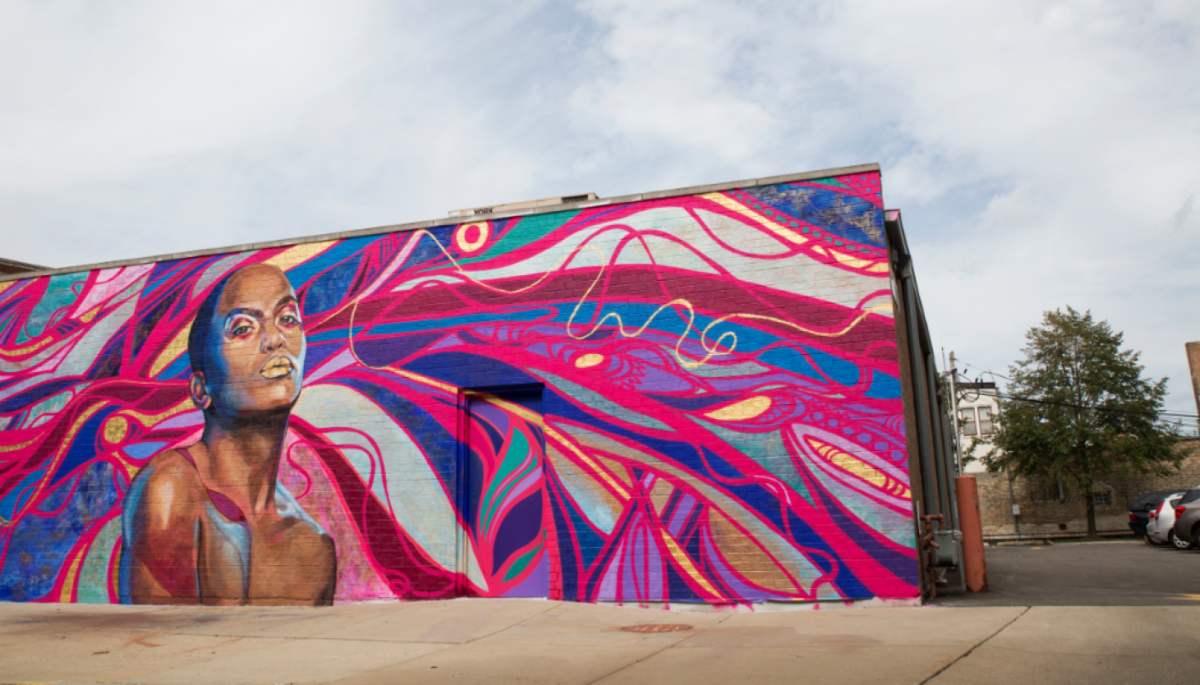
In 2018, Chicago’s Department of Cultural Affairs unveiled a self-portrait mural of queer interdisciplinary artist Kiam Marcelo Junio. The purpose of the mural is to open dialogue about intersecting identities as well as represent non-binary people. However, at the most fundamental level, the mural is a representation of the multiplicity of the human experience. 

Public art such as this mural does more than decorate the neighborhood. It transforms the physical landscape into a kind of cultural archive, preserving the stories of people whose identities have often been erased or ignored. Boystown transforms into an open-air gallery where people constantly reimagine sexuality, gender, and belonging. Each mural, sculpture, and symbol contributes to a collective narrative that insists queer lives are not marginal but central to the fabric of the city. In this sense, Boystown is not simply a place of celebration. It is also a declaration of presence, a reminder that visibility itself can be a powerful form of resistance against the long history of silence imposed on LGBTQIA+ communities.
Categories
Into the Collection

A McMullen Winterlude

By: Emily Barnabas ’26

Winterlude, let’s go down to the chapel

Then come back and cook up a meal

Well, come out when the skating rink glistens

By the sun, near the old crossroad sign

The snow is so cold, but our love can be bold

Winterlude, this dude thinks you’re fine

Winterlude by Bob Dylan may be one of the best snow day songs. By capturing the essence of a slower, simpler life, Dylan’s lyrics evoke the quiet magic and new possibility that arrives with snowfall. With over 20 inches of snow falling in late January, Boston College students enjoyed a winterlude of their own. Whether they were socializing at the “Snarty” in the Mods or curling up with hot chocolate on the couch, the storm provided a welcome reprieve from the frantic start of the semester. 

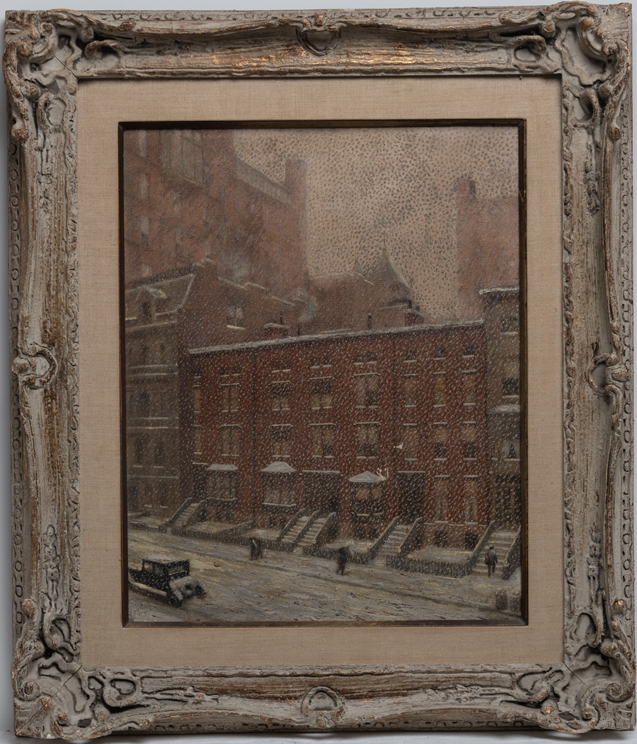
Moments of winterlude have been documented in art for ages. Whether it be written recollections or visual representations, there is something special about the way that snowfall makes us pause and reflect. The Permanent Collection of the McMullen Museum of Art features several notable snow scenes, those of which capture the transformative nature of winter. In celebration of this season, this feature will highlight selected works from the Permanent Collection, discussing how artists across periods and styles have interpreted the spirit of this time of year.

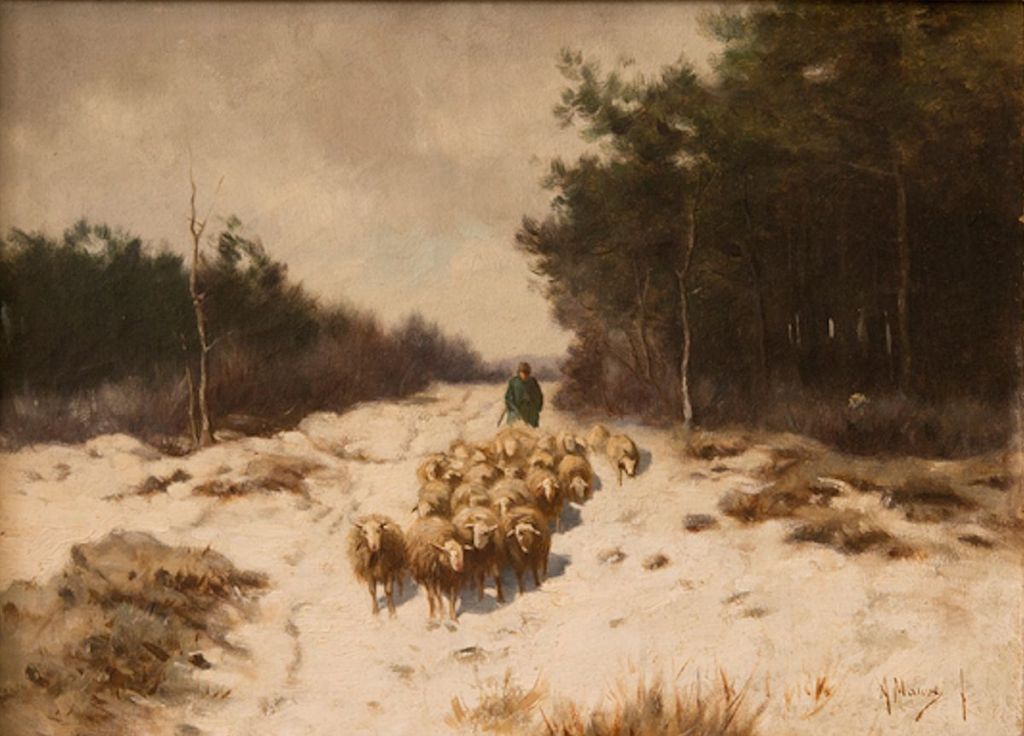
Anthonij (Anton) Mauve (1838–1888)
Snow Scene with Sheep, c. 1882–88
Oil on canvas, 9.3 x 12.5 in.
McMullen Museum of Art, Boston College, 1988.91

Snow Scene with Sheep depicts a tranquil scene of a clustered flock of sheep with a shepherd trailing nearby in the background. Hands stuffed deep into coat pockets and bundled in layers of dark green, the shepherd’s dedication to tending their flock through the winter chill can be interpreted as a metaphor for social and spiritual care (Howe). Mauve’s use of tonal gradations and soft brush strokes create the illusion of depth, signaling the distance that the flock has traveled. When looking at this work, one may imagine the solitude of this journey and sense the resilience needed to persist through such a landscape. In this suspended moment, the subjects’ movement feels slow and deliberate, each step through the snow symbolizing steadfast care in the midst of nature’s austerity. 

Frank-Meadow Sutcliffe (1853–1941)
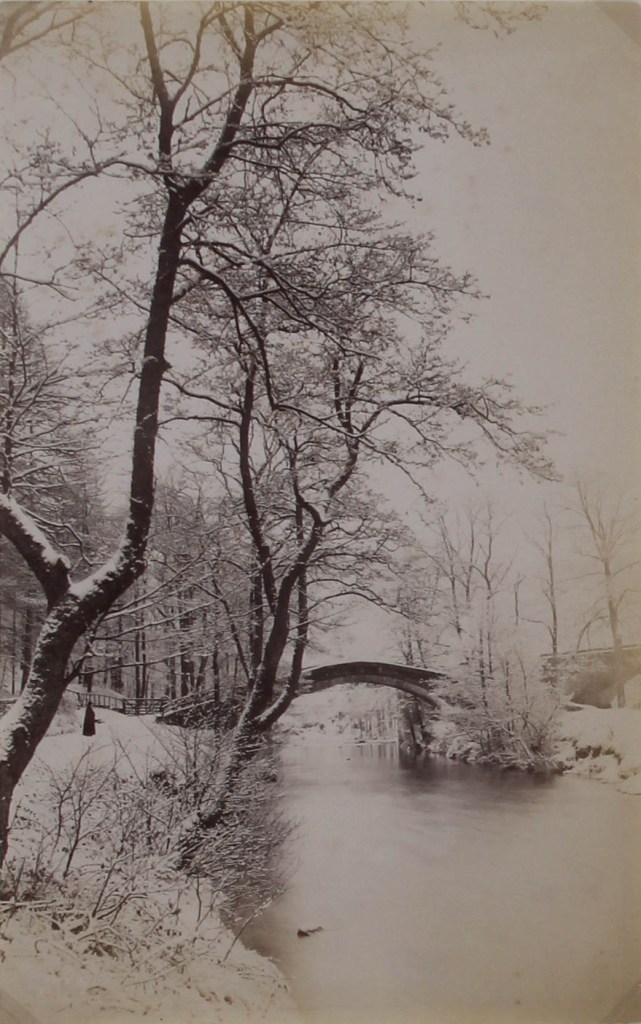
Beggars Bridge, Yorkshire in Snow (near Whitby), c. 1900
Albumen print, 8 x 5 in.
McMullen Museum of Art, Boston College, Gift of David L. Mahoney and Winn Ellis, December 2002, 2002.51

Viewing Sutcliffe’s Beggars Bridge is like listening to Fleetwood Mac’s Landslide, exuding feelings of longing, seclusion, and tranquility.

Then I saw my reflection in the snow covered hills

Til the landslide brought me down

An Albumen print, a method of producing photographic print using a mix of egg whites and salt, this intricate snowscape is brought to life in the small fibers of silver nitrate that bind to the paper. Taking a closer look, the variety of lines—visible in the delicate tree branches and gentle curve of Beggars Bridge—guides the viewer’s eye across the composition with soft intention. Placing emphasis on the subtle impressions left in the snow, this graceful scene carries a deeper emotional weight that is reflective of a literal and symbolic passage through the isolation of winter.

Arnie Jarmak (1949–)
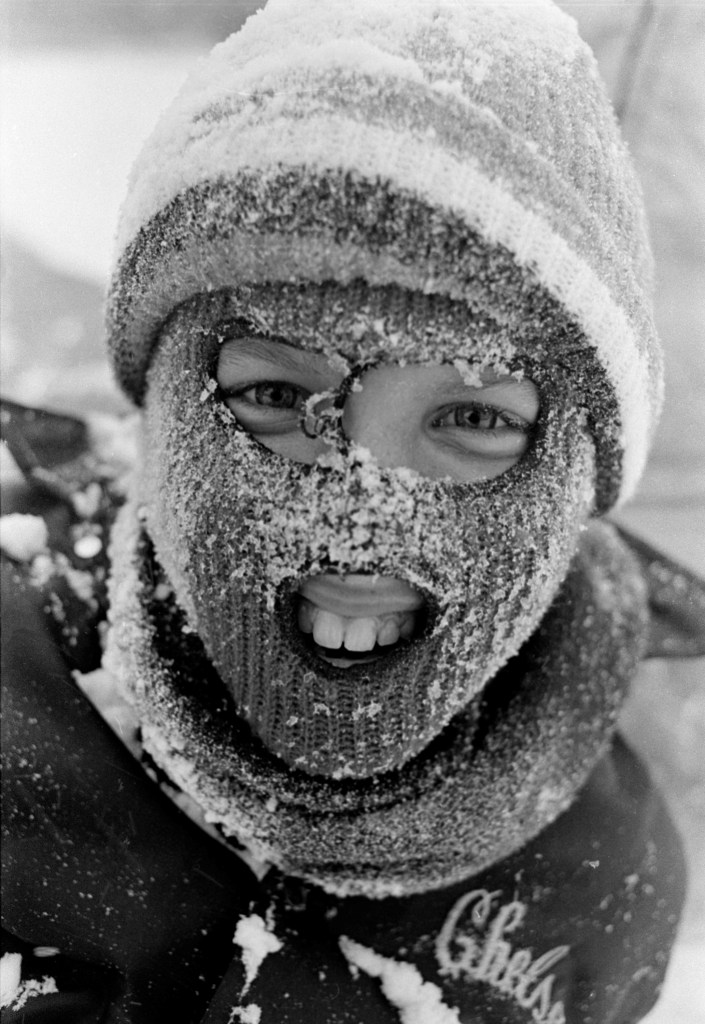
Snow Mask, Blizzard of ’78, 1978, 17 x 10.125 in.
McMullen Museum of Art, Boston College, Gift of the Artist, 2021.71

Following a snowstorm in February of 1978, Jarmak took his camera on a stroll to capture the impact of the historic snowstorm which struck the area. Photographing along the Mystic River (Tobin) Bridge, the local cantilever truss bridge which connects Boston and Chelsea, Jarmak encountered an instance of pure joy and winterlude. What appears as a photograph of a masked, but grinning, child in the snow represents so much more: “a recognition of [their] humanity made visible in the final print” (Andersen & Larsen). Jarmak’s photograph tells an additional narrative of Chelsea’s community, one rich in internal pride and resilience. Through the photographic medium, Jarmak’s striking portrait reminds audiences that moments of joy should not be overlooked during times of hardship.

Works Cited

Howe, Jeffrey. “Snow Scene with Sheep.” McMullen Museum of Art, Boston Collegehttps://mcmullenmuseum.bc.edu/anthonij-mauve-snow-scene-with-sheep/. Accessed 9 Mar. 2026

Arnie Jarmak: Photographing Chelsea in Transition, 1977–89. Edited by Ash Anderson and Diana Larsen, McMullen Museum of Art, Boston College,2022. https://bcweb.bc.edu/mcmullen/exhibitions/jarmak/Jarmak.pdf. Accessed 9 Mar. 2026.

Categories
Art Abroad Uncategorized

The Mona Lisa Heist

By: Elona Michael ’28

Amid a quiet Sunday evening at the Louvre, on August 20, 1911, a mysterious man with a peculiar mustache gave birth to the most famous work of art in the world. Well, not literally, but one can make a strong connection to it.

Everyone knows the Mona Lisa, painted by the well-renowned Italian Renaissance painter Leonardo da Vinci, celebrated through its personal yet mysterious depiction of Mona Lisa herself and the artist’s realist techniques. It has become a world-renowned staple, always surrounded by long lines of visitors at the Louvre and endless conspiracy theories online.

Yet, there was once a time when the painting stood as one of the vast selections of Renaissance pieces in the Salon Carré.

In 1908, a young Italian man named Vincenzo Peruggia moved from his small town in northern Italy to Paris, where he found a cleaning and framing job at the Louvre. His duties mainly consisted of maintenance as well as constructing protective cases for certain valuable pieces of art, and this happened to include the box frame surrounding the Mona Lisa. 

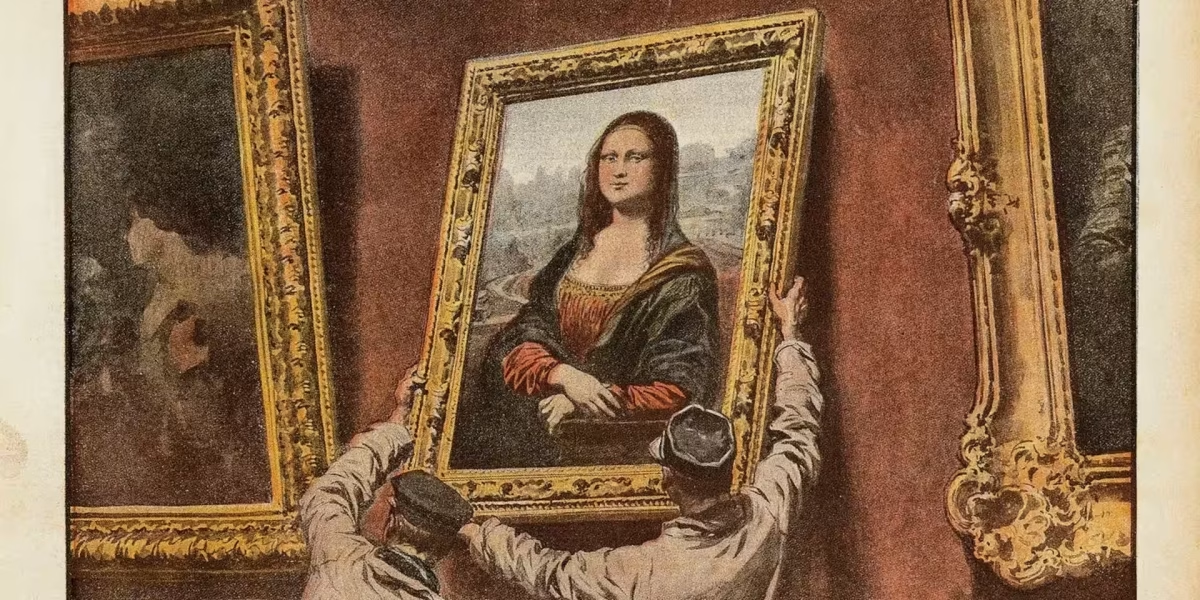
After a couple of years, Peruggia left his job at the Louvre, but his time at the museum did not end there. On the quiet maintenance morning of August 21, 1911, dressed in his standard Louvre employee uniform, Peruggia snuck into the museum with no questions asked. He found himself in the Salon Carré and patiently waited for other clueless employees to finish their duties. Once they had left, he carefully picked up the Mona Lisa from the wall and scattered to the service stairwell. 

There, he utilized his mastery of protective case frames and efficiently removed them and forced himself into a closet where he would stay for the rest of the day. And once the museum finally cleared out, he wrapped the painting in his coat and dashed out.

And this officially marks the heist of the 20th century, the heist that started it all. 

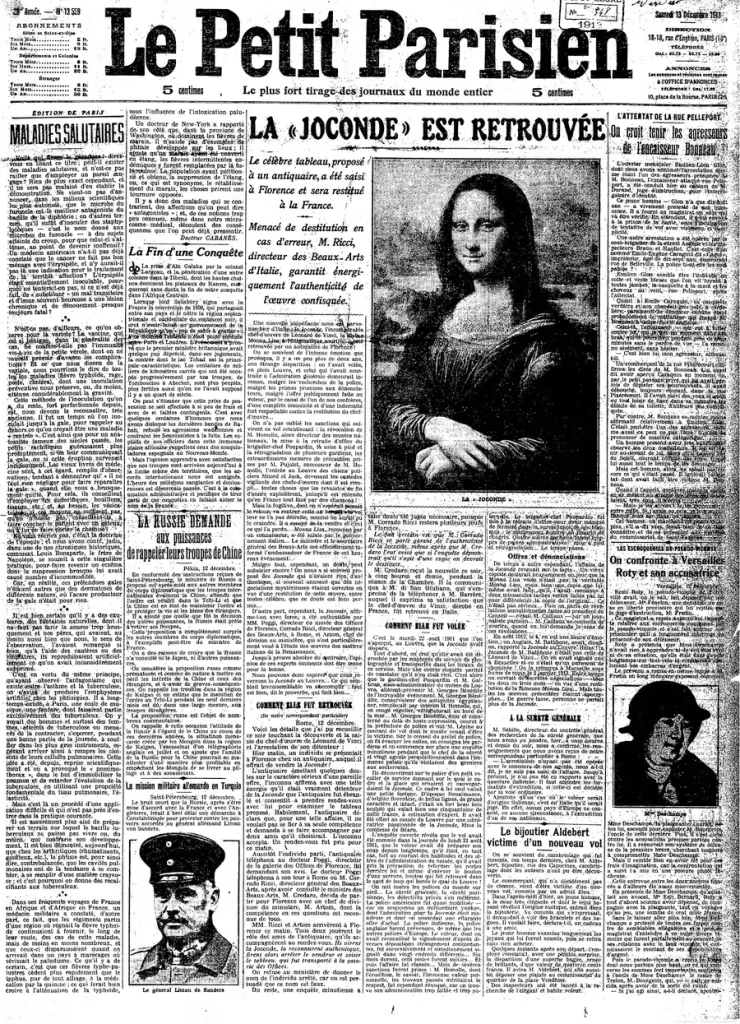
Later on, when cleaning staff saw the painting had been removed, they did not dare to investigate, automatically assuming that it had been swiped for repairing or inspection services. It wasn’t until the artist Louis Beroud noticed the blank wall, where the painting had sat, and immediately called security, eventually leading to a 48-hour shutdown of the museum.

The scandal had completely blown up in the media and the larger world. Nobody had known the Mona Lisa, yet everyone was fascinated by the heist. Who stole it? How did they do it? What were the motives? Where is the painting now? And why the Mona Lisa?

The New York Times reported it as the crime of the century. The Washington Post accidentally published the wrong painting when announcing the theft. People around the world curated new conspiracy theories each day on where it was located, from the U.S., Japan, to Russia. 

Many French newspapers fueled and grilled American art collectors and tycoons, such as JP Morgan and vast American millionaires, with accusations of having commissioned the heist to snatch France’s cultural heritage for themselves.

French police investigated every corner. They stopped ships, questioned avant-garde artists such as Pablo Picasso and Guillaume Apollinaire, and hundreds of others. In fact, they were able to find some crucial clues along the way, including the fingerprint on the protective glass stain Peruggia had removed, and even got close enough to the point where they interviewed Peruggia twice, but still assessed no suspect probability. 

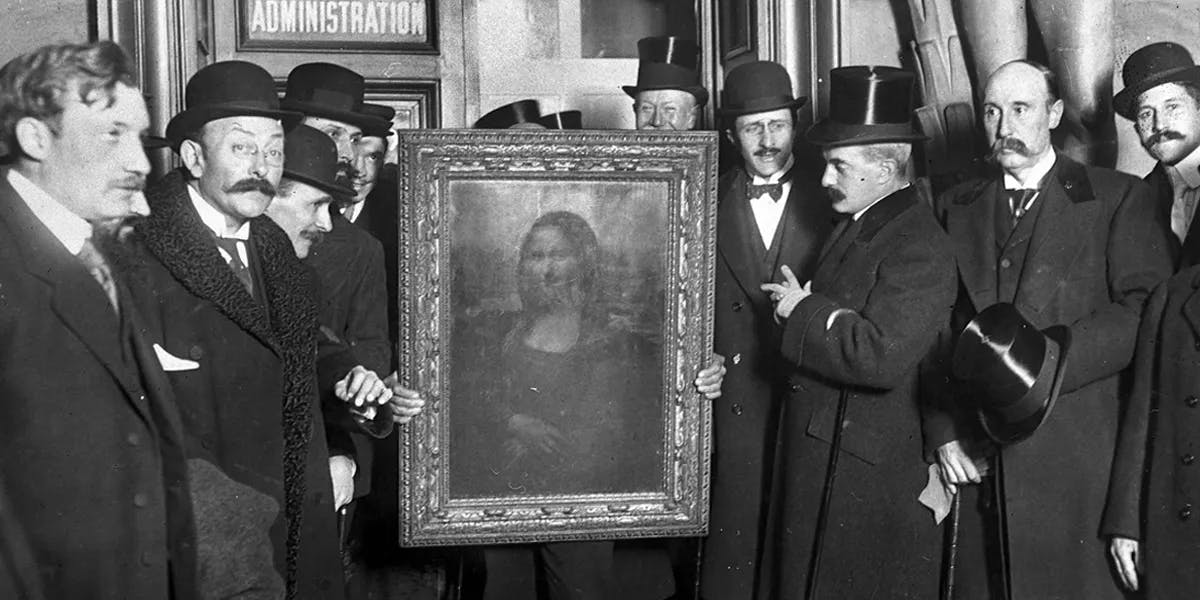
The Incredible 1911 Theft of the Mona Lisa | Barnebys Magazine

It wasn’t for another two years that they eventually identified Peruggia as the thief following his attempt to sell the painting to an art dealer in Florence. 

The 28-month global-spanning frenzy led to the birth of the Mona Lisa. Even before its official return, over 120,000 people visited the Louvre just to see the space where it hung. 

And although the heist gave name and fame to the most well-renowned art in the world, it also revealed something greater about society and the way we view art. 

Movies have depicted and glamorized countless heists, further illuminating society’s century-long fascination with theft. The phenomenon of a victimless crime that challenges wealthy institutions gives a thrill to what is the unknown. 

Therefore, it is crucial to question why society becomes captivated with stories of theft. Further illuminating that maybe it isn’t the art itself but what lies before it, how it got there. 

And what does a heist provide? A sensation for investigation, a mind open for imagination, and a mystery that needs to be solved.