By: Teddy Eskander
Many of today’s trends in music and fashion channel anemoia, or the nostalgia for eras one never lived, as digital communities collectively imagine the 90s through clothing, mood boards, and musical references. Following the 20-30 year trend cycle, the revived interest in the grunge style has been right on time. While contemporary fashion revisits these trends, photography and editorial imagery often do not carry the same raw visual references from the era.
For the past few years, baggy, low-slung jeans, muted colors, boots, and a general favoring of anything thrifted have been mainstays in trend cycles. Following the passing of the influential stylist Melanie Ward, her approach to style — and seemingly to life at large — feels powerful and applicable to today’s fashion landscape.
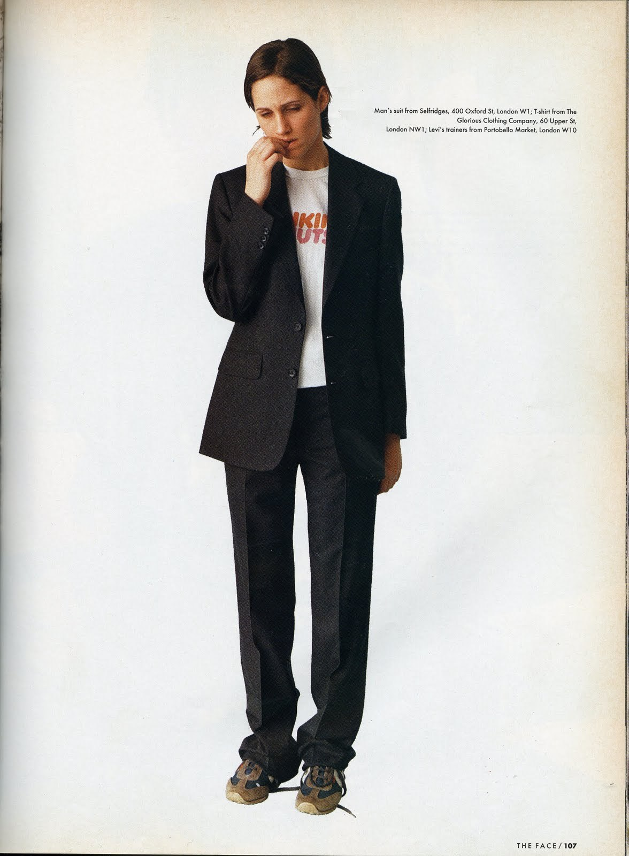
Melanie Ward began her career in the late 80s, incorporating London street and youth culture. Eventually, her styling became a key aspect of defining the grunge style, emerging as a reaction to the polished glamour of the 80s. She emphasized making clothing real and wearable, often blending vintage and contemporary pieces, mixing high- and low-end fashion. Ward’s styles were often captured with a direct flash and a soft blur. She abandoned elaborate sets, carefully designed lighting patterns, or sometimes perfectly metered exposure, in favor of immediacy and intimacy.
There is a presence and dignity in the normalcy of her models’ posing — often informal or awkwardly relaxed. Ward’s styling communicates authenticity in the expression of grounded realness. Throughout interviews spanning the decades, she repeatedly emphasized comfort and the principle that “your clothes don’t wear you.” Her career would eventually lead her to fixed roles at fashion houses such as Helmut Lang, Calvin Klein, Karl Lagerfeld, Louis Vuitton, and Dior. She continued to champion this philosophy at each house, keeping the essence of authenticity with her throughout her career.
While Ward’s realness came from proximity and lived experiences, contemporary fashion photography channels emotional resonance in an opposite way. For instance, Rafael Pavarotti, a friend of Ward, focuses on visual maximalism. Bold color, dramatic lighting, exaggerated and theatrical poses are essential elements of the Pavarotti style. The aesthetic sharply contrasts Ward’s understated approach, but the conceptual goal feels parallel at times.
Pavarotti, who grew up in a small town in the Amazon, moved to London at sixteen to pursue fashion photography. His work demonstrates his capability to shape cultural perspectives on beauty, style, and the human form. His work often highlights Black bodies, addressing disparities in fashion representation and redefining what beauty looks like. Many of his subjects look directly into the lens, creating an intimate connection that invites viewers to engage empathetically with another human presence.
His models are put in positions that make them feel somewhere between powerful, imposing, whimsical, and graceful. The viewer is invited to witness tension and poise in this heightened presence. Each figure is transformed into an expressive subject rather than just a body to hang clothes off of. Pavarotti employs these tactics all to create larger-than-life figures that inspire wonder and leave viewers open-mouthed.
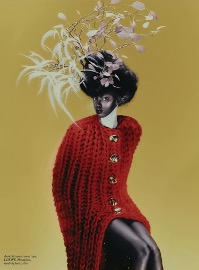
While Pavarotti employs bold color, dramatic poses, and exaggerated silhouettes, his work remains sincere and emotionally grounded. He guides the viewer through a heightened, surreal visual experience to center humanity and dignity in every figure. In the drama of his images, the subject remains central, creating a palpable presence that communicates authenticity and emotional resonance.
Today’s fashion trends often intersect with authenticity through digital media. Platforms like Depop, Grailed, and Pinterest curate nostalgia, remix styles, and construct new amalgams of subcultural identities. While many era revival trends are filtered through aestheticized anemoia, rather than lived experience, it continues to reflect the desire for individuality and self-expression. Thrifted and vintage clothing offers a way to signal style and value, echoing Ward’s message of comfort.
Despite their visual differences, both Ward and Pavarotti aim to make their subjects feel present, immediate, and emotionally resonant. The connection doesn’t lie in style or technique, but in the shared pursuit of human dignity. Whether that be through understated honesty in subtlety and intimacy or in boldness in intensity and spectacle, at the center, there is a human commanding your attention. Both remind us to stay captivated by imagined futures, grounded in the authentic present, and reference the past through a collective anemoia.