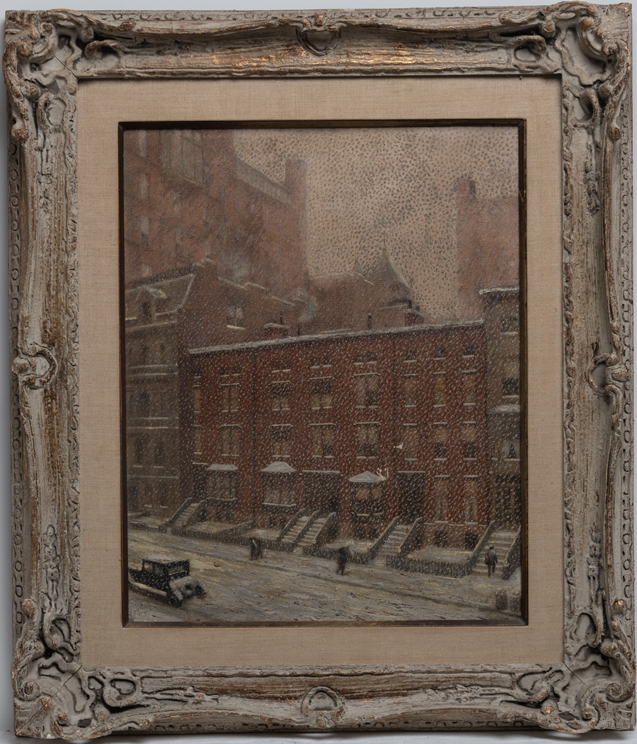
Henry Grant Plumb (1847–1936)
City Snowfall (Home of the Artist on 16th St.), 1925
Oil on canvas, 20 x 16 in.
By: Emily Barnabas ’26
Winterlude, let’s go down to the chapel
Then come back and cook up a meal
Well, come out when the skating rink glistens
By the sun, near the old crossroad sign
The snow is so cold, but our love can be bold
Winterlude, this dude thinks you’re fine
Winterlude by Bob Dylan may be one of the best snow day songs. By capturing the essence of a slower, simpler life, Dylan’s lyrics evoke the quiet magic and new possibility that arrives with snowfall. With over 20 inches of snow falling in late January, Boston College students enjoyed a winterlude of their own. Whether they were socializing at the “Snarty” in the Mods or curling up with hot chocolate on the couch, the storm provided a welcome reprieve from the frantic start of the semester.
Moments of winterlude have been documented in art for ages. Whether it be written recollections or visual representations, there is something special about the way that snowfall makes us pause and reflect. The Permanent Collection of the McMullen Museum of Art features several notable snow scenes, those of which capture the transformative nature of winter. In celebration of this season, this feature will highlight selected works from the Permanent Collection, discussing how artists across periods and styles have interpreted the spirit of this time of year.
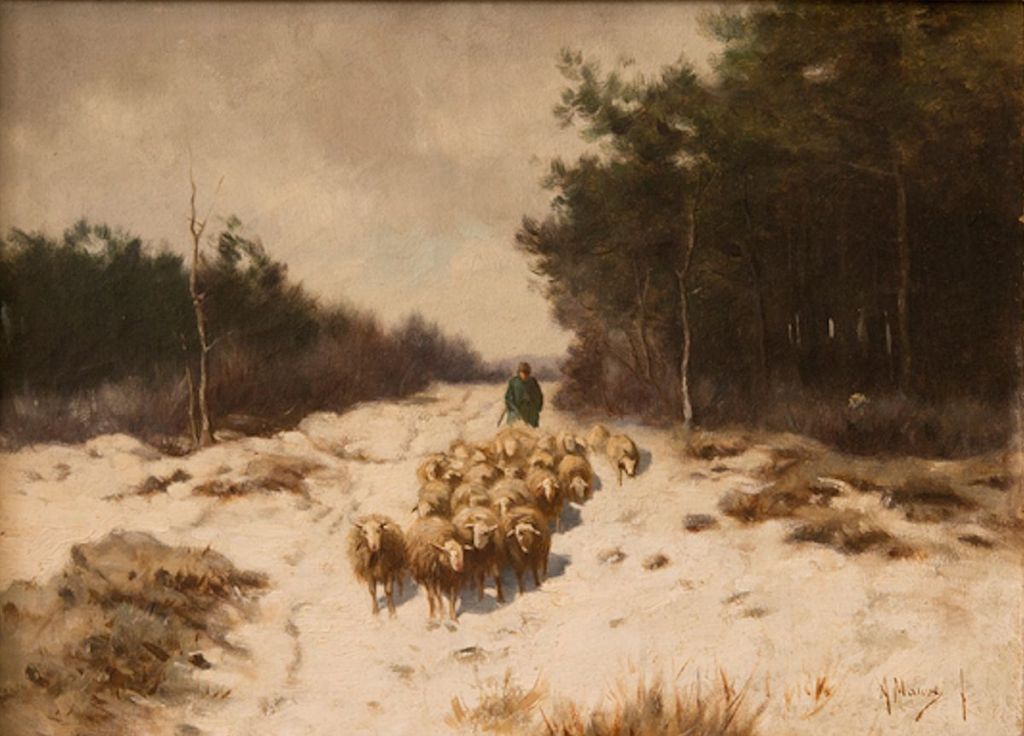
Anthonij (Anton) Mauve (1838–1888) Snow Scene with Sheep, c. 1882–88 Oil on canvas, 9.3 x 12.5 in. McMullen Museum of Art, Boston College, 1988.91
Snow Scene with Sheep depicts a tranquil scene of a clustered flock of sheep with a shepherd trailing nearby in the background. Hands stuffed deep into coat pockets and bundled in layers of dark green, the shepherd’s dedication to tending their flock through the winter chill can be interpreted as a metaphor for social and spiritual care (Howe). Mauve’s use of tonal gradations and soft brush strokes create the illusion of depth, signaling the distance that the flock has traveled. When looking at this work, one may imagine the solitude of this journey and sense the resilience needed to persist through such a landscape. In this suspended moment, the subjects’ movement feels slow and deliberate, each step through the snow symbolizing steadfast care in the midst of nature’s austerity.
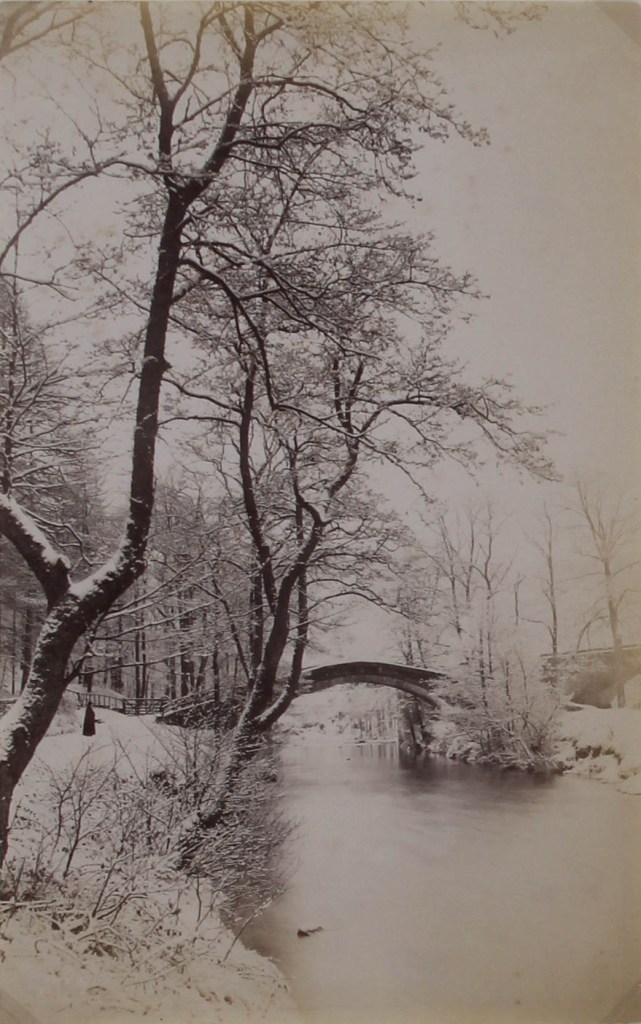
Frank-Meadow Sutcliffe (1853–1941) Beggars Bridge, Yorkshire in Snow (near Whitby), c. 1900 Albumen print, 8 x 5 in. McMullen Museum of Art, Boston College, Gift of David L. Mahoney and Winn Ellis, December 2002, 2002.51
Viewing Sutcliffe’s Beggars Bridge is like listening to Fleetwood Mac’s Landslide, exuding feelings of longing, seclusion, and tranquility.
Then I saw my reflection in the snow covered hills
Til the landslide brought me down
An Albumen print, a method of producing photographic print using a mix of egg whites and salt, this intricate snowscape is brought to life in the small fibers of silver nitrate that bind to the paper. Taking a closer look, the variety of lines—visible in the delicate tree branches and gentle curve of Beggars Bridge—guides the viewer’s eye across the composition with soft intention. Placing emphasis on the subtle impressions left in the snow, this graceful scene carries a deeper emotional weight that is reflective of a literal and symbolic passage through the isolation of winter.
Arnie Jarmak (1949–) Snow Mask, Blizzard of ’78, 1978, 17 x 10.125 in. McMullen Museum of Art, Boston College, Gift of the Artist, 2021.71
Following a snowstorm in February of 1978, Jarmak took his camera on a stroll to capture the impact of the historic snowstorm which struck the area. Photographing along the Mystic River (Tobin) Bridge, the local cantilever truss bridge which connects Boston and Chelsea, Jarmak encountered an instance of pure joy and winterlude. What appears as a photograph of a masked, but grinning, child in the snow represents so much more: “a recognition of [their] humanity made visible in the final print” (Andersen & Larsen). Jarmak’s photograph tells an additional narrative of Chesela’s community, one rich in internal pride and resilience. Through the photographic medium, Jarmak’s striking portrait reminds audiences that moments of joy should not be overlooked during times of hardship.
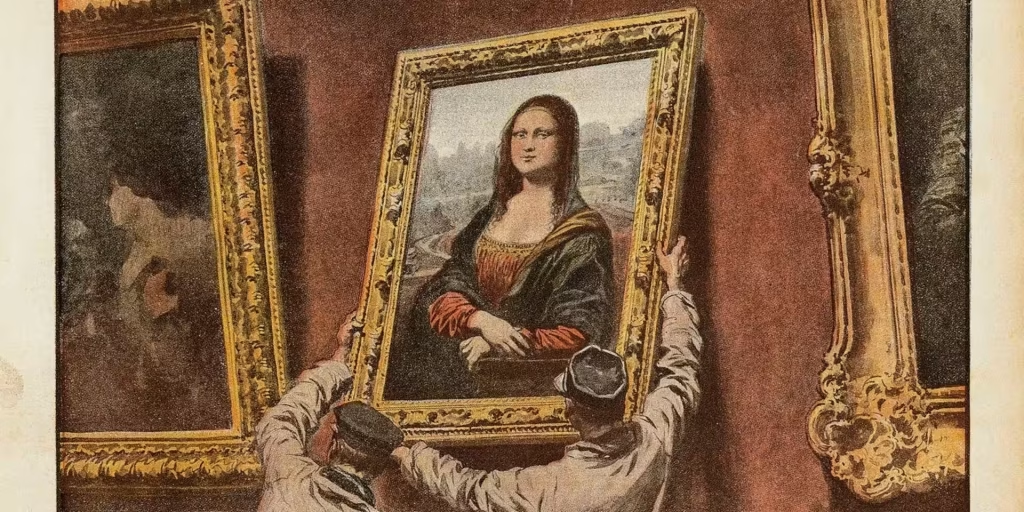
Amid a quiet Sunday evening at the Louvre, on August 20, 1911, a mysterious man with a peculiar mustache gave birth to the most famous work of art in the world. Well, not literally, but one can make a strong connection to it.
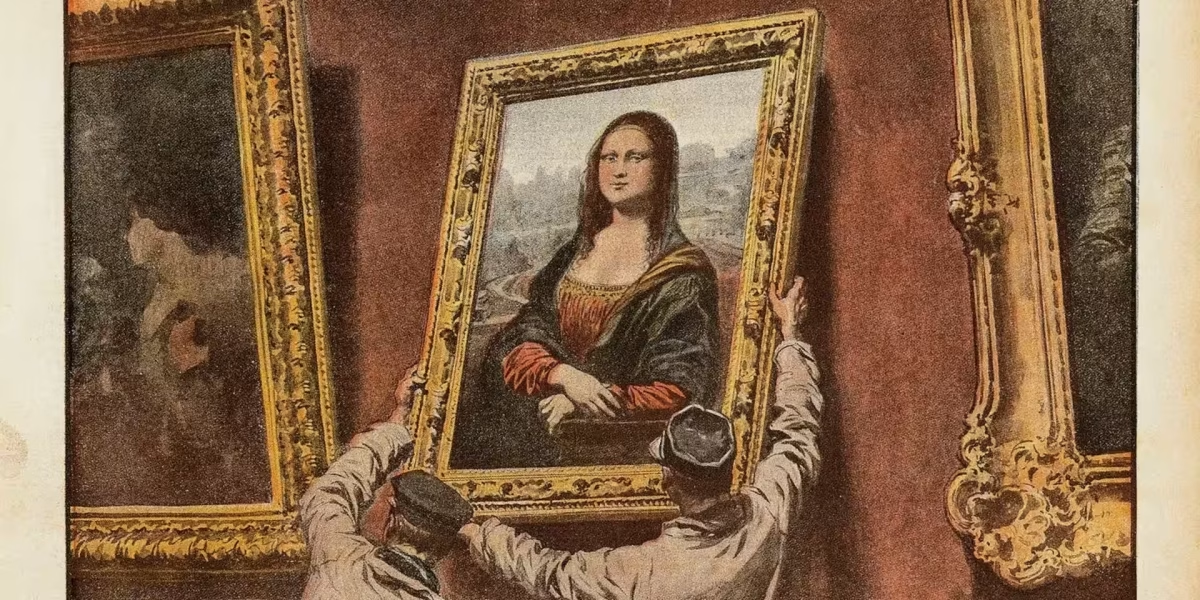
Everyone knows the Mona Lisa, painted by the well-renowned Italian Renaissance painter Leonardo da Vinci, celebrated through its personal yet mysterious depiction of Mona Lisa herself and the artist’s realist techniques. It has become a world-renowned staple, always surrounded by long lines of visitors at the Louvre and endless conspiracy theories online.
Yet, there was once a time when the painting stood as one of the vast selections of Renaissance pieces in the Salon Carré.
In 1908, a young Italian man named Vincenzo Peruggia moved from his small town in northern Italy to Paris, where he found a cleaning and framing job at the Louvre. His duties mainly consisted of maintenance as well as constructing protective cases for certain valuable pieces of art, and this happened to include the box frame surrounding the Mona Lisa.
After a couple of years, Peruggia left his job at the Louvre, but his time at the museum did not end there. On the quiet maintenance morning of August 21, 1911, dressed in his standard Louvre employee uniform, Peruggia snuck into the museum with no questions asked. He found himself in the Salon Carré and patiently waited for other clueless employees to finish their duties. Once they had left, he carefully picked up the Mona Lisa from the wall and scattered to the service stairwell.
There, he utilized his mastery of protective case frames and efficiently removed them and forced himself into a closet where he would stay for the rest of the day. And once the museum finally cleared out, he wrapped the painting in his coat and dashed out.
And this officially marks the heist of the 20th century, the heist that started it all.
Later on, when cleaning staff saw the painting had been removed, they did not dare to investigate, automatically assuming that it had been swiped for repairing or inspection services. It wasn’t until the artist Louis Beroud noticed the blank wall, where the painting had sat, and immediately called security, eventually leading to a 48-hour shutdown of the museum.
The scandal had completely blown up in the media and the larger world. Nobody had known the Mona Lisa, yet everyone was fascinated by the heist. Who stole it? How did they do it? What were the motives? Where is the painting now? And why the Mona Lisa?
The New York Times reported it as the crime of the century. The Washington Post accidentally published the wrong painting when announcing the theft. People around the world curated new conspiracy theories each day on where it was located, from the U.S., Japan, to Russia.
Many French newspapers fueled and grilled American art collectors and tycoons, such as JP Morgan and vast American millionaires, with accusations of having commissioned the heist to snatch France’s cultural heritage for themselves.
French police investigated every corner. They stopped ships, questioned avant-garde artists such as Pablo Picasso and Guillaume Apollinaire, and hundreds of others. In fact, they were able to find some crucial clues along the way, including the fingerprint on the protective glass stain Peruggia had removed, and even got close enough to the point where they interviewed Peruggia twice, but still assessed no suspect probability.
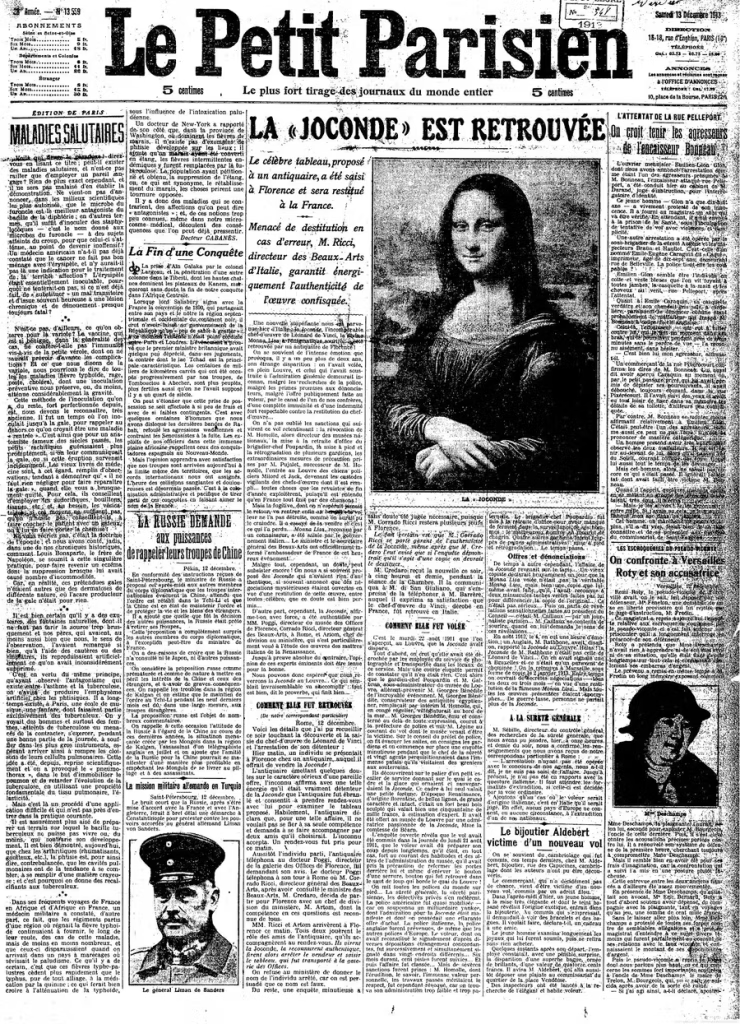
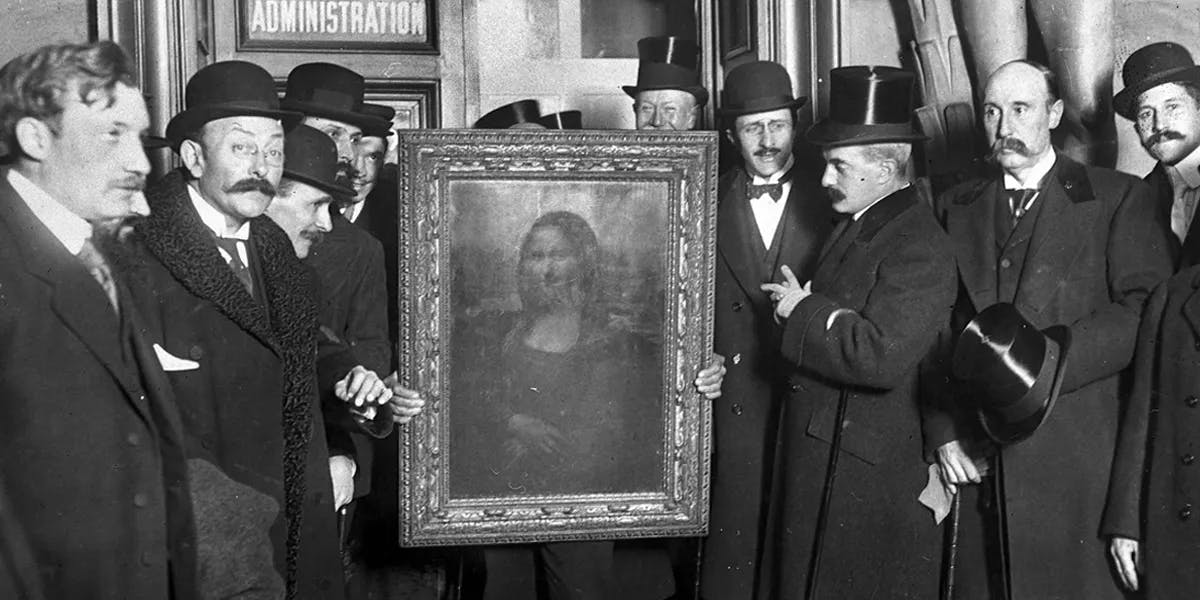
It wasn’t for another two years that they eventually identified Peruggia as the thief following his attempt to sell the painting to an art dealer in Florence.
The 28-month global-spanning frenzy led to the birth of the Mona Lisa. Even before its official return, over 120,000 people visited the Louvre just to see the space where it hung.
And although the heist gave name and fame to the most well-renowned art in the world, it also revealed something greater about society and the way we view art.
Movies have depicted and glamorized countless heists, further illuminating society’s century-long fascination with theft. The phenomenon of a victimless crime that challenges wealthy institutions gives a thrill to what is the unknown.
Therefore, it is crucial to question why society becomes captivated with stories of theft. Further illuminating that maybe it isn’t the art itself but what lies before it, how it got there.
And what does a heist provide? A sensation for investigation, a mind open for imagination, and a mystery that needs to be solved.
The shift into winter is usually when everything settles and stiffens, but this year the change in seasons feels more like a thaw; everything loosening, reshaping, and moving at once. Across art, tech, fashion, and culture, familiar systems are melting down and reforming into something new. What we’re watching isn’t just trend rotation, but the beginning of a cultural swap-out, a quiet dismantling of old rules, and the emergence of a new framework taking shape beneath the surface.
After the cozy maximalism and tactile warmth of fall, when chunky knits, lived-in interiors, and analog imperfection reigned, we’re heading into a winter stripped of old formulas and ready for reinvention. The same energy that had us trading sterile minimalism for messy character is now reshuffling our cultural deck entirely.
In this edition of Culture Check-In, we’re zooming out: not to chronicle isolated trends, but to catch the pattern beneath them. Because 2025 isn’t just another year of shifting style; it’s a turning of the page for everything we thought we knew about status, taste, identity, and what counts as “in.”
Patrons, Power Plays
The art world is continuing to be shaken up. With the passing of Leonard Lauder and Agnes Gund, two of the last “if-they-liked-you-your-career-was-made” patrons, the entire system suddenly feels up for grabs. Their absence raises a real question: who steps in now? Tech billionaires? Decentralized collectors? The guy who dropped millions turning a banana into a hedge fund? Whoever it is, they’re about to redefine taste, money, and the overall power map.
Women artists, meanwhile, are still undervalued at auction, a phenomenon the art world continues to act surprised by. We love to shout “the future is female,” while the auction block just shrugs and says, “Anyway, here’s a man who painted a blue square in 1961 for the price of a brownstone.”
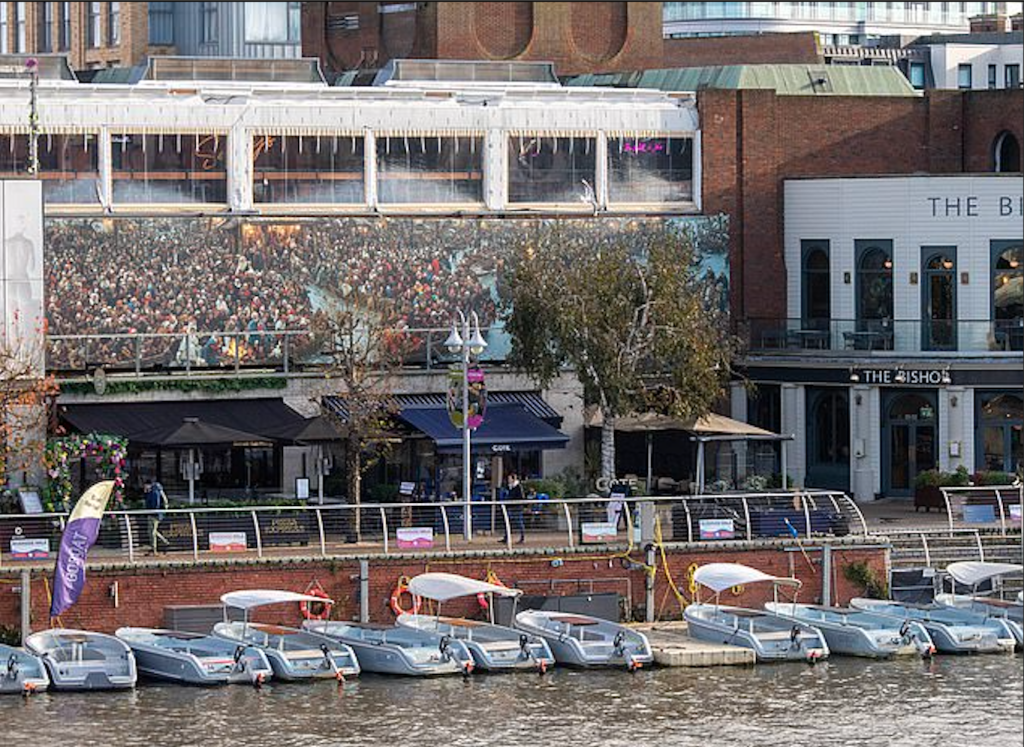
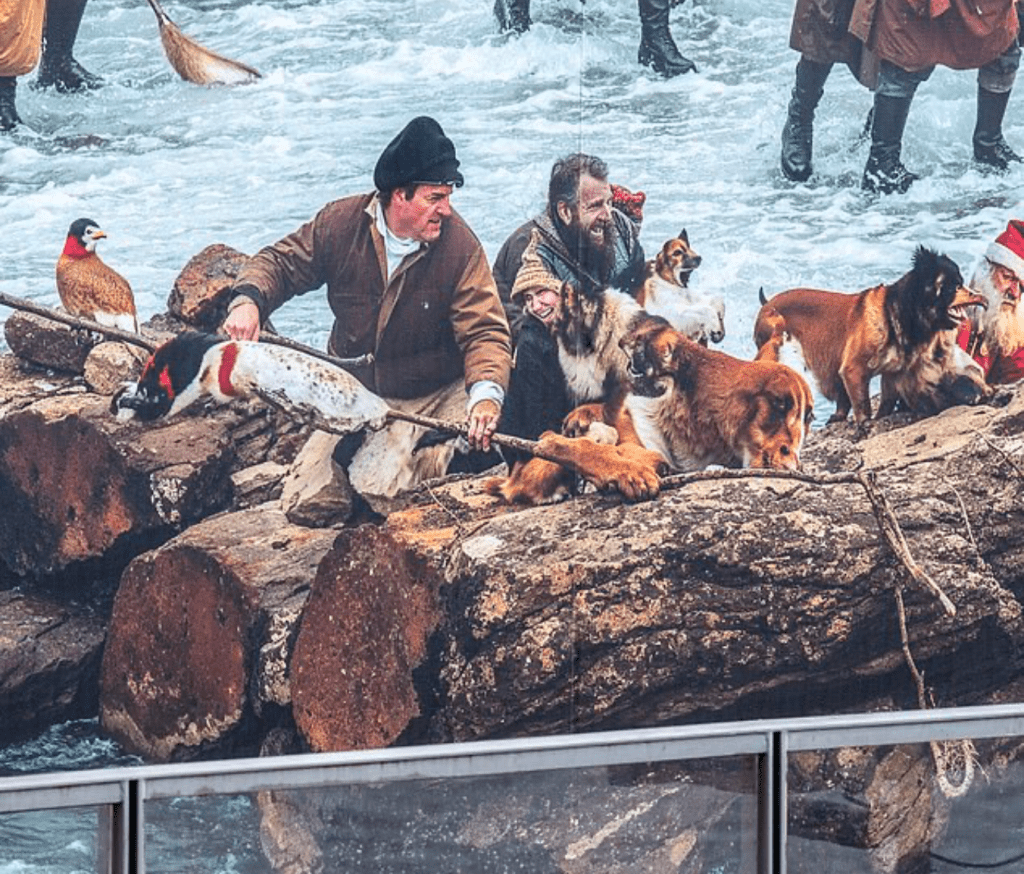
AI is also always testing our sanity. I RUN, the AI-generated song more than half of the internet fell in love with, proves we’re going to keep falling for robots with good marketing until we collectively get our act together. And with the VR world now full of digital “degenerates” sitting around chatting like it’s Club Penguin After Dark, plus the UK’s unsettling AI-generated Christmas mural haunting pedestrians, it’s clear that the fight for “real” is getting weirder by the minute. Are we okay?
Miami Art Week kept the chaos alive, with Art Basel leaning into its “Second Nature” theme. And over at the Met Gala, with this year’s theme centered on costume art, it’s hard not to ignore that Bezos is footing the bill, which naturally leads us to the annual reminder that money buys anything, including the illusion of taste.
Meanwhile, the Frida Kahlo painting that hit an eye-watering price tag had everyone asking the same thing: she literally despised capitalism…so what would she say watching her face become a tradeable asset? The irony is a little too loud.
Microtrends, Megachaos
By the time a trend reaches your cart, it’s already obsolete. Microtrends are burning out so fast, thanks to fast fashion, that by the time you finally cave and buy something, TikTok has already declared it “cheugy,” “trauma-coded,” or “out.” The cycle is so aggressive it’s basically a sprint, and everyone’s exhausted. We’re living in trend inflation–too many, too fast, none of them lasting long enough to matter.
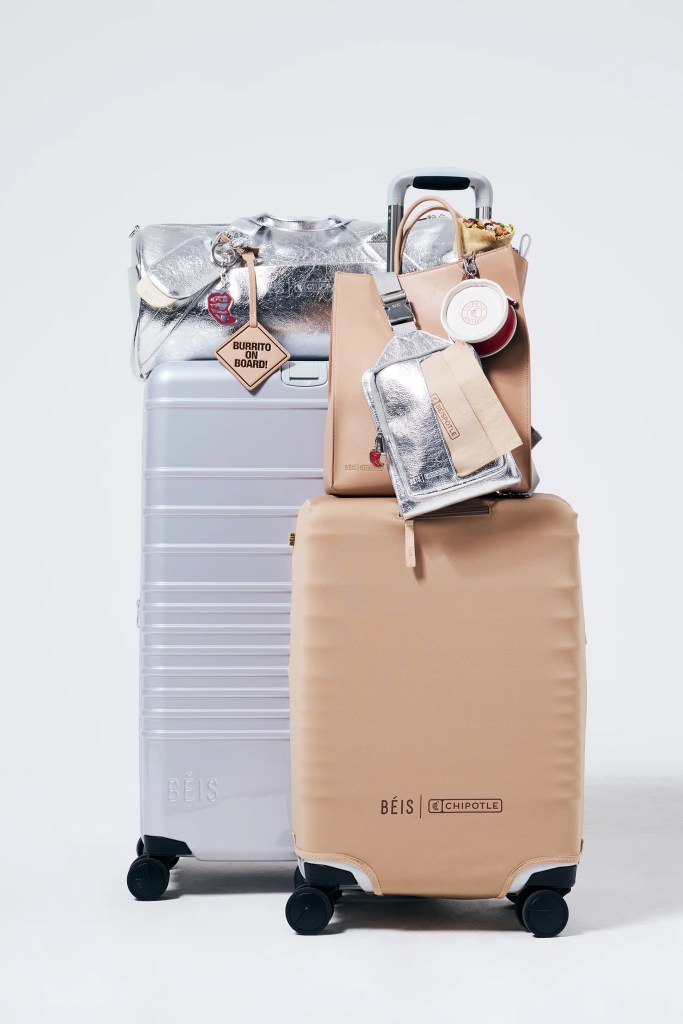
Even brand collaborations feel like microtrends. The Beis × Chipotle collab is less “strategy” and more “internet joke,” and I’m honestly just curious how much Chipotle paid to be in on it.
Image: BÉIS X Chipotle collaboration, courtesy of BÉIS
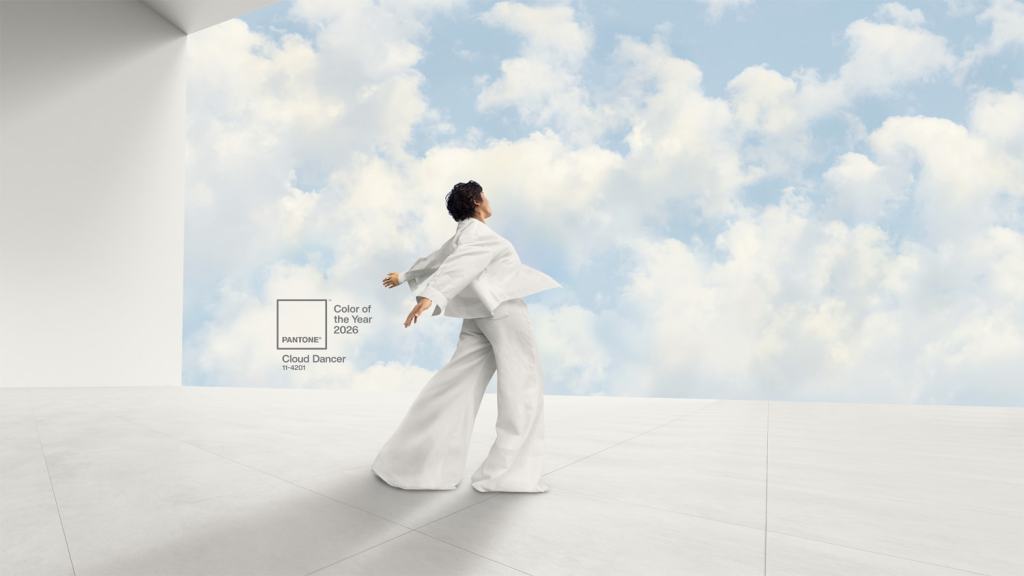
Pantone’s Color of the Year, Cloud Dancer, has been surprisingly controversial because of it’s simplicity. Its softness and near-absence have split opinion, with critics calling it boring or evasive and others reading it as intentional restraint. Soft, pale, and almost unwilling to perform, Cloud Dancer feels less like a trend and more like a quiet refusal, signaling a collective craving for neutrality after aesthetic overload.
Meanwhile, luxury is quietly being replaced by mid-market. The new status symbol is no longer a four-figure bag, but instead it’s looking like you tried to look expensive. Brands like Reformation, Aritzia, The Row, Ganni, and COS have become the new “don’t worry, I have taste,” which is ironic because their price tags still make your credit card cry. Eco-friendly fashion is still priced like you’re paying for a college course, so younger shoppers keep bouncing between thrifting, closet “shopping,” and buying one impossibly nice top and pretending it’s sustainable.
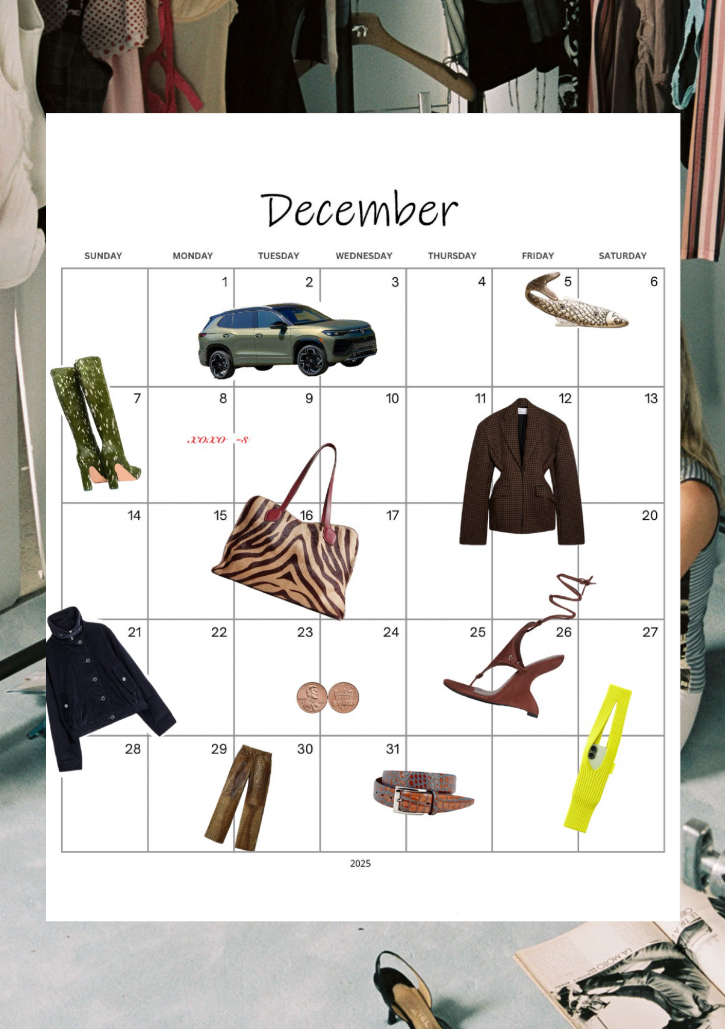
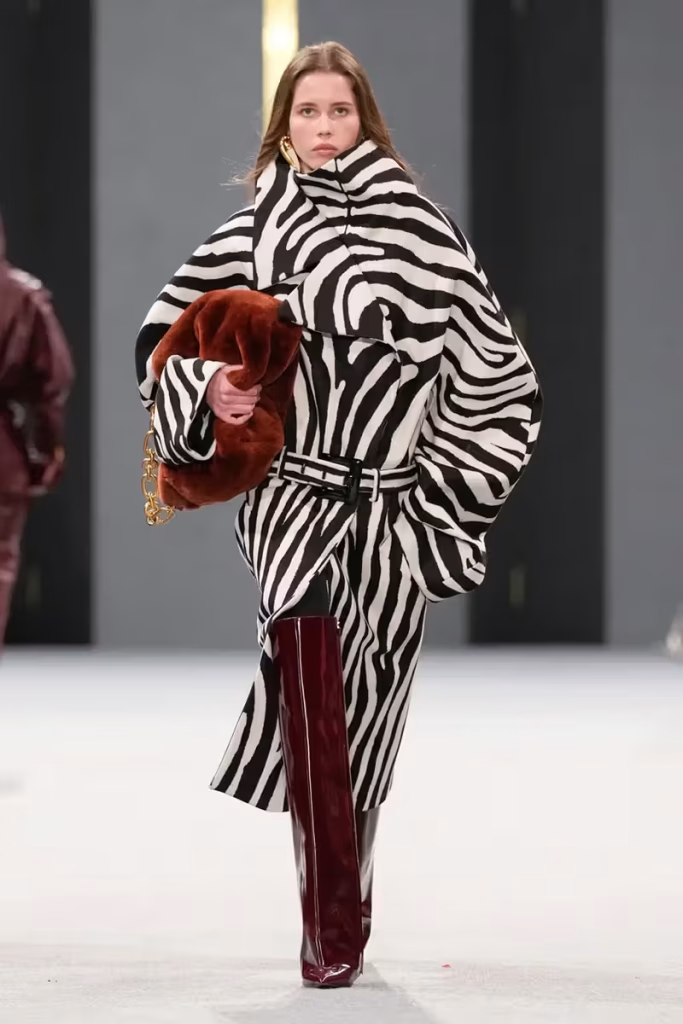
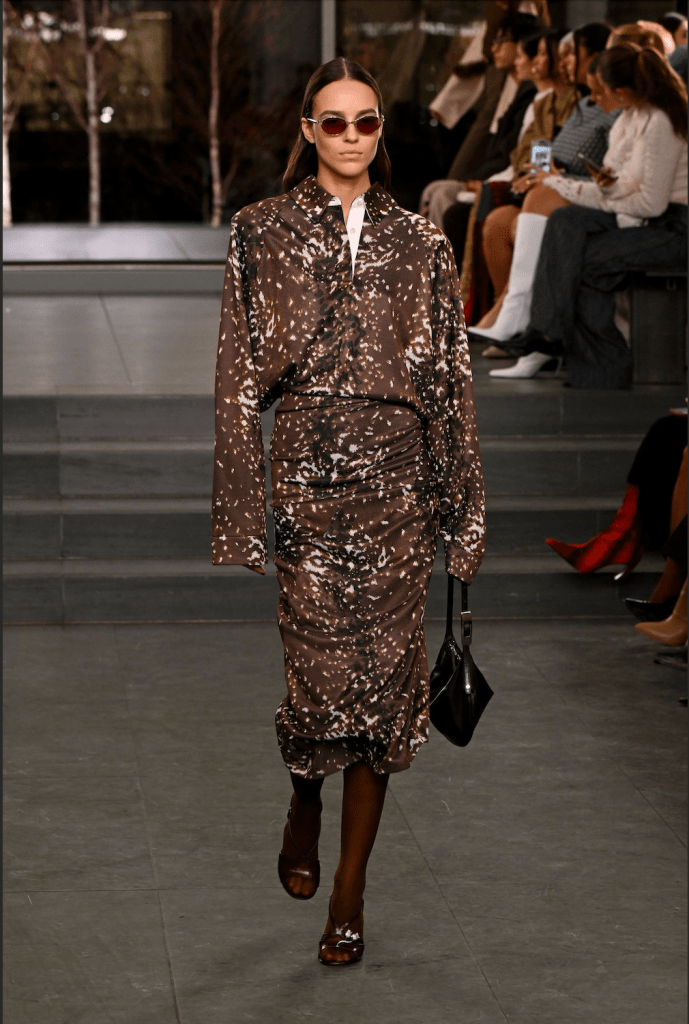
Prints are having their own identity crisis. Every year, we latch onto one animal print to save us, but this winter it feels like they all showed up at once: snake, crocodile, zebra, cow, and a suspicious amount of pony or deer hide creeping in through embossed textures. It feels like “the zoo escaped, but make it chic.” And with western accents slipping into everything from jackets to your mini-skirts, plus hints of acid-wash, it’s obvious we’re constantly craving the comfort of authentic, sturdier aesthetics because deep down we might be dissatisfied with where fashion keeps dragging us.
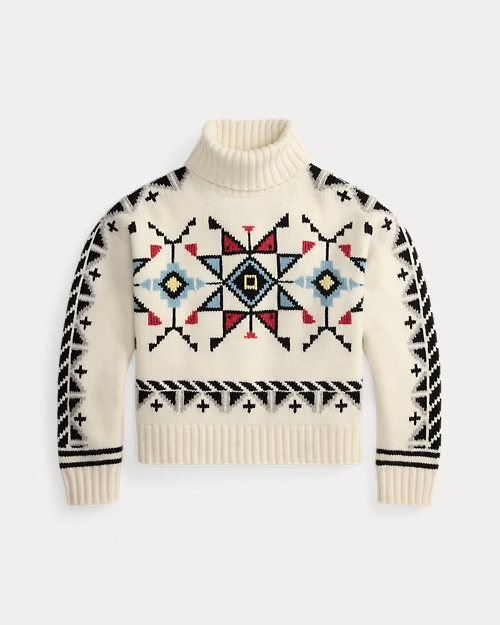
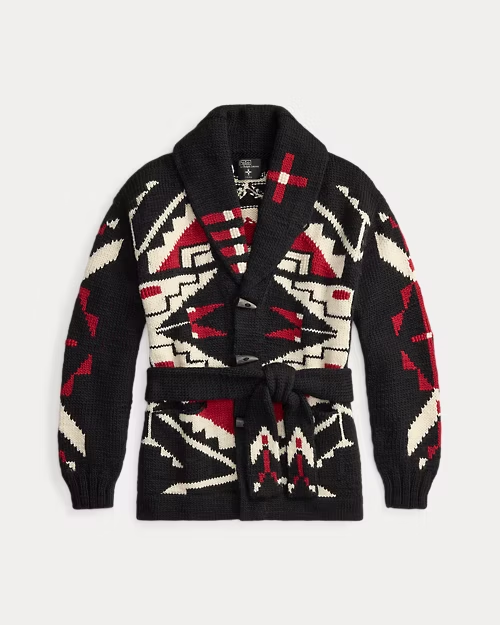
Textile mixing is everywhere, and the Ralph Lauren effect is real. Styling authentic pieces in unexpected ways is what keeps the RL identity alive. Ralph has undeniably recognizable iconic pieces like the riding boot, varsity bomber jackets, souvenir jackets, rugby shirts, skins, western accessories, and tailored pieces. Since, RL doesn’t chase microtrend chaos (they actually know who they are), their latest artist and residence collaboration with TÓPA didn’t just look good; it set a new creative bar for what heritage design should be.
And for shoes…where do we even begin? New Tabi boots with actual glass (only 25 pairs because your insurance wouldn’t cover them), convertible loafers (convertible into what? the unknown), glove-like ballet flats gripping your feet like they’re in love with you, slipper mules that look like elevated Boston Birkenstocks (they’re already in my cart), and wedge heels that feel less like footwear and more like wearable sculpture. Art, but on your feet, giving Foot Finder even more material to work with, unfortunately.
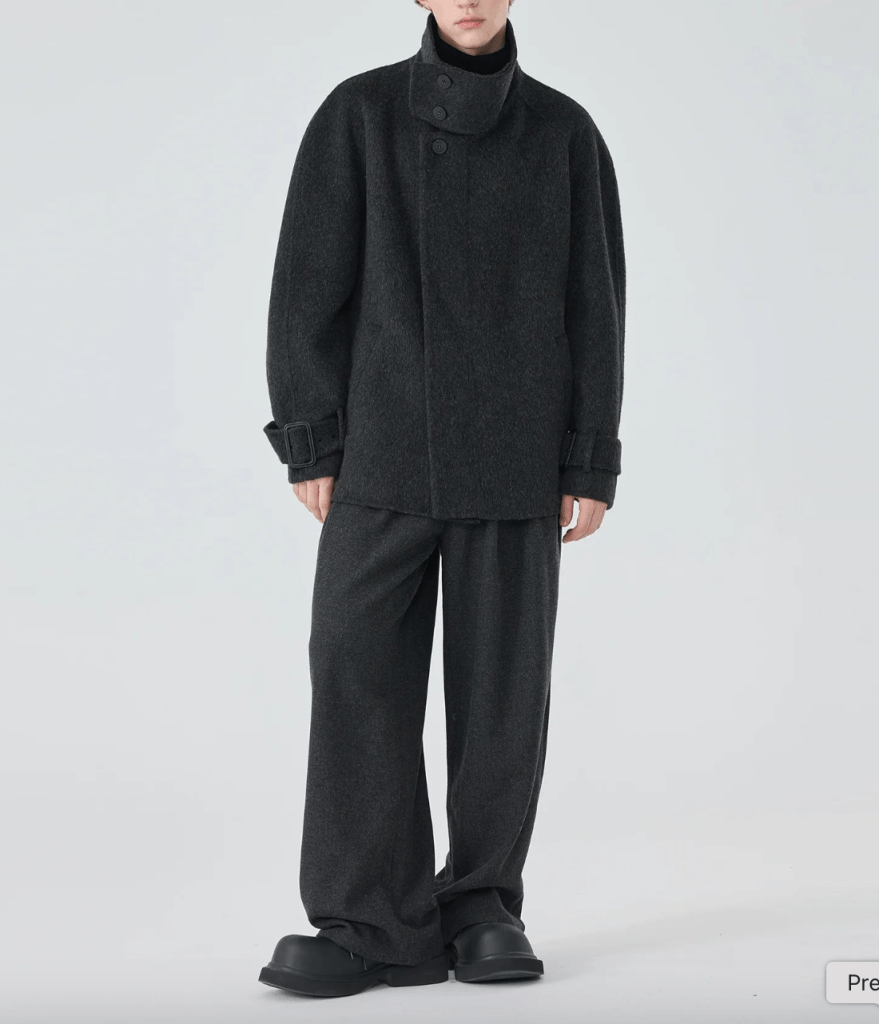
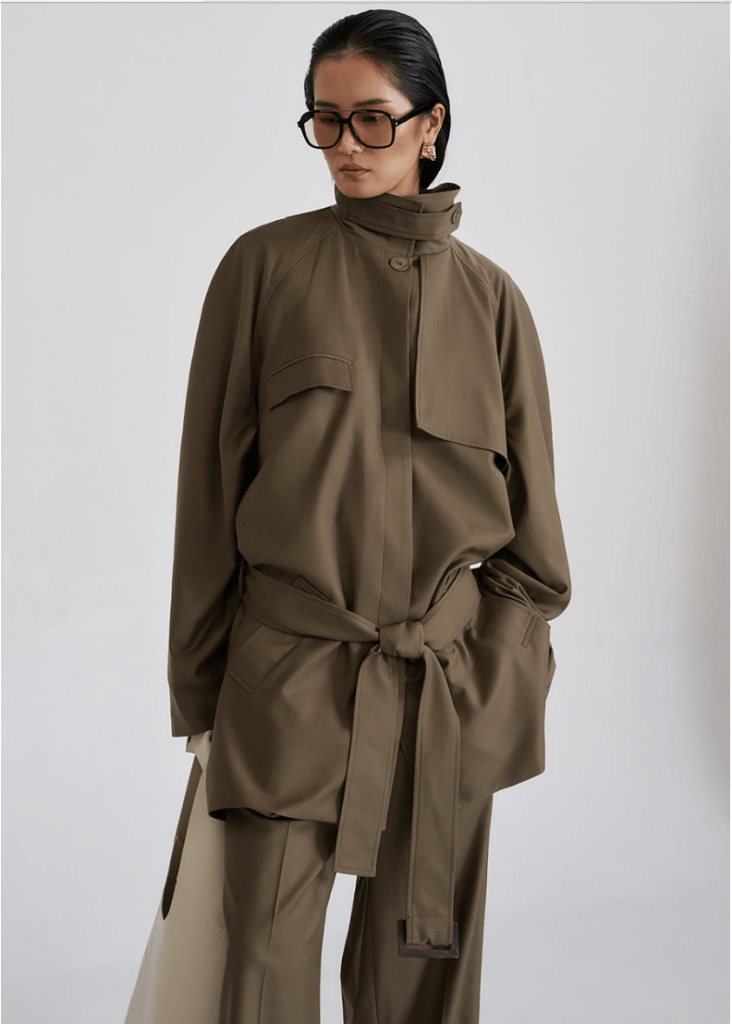
Structure-wise, the clothes are absolutely wearing us again. Exaggerated hips, curves engineered back into silhouettes, trenches with belts dropped so low, jackets with collars so dramatic they practically qualify as air vents. Funnel necks and stand collars have us one popped-lapel away from looking like a coven of fashion-forward vampires roaming the streets.
Accessories are also having a moment of personality disorder: ascots replacing knot scarves, leather gloves giving every outfit a “mysterious widow” vibe, pouch pendants that still make no sense, and doctor-style handbags walking around like they’re diagnosing the rest of our outfits.
The chaos of fashion right now is unhinged with crazy silhouettes and trends that feel like a collective experiment. We didn’t sign up for it, but needless to say, we’re enjoying it anyway.
Culture, Reframed
The examples are varied, but the pattern is familiar. Prada casually decided to buy Versace, basically the fashion equivalent of your ex dating your enemy. Meanwhile, the owner of MANGO passed away under circumstances questionable enough that the internet didn’t even hesitate before asking: Did his son do it? The theories weren’t pulled out of thin air either; enough odd details were swirling around that the true-crime side of TikTok practically sprinted onto the scene.
And Shein somehow managed to outdo itself with those child-like SA dolls; a launch so baffling and upsetting it sparked instant protests and demanded real accountability. And Timothée Chalamet’s bizarre Vogue cover didn’t help the cultural dizziness; equal parts editorial, fever dream, and “Wait…was this AI too?”
Speaking of emotionally confusing releases, Taylor Swift’s “Ophelia” dropped and sent the internet into a spiral of literature analysis, feminism discourse, and whatever corner of the fandom currently pretends they’re English majors. It was a cultural event, whether or not anyone actually understood the references.
Disney announced the creation of AI-generated content, and DC Comics immediately fired back, saying they’ll never touch AI for storytelling. So who’s right? Who’s wrong? Probably both, but the bigger picture is that nostalgia is becoming raw material for whatever AI wants to spit out next.
Over in D.C., the White House is undergoing construction to add a ballroom, yes, a ballroom, which somehow requires removing the Office of the First Lady. Nothing screams American politics like making room for a dance floor by eliminating a woman’s workspace.
And finally: the last penny. The U.S. minted its final batch, officially retiring Lincoln from your couch cushions. A soft farewell to the coin that cost more to make than it was actually worth.
Tech, Rewired
The new Volkswagen Tiguan is also getting attention for its upgraded tech, including an automated lane-change feature as part of the IQ.DRIVE Travel Assist system. It’s not self-driving, but it’s close enough to feel futuristic: the car offers lane centering, adaptive cruise control, and even helps initiate (or sometimes perform) a lane change when there’s a safe gap. It’s a controlled, safety-conscious system that hints at where mainstream car tech is heading next.
Meanwhile, 6G is already being teased even though most of us aren’t convinced 5G ever actually worked. But sure, let’s go faster. Why not.
“SaaS beyond software” is the new buzz phrase floating around tech circles, essentially meaning that everyone is trying to turn physical things into subscription services now, with AI wedging itself into every step of that process. Your car, your fridge, your vacuum, even your appliances are suddenly “smart” and “personalized,” which is code for: one bad idea from needing a login and an AI buddy you never asked for.
Apple also released the iPhone pocket sling, essentially a $150 sock for your phone, designed by Issey Miyake, the same person behind Steve Jobs’ turtlenecks. Amazing pedigree, questionable price tag.
However, I would say the coolest innovation of the season comes from UC Santa Barbara, where researchers created a new haptic display technology that lets you feel on-screen graphics. Tiny pixels expand into bumps when illuminated, meaning animations can be seen and touched. Screens are no longer flat; they’re becoming physical. The line between the digital and the tangible is fading, which is either the future…or the start of a very complicated era of screen-related crimes.
Tech keeps promising a smarter world, but mostly it’s just finding new things to “optimize.” At this rate, if next winter’s innovations start asking us to tip, that might be where I draw the line.
Interiors, Evolving
On the home front, open-concept layouts are finally falling out of favor; people want actual rooms again. Separate spaces feel safer, calmer, and more intentional. Design-wise, brown kitchens, honey oak, and fun-shaped hardware are taking over, along with those blue-and-white antique tiles that make every bathroom look like a Mediterranean Airbnb (in a good way). The overall mood seems to be warm, lived-in, and anti-minimalist.
Zip Codes, Shifting
The real estate landscape has developed some surprising new favorites. Fort Worth, Jersey City, Miami, and even Cleveland are emerging as surprising hotspots; a lineup so varied it feels a little randomly generated. Affordability, job mobility, and the search for more space are driving people toward cities they had not considered a few years ago.
Odds & Ends
Food trends are getting quirky again, with swavory and swangy flavors everywhere; sweet meets savory, sweet meets tangy, and somehow it works. Biophilic design continues to shape interiors with an increased emphasis on plants, natural textures, and calm, earthy environments. And “intentional content consumption” is quietly replacing doomscrolling as everyone tries to curate their media diet as if it’s self-care.
If nothing else, winter is ushering in a world rearranged. Old norms fade, new ones appear, and the landscape keeps shifting faster than we can name it.