
By: Elona Michael ’28
Amid a quiet Sunday evening at the Louvre, on August 20, 1911, a mysterious man with a peculiar mustache gave birth to the most famous work of art in the world. Well, not literally, but one can make a strong connection to it.
Everyone knows the Mona Lisa, painted by the well-renowned Italian Renaissance painter Leonardo da Vinci, celebrated through its personal yet mysterious depiction of Mona Lisa herself and the artist’s realist techniques. It has become a world-renowned staple, always surrounded by long lines of visitors at the Louvre and endless conspiracy theories online.
Yet, there was once a time when the painting stood as one of the vast selections of Renaissance pieces in the Salon Carré.
In 1908, a young Italian man named Vincenzo Peruggia moved from his small town in northern Italy to Paris, where he found a cleaning and framing job at the Louvre. His duties mainly consisted of maintenance as well as constructing protective cases for certain valuable pieces of art, and this happened to include the box frame surrounding the Mona Lisa.
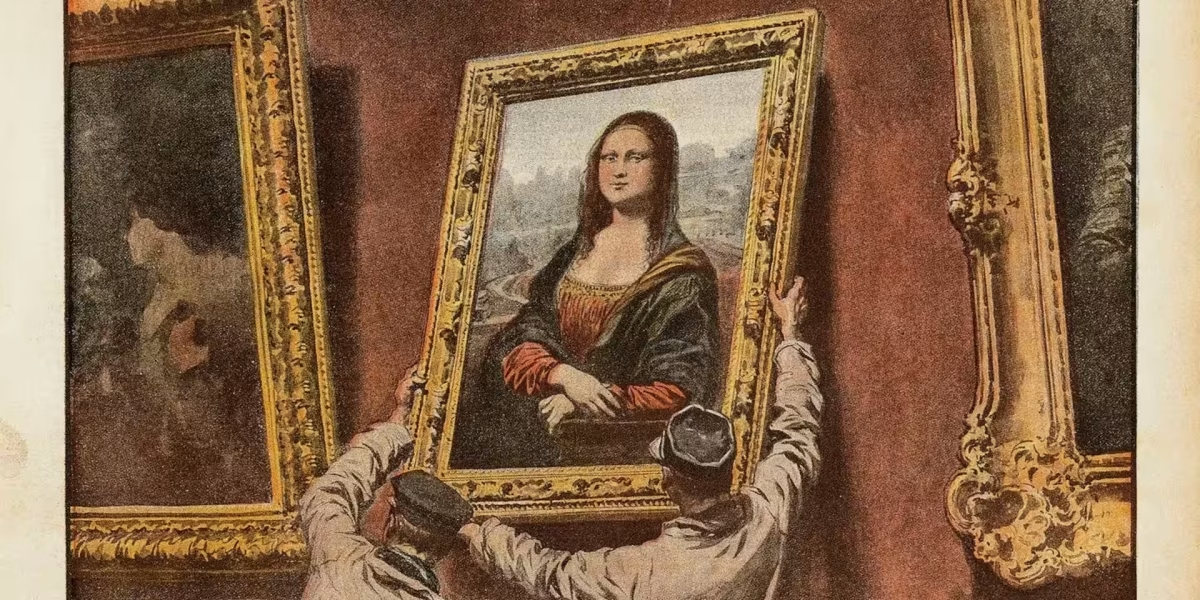
After a couple of years, Peruggia left his job at the Louvre, but his time at the museum did not end there. On the quiet maintenance morning of August 21, 1911, dressed in his standard Louvre employee uniform, Peruggia snuck into the museum with no questions asked. He found himself in the Salon Carré and patiently waited for other clueless employees to finish their duties. Once they had left, he carefully picked up the Mona Lisa from the wall and scattered to the service stairwell.
There, he utilized his mastery of protective case frames and efficiently removed them and forced himself into a closet where he would stay for the rest of the day. And once the museum finally cleared out, he wrapped the painting in his coat and dashed out.
And this officially marks the heist of the 20th century, the heist that started it all.
Later on, when cleaning staff saw the painting had been removed, they did not dare to investigate, automatically assuming that it had been swiped for repairing or inspection services. It wasn’t until the artist Louis Beroud noticed the blank wall, where the painting had sat, and immediately called security, eventually leading to a 48-hour shutdown of the museum.
The scandal had completely blown up in the media and the larger world. Nobody had known the Mona Lisa, yet everyone was fascinated by the heist. Who stole it? How did they do it? What were the motives? Where is the painting now? And why the Mona Lisa?
The New York Times reported it as the crime of the century. The Washington Post accidentally published the wrong painting when announcing the theft. People around the world curated new conspiracy theories each day on where it was located, from the U.S., Japan, to Russia.
Many French newspapers fueled and grilled American art collectors and tycoons, such as JP Morgan and vast American millionaires, with accusations of having commissioned the heist to snatch France’s cultural heritage for themselves.
French police investigated every corner. They stopped ships, questioned avant-garde artists such as Pablo Picasso and Guillaume Apollinaire, and hundreds of others. In fact, they were able to find some crucial clues along the way, including the fingerprint on the protective glass stain Peruggia had removed, and even got close enough to the point where they interviewed Peruggia twice, but still assessed no suspect probability.
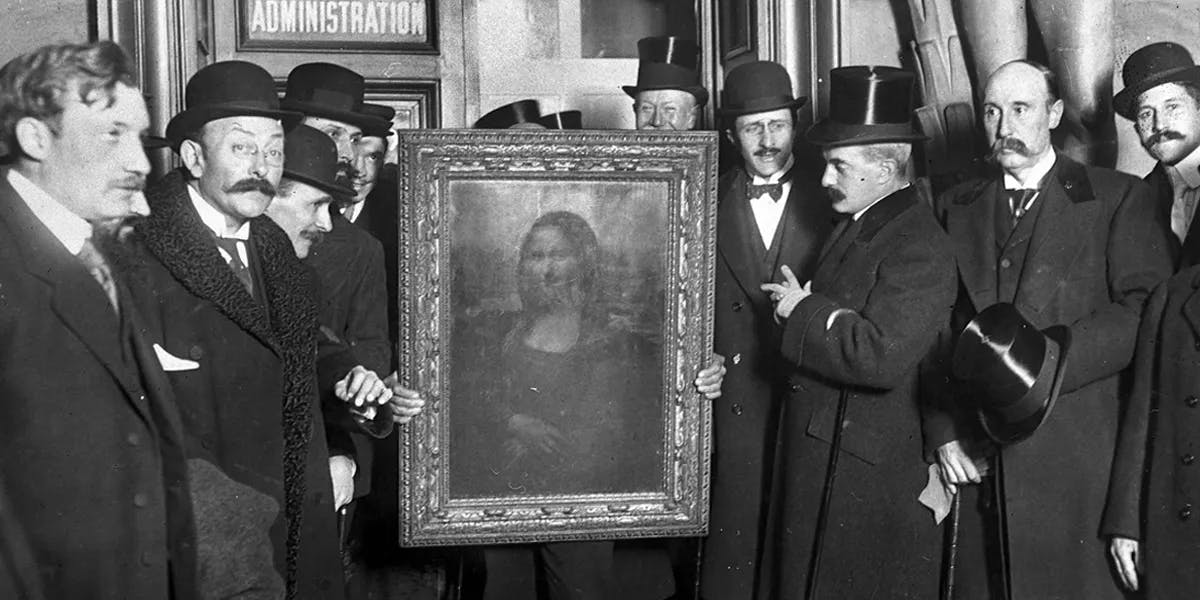
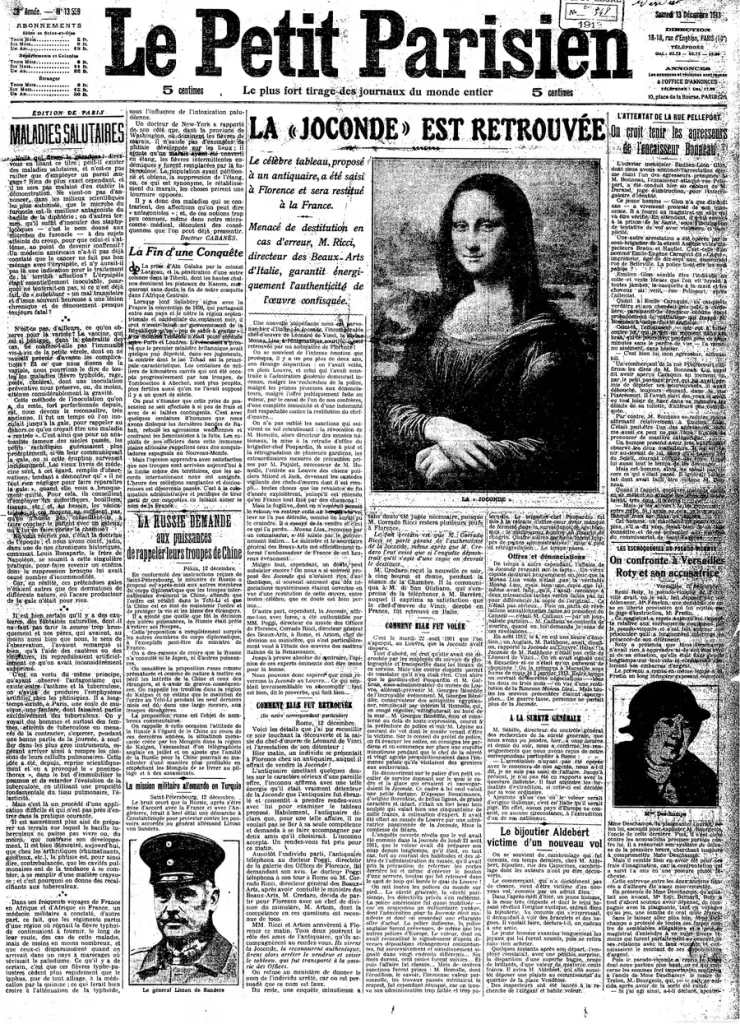
It wasn’t for another two years that they eventually identified Peruggia as the thief following his attempt to sell the painting to an art dealer in Florence.
The 28-month global-spanning frenzy led to the birth of the Mona Lisa. Even before its official return, over 120,000 people visited the Louvre just to see the space where it hung.
And although the heist gave name and fame to the most well-renowned art in the world, it also revealed something greater about society and the way we view art.
Movies have depicted and glamorized countless heists, further illuminating society’s century-long fascination with theft. The phenomenon of a victimless crime that challenges wealthy institutions gives a thrill to what is the unknown.
Therefore, it is crucial to question why society becomes captivated with stories of theft. Further illuminating that maybe it isn’t the art itself but what lies before it, how it got there.
And what does a heist provide? A sensation for investigation, a mind open for imagination, and a mystery that needs to be solved.