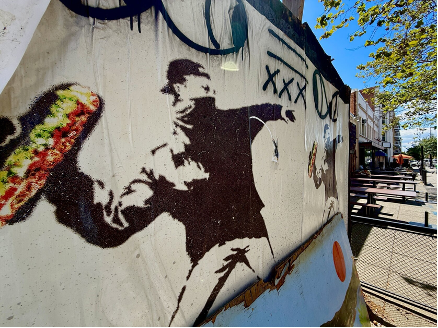
In the summer of 2025, a DC resident and employee for the Department of Justice, Sean Charles Dunn, was celebrated for throwing a hoagie sandwich at a federal police officer during the Trump administration’s occupation of DC city streets. Dunn was arrested and charged with misdemeanor assault, but his image took a life of its own with a series of graffiti art depicting a resistance fighter heaving a hoagie as if it were a molotov cocktail.
The graffiti is printed on cement walls across DC, a symbol of resistance against federal overreach and a response to fears of despotism and martial law. The piece itself seems to be inspired by famous street artist and political activist Banksy who painted a similar depiction of a resistance fighter in Love Is In The Air, where the protester brandishes a bouquet of flowers. Both pieces are statements in support of defiance — not just of any act of rebellion, but rather of strictly non-violent means of defying an unjust government.
To place a sandwich or a bouquet of flowers in the throwing arm of a resistance fighter instead of a molotov cocktail or a gun demonstrates the artist’s preference for nonviolent civil disobedience. Rooted in the principles of Dr. Martin Luther King, Jr. and Mahatma Gandhi, principles philosophized by thinkers like Henry David Thoreau and Hannah Arendt, civil disobedience is the public, non-violent refusal of a government that demonstrators, like Dunn, view as unjust. The value of civil disobedience lies in withholding violence so as not to play into the “myth of redemptive violence,” as theologian Walter Wink coins it.
The myth Wink writes about is that there is justice in committing one act of violence in response to another. Wink argues that violence only perpetuates violence, continuing a cycle of domination — a cycle that created the injustice in the first place. This article comes in the wake of the horrific murders of Charlie Kirk, Melissa and Mark Hortman, the beating of Paul Pelosi, and the arsonist who burned down the home of Governor Josh Shapiro. These crimes come from a passion for a particular point of view, but they are crimes devoid of the compassion we ought to feel towards our neighbors.
Art pieces like Love Is In The Air and the graffiti of DC are testaments to the importance of peaceful discourse and demonstrations in a democratic society. Political violence is corrosive to our democratic institutions and counter-productive for open dialogue—a malignant presence in our current political environment and a threat to our way of life and governance. The artists who advocate non-violence, who push back against this wave of hostility, not only remind us of the virtues of pacifism, but also of the role that art can play in society.
Like the Civil Rights Movement’s freedom songs, murals, and posters or Anti-Apartheid Movement plays like Woza Albert, the “sandwich guy” represents the power that art can have for political representation. Art has the power to influence people, to touch us, to remind us of the higher minded principles foundational to what makes free, fair, pluralistic democratic systems like that of the United States great. An artist’s mission, after all, is to convey a meaning in their work — which is in another sense: a perspective.
Many of today’s trends in music and fashion channel anemoia, or the nostalgia for eras one never lived, as digital communities collectively imagine the 90s through clothing, mood boards, and musical references. Following the 20-30 year trend cycle, the revived interest in the grunge style has been right on time. While contemporary fashion revisits these trends, photography and editorial imagery often do not carry the same raw visual references from the era.
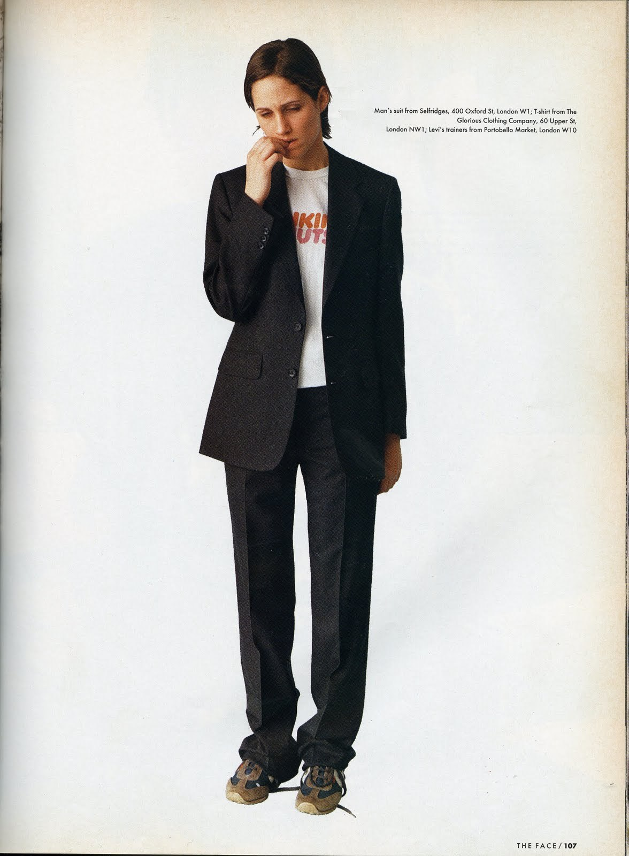
For the past few years, baggy, low-slung jeans, muted colors, boots, and a general favoring of anything thrifted have been mainstays in trend cycles. Following the passing of the influential stylist Melanie Ward, her approach to style — and seemingly to life at large — feels powerful and applicable to today’s fashion landscape.
Melanie Ward began her career in the late 80s, incorporating London street and youth culture. Eventually, her styling became a key aspect of defining the grunge style, emerging as a reaction to the polished glamour of the 80s. She emphasized making clothing real and wearable, often blending vintage and contemporary pieces, mixing high- and low-end fashion. Ward’s styles were often captured with a direct flash and a soft blur. She abandoned elaborate sets, carefully designed lighting patterns, or sometimes perfectly metered exposure, in favor of immediacy and intimacy.
There is a presence and dignity in the normalcy of her models’ posing — often informal or awkwardly relaxed. Ward’s styling communicates authenticity in the expression of grounded realness. Throughout interviews spanning the decades, she repeatedly emphasized comfort and the principle that “your clothes don’t wear you.” Her career would eventually lead her to fixed roles at fashion houses such as Helmut Lang, Calvin Klein, Karl Lagerfeld, Louis Vuitton, and Dior. She continued to champion this philosophy at each house, keeping the essence of authenticity with her throughout her career.
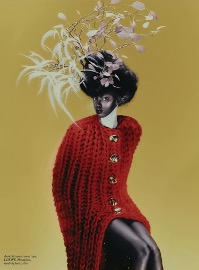
While Ward’s realness came from proximity and lived experiences, contemporary fashion photography channels emotional resonance in an opposite way. For instance, Rafael Pavarotti, a friend of Ward, focuses on visual maximalism. Bold color, dramatic lighting, exaggerated and theatrical poses are essential elements of the Pavarotti style. The aesthetic sharply contrasts Ward’s understated approach, but the conceptual goal feels parallel at times.
Pavarotti, who grew up in a small town in the Amazon, moved to London at sixteen to pursue fashion photography. His work demonstrates his capability to shape cultural perspectives on beauty, style, and the human form. His work often highlights Black bodies, addressing disparities in fashion representation and redefining what beauty looks like. Many of his subjects look directly into the lens, creating an intimate connection that invites viewers to engage empathetically with another human presence.
His models are put in positions that make them feel somewhere between powerful, imposing, whimsical, and graceful. The viewer is invited to witness tension and poise in this heightened presence. Each figure is transformed into an expressive subject rather than just a body to hang clothes off of. Pavarotti employs these tactics all to create larger-than-life figures that inspire wonder and leave viewers open-mouthed.
Models Anok Yai and Zaya Guarani in “An Altar to Memory,” photographed by Rafael Pavarotti for British Vogue, March 2024.
While Pavarotti employs bold color, dramatic poses, and exaggerated silhouettes, his work remains sincere and emotionally grounded. He guides the viewer through a heightened, surreal visual experience to center humanity and dignity in every figure. In the drama of his images, the subject remains central, creating a palpable presence that communicates authenticity and emotional resonance.
Today’s fashion trends often intersect with authenticity through digital media. Platforms like Depop, Grailed, and Pinterest curate nostalgia, remix styles, and construct new amalgams of subcultural identities. While many era revival trends are filtered through aestheticized anemoia, rather than lived experience, it continues to reflect the desire for individuality and self-expression. Thrifted and vintage clothing offers a way to signal style and value, echoing Ward’s message of comfort.
Despite their visual differences, both Ward and Pavarotti aim to make their subjects feel present, immediate, and emotionally resonant. The connection doesn’t lie in style or technique, but in the shared pursuit of human dignity. Whether that be through understated honesty in subtlety and intimacy or in boldness in intensity and spectacle, at the center, there is a human commanding your attention. Both remind us to stay captivated by imagined futures, grounded in the authentic present, and reference the past through a collective anemoia.
Drake DiPaolo, a twenty-year-old passionate about museums—and a McMullen Student Ambassador—was ecstatic to see four older people enter the gallery. They appeared frustrated by the video on the far side of the room. In their faces, you could see them asking, “Is this the last one?” as they sat down on the opposite side of the room and began to speak loudly to one another. This room was on the third floor, and on the second was the Barjeel Art Foundation’s show Landscape of Memory, which displayed seven videos focused on the “rich and complex history of the Middle East.” Naturally, the people assumed that this floor would have more of what they had just seen, videos. But this space was a bit different. The room was cramped, with vertical LEDs glaring and dark walls. Exhausted by the exhibit, the viewers discussed how all the videos were about death, and none of them had been in English. Confused, they looked at the people in the video dead in the eye. But, something felt eerie about the figures, as if they were watching the visitors. Drake walked over.
“It’s actually like a zoom; these people live in a refugee camp.” The visitors spent their remaining time at the museum complaining that they could not hear the people, understand their accents, or even comprehend the point of the exhibit. They made sure to tell me this, the worker at the front desk, on their way out. This uncomfortable scene comes from a semester of bizarre interactions between visitors and “the Portal” at the McMullen Museum of Art from January 30th through June 4th, 2023.
When I initially heard about the exhibit, the concept of the portal also confused me. I found the name dystopian, fantastical, maybe something out of a Back to the Future Movie. What the hell was the Portal? A Portal to where? Was there more than the video art installations on the second floor? But, on the third floor, there was more: a small room with all-black walls, about 12 chairs, and a video projection. The Portal was unlike a Delorean and had no time or space travel capabilities; its goals were much more advanced.
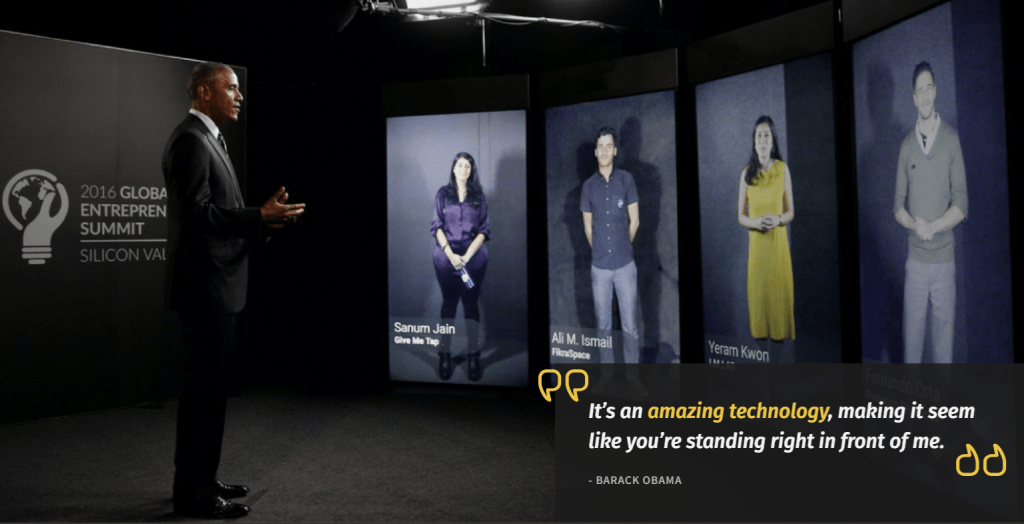
I later learned that “The Portal” is not unique. It is a room-sized audio-visual experience providing a cross-continental connection you can place on any college campus. The proprietor of the technology and licensing, Shared Studios, has a clear Silicon Valley-esque message of connection. Their website displays a picture of President Obama and his words while using this portal: “It’s an amazing technology, making it seem like you are standing right in front of me,” he says while speaking to young entrepreneurs from Iraq. Topics of conversation vary, from climate change to artistic expression, but the overarching theme of cultural exchange is consistent throughout.
Screenshot from the Shared Studios website.
Now that it was at the museum, patrons and BC students could connect with people from all over the world. Specific topics were encouraged for certain groups. For instance, a group from Barbados talked with a professor and their Oceans class about climate change. A group from the Nakivale refugee group was encouraged by Shared Studios to discuss the portal they built out of bottle bricks. A group from Palestine discussed their futures. Many of them reflected on the current exhibit’s Landscape of Memory’s themes of exile, home, war, and family. The audience was never as diverse as the speakers featured at the Portal. Throngs of white college students entered the museum. They had to write papers on their experience—how were their eyes fully opened? Many of the participants were young college students mandated to be there to meet someone different from themselves. Most would sit there dead silent, hoping to get through the event and get their extra credit.
In comparison, Drake spent countless hours worried about the Portal and its functions. He would come early to work to set it up, go into every connection with notes on discussion topics, and encourage visitors around the museum to join him. Despite his best attempts, he was the only one willing to put in this effort. Drake recounts moments where he felt like he was pulling teeth; “at times, I felt like I was running a circus. It was hard to manage the people in the room. Sometimes, they would just sit and watch whoever was talking. You had to force interaction.” The placement of the exhibit itself was bizarre. There was a video installation in another part of the exhibit, implying to visitors that this, too, was something to view. “It was also weird because they are having this interaction, but in the room right next to them is the rest of the exhibit,” Drake said. There was a feeling that museum-goers should view these people, their stories, culture, and even trauma as objects.
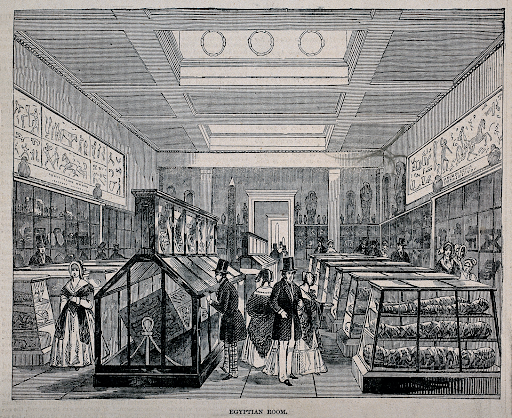
Though conversations that took place in the Portal are essential to understanding one another, to have these conversations within the context of a museum space reinforces power structures. The museum has once again become the playground for people with wealth and power. The people on the other end of the connection are often othered by this experience. Though they are involved in this process, they are the ones on display. The first time I saw the Portal, I was reminded of the historical display of others. I had recently taken a class in Victorian studies and was eerily reminded of their practices. The purpose of the museums in the Victorian period was to display so-called conquered cultures from across the globe. Indian silks and bead-work were an essential feature of the museum. The museum became a part of the nationalistic rhetoric and colonial projects.
Artist unknown, (1847) The British Museum: the Egyptian Room, with Visitors. 1 print: wood engraving; image 12.2 x 15.4 cm.
The Victorians are also responsible for developing freak shows and human zoos in the late 18th and early 19th centuries to display people with non-Euro-centric features and disabled bodies. Pseudo-science and the academic field of anthropology reinforced these backward forms of entertainment. The basis of science and historical study justified false racialized narratives that pervaded museum exhibitions for the public to view. The “other” was put on display for societal purposes. Museums became a place where the “other” is reminded of their place, and the audience is reminded of their superiority. These interpersonal interactions reflected the colonialist tendencies of Great Britain and other European powers. Viewers mocked, laughed at, and, in some cases, attacked the subjects of the human zoo.
The Crystal Palace at Sydenham Hill, London. Designed by Sir Joseph Paxton for the Great Exhibition of 1851 and rebuilt in 1852–54 at Sydenham Hill.
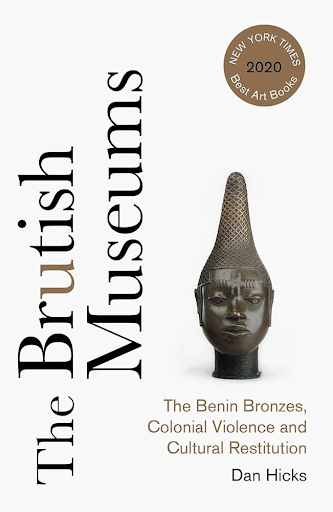
Book cover of Dan Hick’s Brutish Museums: The Benin Bronzes, Colonial Violence and Cultural Restitution.
Dan Hicks, in his book Brutish Museums: The Benin Bronzes, Colonial Violence and Cultural Restitution, describes the “second shot” produced by museums. The “first shot” is the colonial exploitation and theft of indigenous art, and the “second shot” is a continuation of this narrative. Though not entirely the same as a human zoo, the McMullen Museum’s Portal continues the “exhibitory” gaze of the past. Through the Portal, the museum puts the “other” on view. Not only are their bodies on display, but their trauma is now a learning experience for others. The Portal accentuates power differences when watching the conversations, and there is also something Foucauldian about the museum entering these people’s homes. The Portal is an installation meant to connect people, but it has created an exploitative environment in practice. There is constant surveillance of the “other.” Museums have always struggled with this issue. New technology does not break down the old power structures. Exploitation does not need to be at the root of art.
Drake left the interview with a few words, “You can’t view it as an exhibit.” Context is important. In the museum’s attempt to diversify and enrich experiences for their visitors, they exploited the lived experiences of people in countries with fewer opportunities than the US. Yet, exploitation is a conscious choice made by the visitors. A random student who has done nothing to learn about the Portal speakers enters the space differently than someone with the intention of discussing difficult topics. One student, Ashley Shackelton, who participated in a Portal on campus, not in the museum, felt that the experience was necessary to her learning. “It felt like we had to have serious academic conversations if you went with a class. But my favorite most meaningful conversations were about sharing music and books we found inspiration.” We can still meet the goal of the Portal—human conversation—if the person with the power in the transaction is willing to absolve themselves of it. However, Ashley noted that the connection felt blocked by the technology. She notes, “there wasn’t much comfort I could provide… It reminded me that although we could have incredibly enlightening and important conversations, we were still speaking through a video.”
In attempting to create human interaction, Shared Studios is placing the importance on both groups of people coming together as equals to have a discussion. Reality is not as simple. The conversation is not on an equal playing field in a space of power such as a museum or a college. Some of my discussions in the Portal were constructive and opened my eyes to new experiences. Drake recalls a moment when the translator had not yet arrived, and a class of students blankly stared at the people on the screen. In a moment of panic, Drake posed the question- Messi or Ronaldo? Everyone in the room understood what was happening and interacted despite the language barrier. Drake is a shining example of how to make this technology work.
The idea that we are all similar no matter what is true, but understanding differences allows for richer and more empathetic conversations. Historical and present contexts affect these interactions. The only way to move forward is to acknowledge our differences while learning our similarities. In this way, the Portal can work.
Works Cited
Dan, Hicks. The Brutish Museums: The Benin Bronzes, Colonial Violence and Cultural Restitution, Pluto Press, 2020, pp. 152–65. JSTOR, https://doi.org/10.2307/j.ctv18msmcr.17. Accessed 22 Mar. 2024.
Bennett, Tony. The Birth of the Museum: History, Theory, Politics. Routledge, 2005.